Monday, April 6, 2026
Home Blog Page 89

Looking the part, finding your tribe: A talk with Deb Hallberg

0

By Ebony Marie Chappel

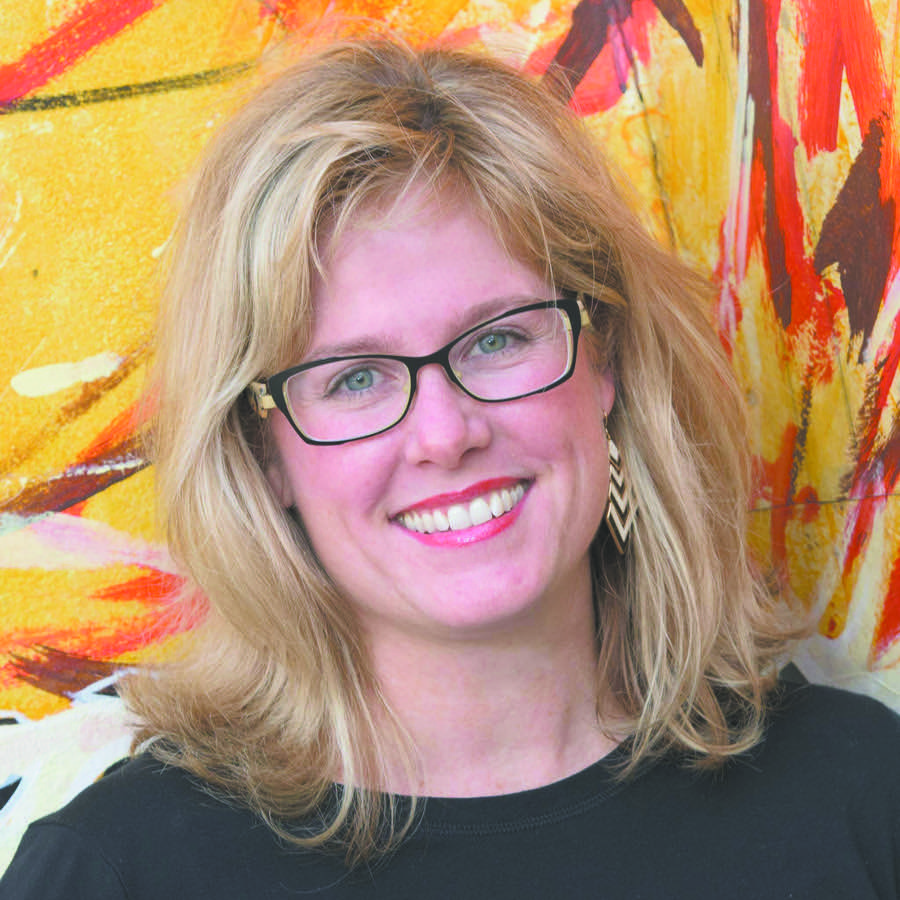
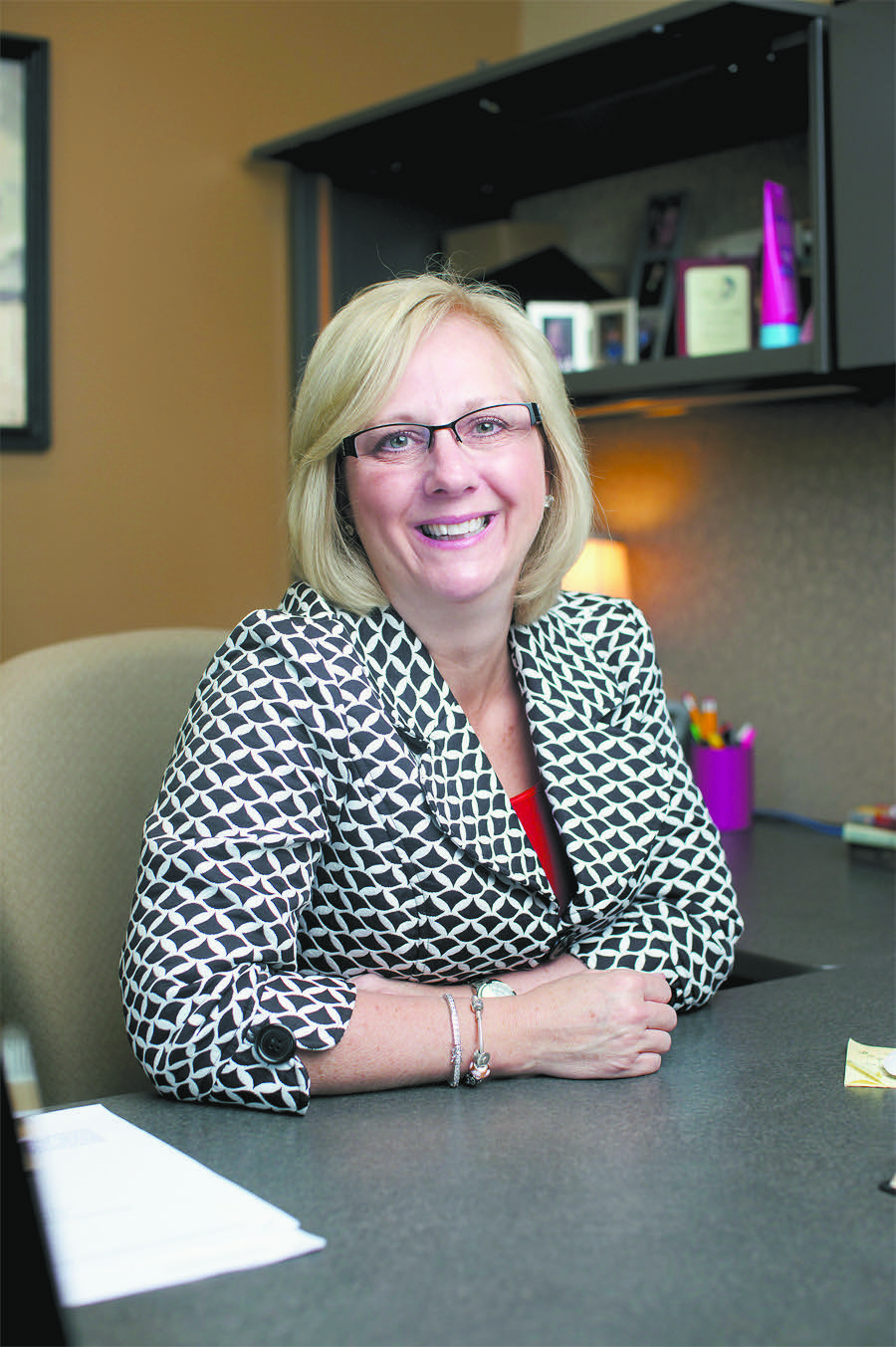
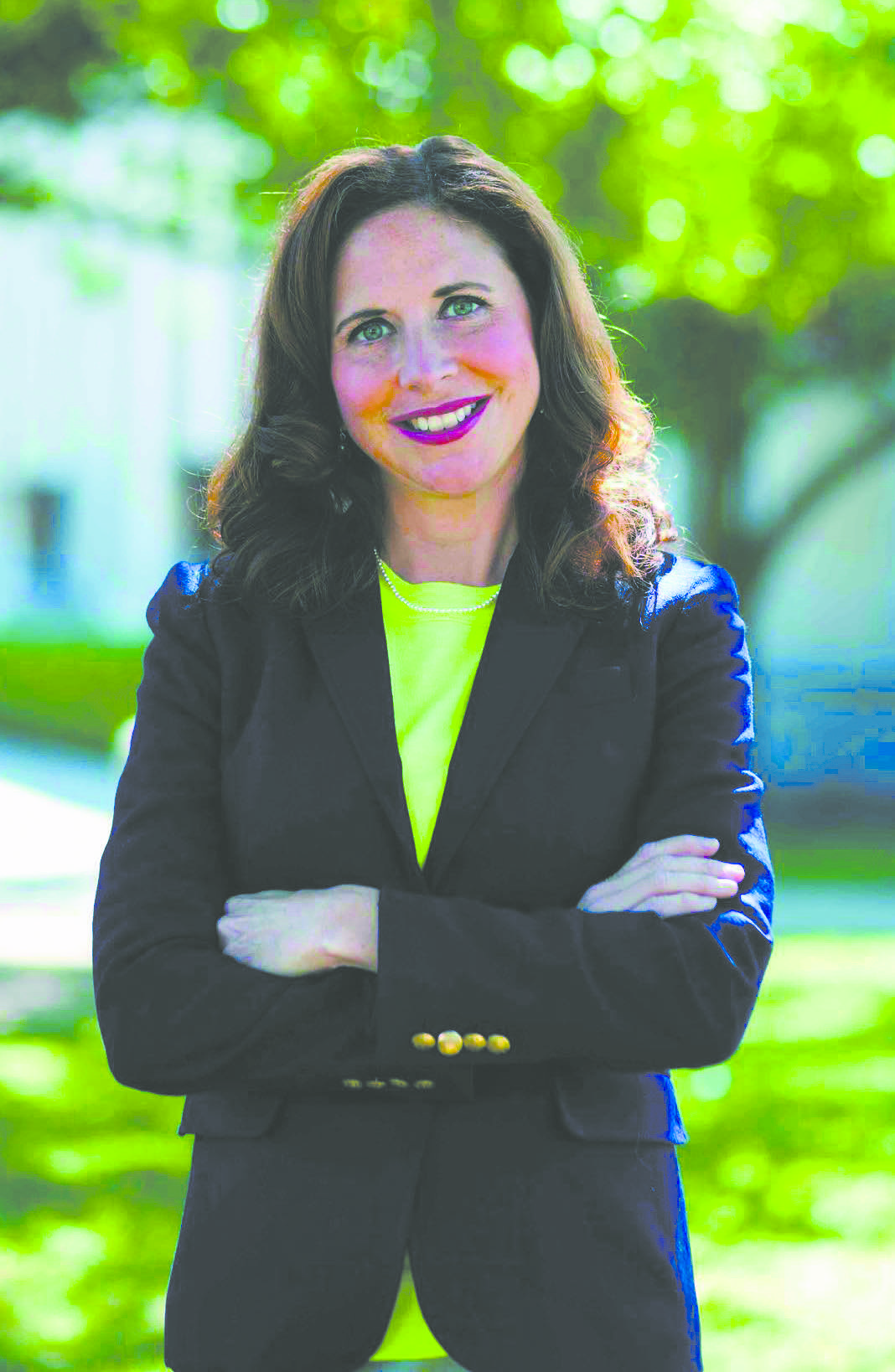
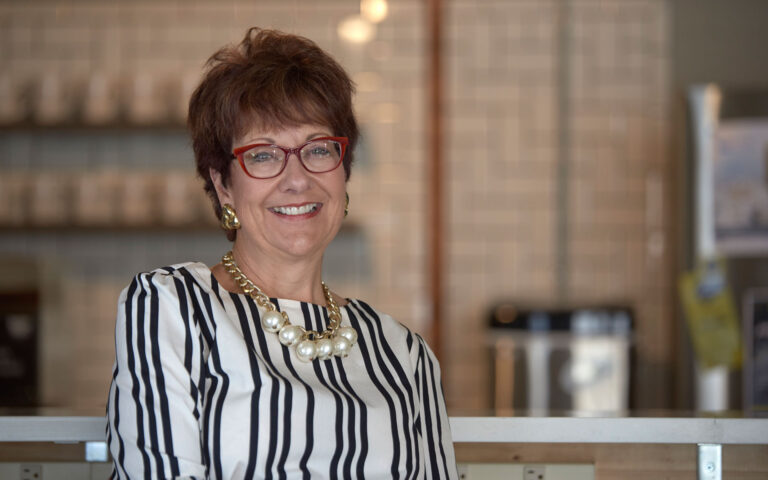
Deb Hallberg’s welcoming personality and signature red-framed glasses are what many people notice first. The multifaceted business professional, who has worked in the legal field for decades, has yet another coveted skill — that of being a great connector. Hallberg currently serves as business development manager for Barnes & Thornburg LLP in Indianapolis, and when she isn’t handling things for the firm, she can be found leading and  serving in a number of professional and civic organizations, such as the Business Ownership Initiative, Indiana Bourbon Women, National Association of Professional Women and the Central Indiana Women’s Business Center, to name a few. In 2015, she was inducted into the 2015-16 VIP Woman of the Year Circle, and in 2012 she was named one of Indianapolis’ Top 50 Business Connectors by the US Small Business Conference.

Indiana Minority Business Magazine recently sat down with Hallberg to discuss her unique sense of style, personal career path and advice for young female professionals.

IMBM: You are a woman working in what appears to be a pretty strait-laced professional environment, yet you still have touches of creativity to your look. How did you develop your own sense of personal style? 

Hallberg: I grew up in a white-collar family. My dad was a bank president, so it was always known that you had to dress a certain way, and I’ve worked with lawyers my entire working career. The men all wore suits, the women wore suits and dresses, so there was an expectation. As I advanced in my career dealing with white-collar professionals … if you wanted to have a seat at that table and be taken seriously, part of it was dressing the part.

Clearly, dressing the part is an integral piece to your work today. How would you describe the quintessential Deb look?

Everything (in my wardrobe) goes together, everything matches or blends. I might wear a statement bracelet, necklace or earrings, but everything doesn’t have to be “matchy-matchy.” I own one suit, and everything else is separates. I do not want to wear a conservative lawyer-like look every day; I want it to be more fun-looking but still professional so that if last minute I’m asked to go to lunch with an attorney and a client, I’m dressed appropriately.

You have worked in the legal field for several years. How did you come into this particular career and how has your professional journey progressed?

When I was in college, I was unsure of what I wanted to do, so I took some psychological tests to see what direction I should go in. Some friends of my parents lived across the street from a lawyer who was a partner at a law firm; I met him on a Saturday afternoon and had an interview in his home that day. There was no drug testing or typing involved; I just sat and we talked, and I started the following Monday. The firm was Locke Reynolds (now Frost Brown Todd). I worked there for three years, and it was a small firm. I decided I needed a change, so I came to Barnes & Thornburg and stayed for six years then left when one of the partners left to do his own thing. I worked with him off and on for 18 years, and he also was a manager/partner of the Southern Cross Club resort in the Cayman Islands. I never went, but I was telling everyone how awesome this place was and that was fun, talking to people all over the world who wanted to go there on vacation. Then I left and went to Merchants National Bank (now PNC) and managed their legal department for a few years. I left there and went to a small law firm, and then their corporate department came here to Barnes & Thornburg. I didn’t want to come back, so I went to work for a small startup for nine months, and it wasn’t a good fit. Then I came back to Barnes & Thornburg and have been back for 14 years. It was a really good move on my part to come back. In working with all the attorneys and all the people that I’ve met, I was able to meet some really innovative shakers and movers for this city, really influential people. Over 40 years, I’ve been able to develop a really awesome database of contacts, but you have to really work at that.

For some women, navigating the professional world can be daunting. There are some who require a certain amount of stability and may have even grown loyal to their current employer. Would you agree that the process can be challenging? 

Yes. You get comfortable. It’s easy to stay and not make the decision to move on, and women tend to be risk-averse. It’s risky to make that change, and you’re looking at the unknown. You’re comfortable with what you do, you know your job, you do it and then you go home. My job, it’s different every single day and that’s the best part. I’m not coming in and sitting at a desk doing the same thing every day. I get to come in and interact with a lot of cool people and successful women, which I love doing. I don’t know that I can find that somewhere else. I feel like once you find a spot where you’re appreciated and you can make a difference and you’re receiving what you’re giving, then that’s great. But if you’re not being fulfilled, then maybe it’s time to look on the other side of that glass and see what’s out there.

How has mentorship benefited you, and what advice do you have for others on how to properly seek out and approach a mentor?

I had someone just contact me out of the blue, knew my name, checked me out on LinkedIn, stalked me with emails wanting to meet, and I thought, ‘Well, I’ll go ahead and meet her.’ It was a great meeting. She was looking for a mentor and wanted to meet me to see if I would be interested in doing it, so that was kind of different. I’ve had women that I’d known for a few years, they’re in their 30s and they’ll say, ‘Oh Deb, thanks for being my mentor,’ and I’ll think, ‘Oh, I didn’t think of it as being her mentor. It was very flattering that that’s how she thought of me,’ but sometimes I think it just evolves. You meet someone and you make that connection and you like spending time with that person. You enjoy the conversation. I love hearing from young women about what’s going on in their lives and what their work challenges are. If there is any advice or wisdom that I can share or suggestions or introductions, that’s what I love doing. I’ve been working in this area for a very long time, and things have changed drastically for women. It’s a whole new world for young female professionals.

In what ways do you feel the workforce has changed for women, particularly in male-dominated industries?

There’s more respect for women. I think (women are taken) more seriously, and more women have a seat at the table. There are also more women in the workplace now than there were, and there are a lot more successful women. We’re not where we need to be, but we’re getting there. The women are also smarter. Technology has advanced so far. I think women, when they enter the workplace, have far more experience than we did many years ago, so they’re just more savvy about the workplace. There weren’t female mentors when I started. I had male mentors when I started, and that’s not bad, but it was also much later (in my career). I have a couple now, and they’re younger, but I can go to them and they understand what I do and the environment. But then I also have my tribe of females that are my age and a little younger, but they’re all female professionals and we can share different experiences, frustrations and challenges and be open with our advice and critiques.

How important is it to have a support group? 

Everyone should have their own personal board of directors. You don’t want them to all look like you — maybe three to four people, men and women. You maybe don’t share as much of your personal life with them, but they can help you with your professional life.

How has your board/tribe helped you? 

It has helped me in making some decisions about my career path. They have been people that I’ve been able to talk to when I was at a fork in the road just to get some advice; here’s pros and cons, what do you think? Am I being crazy? I have talked to them about different instances that have occurred in my professional life, and they’ve talked me off the ledge a little bit. There have been some very critical moments when the board has made a solid impact on where I am today.

Girl Scouts leader to close chapter on impactful career

0

By Ebony Marie Chappel


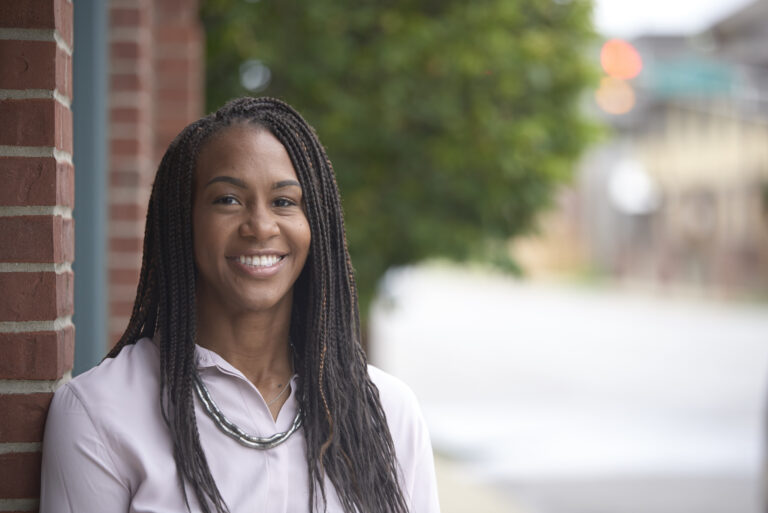
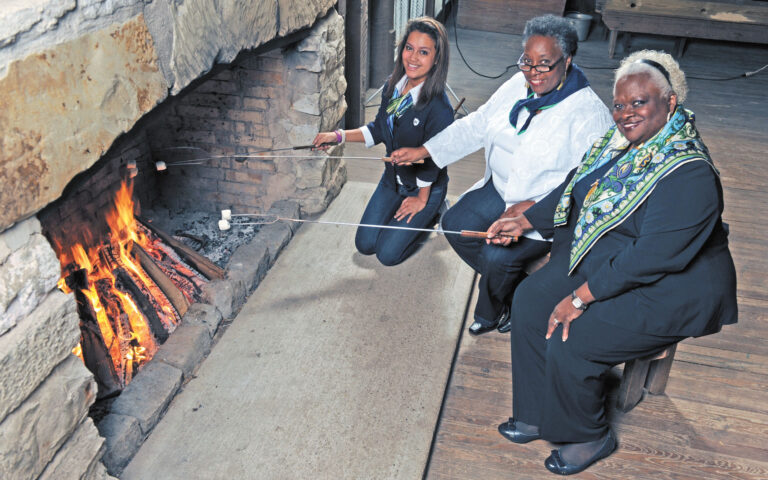
This spring, Deborah Hearn Smith, CEO of Girl Scouts of Central Indiana, announced that she will be retiring at the end of 2017. During her tenure, which spans nearly 50 years, Smith has served in various capacities within the Girl Scouts organization. 

In 1970, Smith earned a Bachelor of Science in political science from Kentucky State University, after which she became a field executive with the Girl Scouts organization. Two years later she was promoted to director of camping services and remained in that role until 1991, when she was named director of facilities and technology. In 2001, she rose to the office of CEO of the Girl Scouts Hoosier Capital Council, and in 2007 when five of the state’s Scouts councils merged, she was named CEO of Girl Scouts of Central Indiana. Her Girl Scouts journey has spanned most of her lifetime, and she is estimated to have impacted the lives of more than 1 million girls. Prior to becoming an executive, she participated as a young scout herself, building lifelong bonds and connections. 

In an interview with the Indianapolis Recorder, Smith said:  “I joined Girl Scouts because my mother wanted me to be engaged in activities that she thought would broaden my horizons and develop me as a whole person. She was dedicated to the fact that as an African-American girl growing up in the ’50s and ’60s, that I not see my horizons as limited. And she found a fit in the core mission in Girl Scouts to help realize her dreams for me.”

Recently, IMBM caught up with Smith to reflect on her career and thoughts on the issues that continue to affect women and girls. 

IMBM: You’ve been with the Girl Scouts nearly your entire life. As a professional, how were you able to continuously reinvent yourself within the organization over the years? 

Smith: I think over time, changes in the world, in Indianapolis, in the lives of girls and in education meant that I had to adapt and the organization needed to adapt or we wouldn’t be relevant. It was really studying trends, demographics and going back to school to continue academic learning as well as practical experience. Within Girl Scouting, we go from child development, to property development, to technology so I’ve been in various areas over the years. I haven’t just done one thing forever. 

With doing those different things, was it your intention to constantly seek out new opportunities or would you attribute your growth to some other factors?

I get bored easily, believe it or not. I’m always seeking to do things differently and to learn new things. It’s just the nature of who I am. I’m also the type of person who likes to see things get started. I’m not going to stay on one track if that track isn’t succeeding. I’m not afraid to take on a new challenge or change things. I feel like you’ve already failed if you’re not doing something new and that’s basically who I am. I’m a learner, I’m a reader and I just enjoy that. I also enjoy people, and even though you may have a situation that looks the same, the people are what makes it different. I’m always trying to meet the needs of the people around me, which means I’m very sensitive to what’s going on. 

What do you feel have been some of your biggest challenges throughout your career?

 I think that it’s a challenge to relate to a broad spectrum of society. Since the mission (of the Girl Scouts) is to serve all girls, it’s critical to understand what parents want for their girls and to understand the values of families as they differ. As much as we would like to make generalizations, families have their own uniqueness. We have to understand that and not try to legislate and rule what everyone needs. As I work with thousands of different people, I’ve had to work very hard to understand their perspectives and goals and not try to impose my goals on them. That’s very challenging, demanding and it can drain you. I may think every girl should go to college, and I may be working with a family that would see success if she just makes it through high school, and I need to help that family be successful. I may want to help her go on to college, but I cannot disavow the family’s values. 

When you look back on the accomplishments you’ve made and the lives you’ve touched through your work, what are some of those moments that make you proud? 

Recently, we had a girls awards breakfast. We had capacity for 1,400 people (at the event) but we were fully booked; we were past that.  When I can look out and see a thousand girls who have achieved the high standards that we set for them, I am really pleased. That number has increased over the last several years. I can look out and know, no matter what the press is saying, the girls of central Indiana are doing well, and any small part I’ve had in that is what I’m most proud of. 

When you look at the state of girls and women today, what do you think is missing? 

I can tell you that my biggest disappointment is that women have yet to grasp their own power and their own leadership. Far too often, women put limits on themselves. They don’t see themselves as leaders; they don’t acknowledge their skills. In this day, I didn’t think we’d still be there. So, a lot of  the work we do is to have mothers and women understand their value, because to impart that onto girls, we have to have it as women, and we don’t  always. That, I find troubling. I also find it troubling that men in our community have not stepped up to the plate at the same level for girls as they have boys. Our girls need our support, and I think as a community, we need to really wrap ourselves around what women and young girls need. It’s more than whether or not they can read in third grade. It’s self-concept and self-perception, a sense of who they are that’s really critical, and that’s being lost in the discussion. 

A great portion of that erasure, maltreatment and neglect can be attributed to sexism and, in the case of women of color, racism. What has been your own personal experience with sexism and racism? 

I’m a Black woman in Indiana…of course! I have definitely been exposed to both. I have to still understand, that when I walk into the room, I walk in as a Black woman. There’s no way not to, and I know that in some circles, that is not viewed as a positive. What we have to teach our girls is that when I enter into the room, I enter knowing that I am capable, I am equal and I can do it.  I don’t walk in there thinking I can’t. Whether or not you think I can is not as critical as the (necessity of) me walking into the room with that confidence. We talk about girls needing courage, character and confidence, and I walk in the room with all three. I know there are places where my gender or my race may not be viewed in a positive way, but I cannot allow that to stop me.


Deb is… Reflections from friends and colleagues

“As a parent of a son with significant disabilities, (Smith) worked to promote the importance of ethnic and cultural diversity and the inclusion of people with disabilities as active, participating members of their communities. Deborah served on the Cultural Inclusion Committee and assisted the Council to develop and promote a Girl Scout badge focusing on disability inclusion for the Hoosier Capital Council.”

Christine Dahlberg, executive director of the Governor’s Council for People with Disabilities 


“It’s very easy for me to say great things about Deb Hearn Smith because I’ve known her for at least 22 years, and she’s always been a great mentor. She’s a thought leader and a great problem solver. She shares her knowledge and her resources with you. She shares her thoughts about things with you and she does it in a very thoughtful, respectful way. I think she has been a great mom, friend and member of the Circle City Links as well as a leader in the community.”

Debra Simmons Wilson, president of Circle City Chapter of the Links, Inc.


“Deb’s passion for the Indiana Deaf Camp is a direct result of her own deaf son, Jason, having come to our camp for many years.  Her experience with (Girl Scouts) made her an exceptionally valuable asset to our board as she guided us through policies and procedures she was totally familiar with. Deb’s knowledge, compassion, diplomacy and her (care) for all other people are just a few in a long list of attributes.”

Barbi Stenacker, executive director of the Indiana Deaf Camp Foundation


“Over the years, I have been so impressed with her knowledge base. What she knows about the needs of our community, particularly for women and girls, just amazes me. Due to her, Girl Scouts is (very connected) to our funders and female leaders in Central Indiana and across the state. When I go with her to meetings in Nashville, I’m impressed at how well respected she is by her colleagues across the country.” 

Diana Sullivan, board chair of the Girl Scouts of Central Indiana

10 Free Online Resources for Companies Large and Small

0

By Keshia McEntire

Whether you are planning a new business, looking to improve an established company’s operations or working out the first steps of becoming an entrepreneur, keeping a company running smoothly can often become overwhelming. Thankfully, the internet is full of templates, tools, applications and resources to help your business thrive. Simplify things by taking advantage of these free online resources and start building the business you’ve always dreamed of.


FOR SMALL BUSINESSES:

HootsuiteHootsuite

In today’s world, having an active social media presence is key to building your brand, gaining new customers and keeping your current client base engaged. However, remembering to update a plethora of social media accounts daily can fall by the wayside when busy business owners are focused on handling the day-to-day operations of their company. Hootsuite is a tool that makes social media management quick and easy, allowing users to post to and monitor multiple social accounts from one dashboard and auto-schedule updates. Hootsuite also tracks social growth and engagement so users can learn what content their audience responds to the most. The free plan allows users to manage up to three social media profiles in one place, all with one password. Visit hootsuite.com for more information.


Canva

All business owners want professionally designed logos and graphics for their social media accounts and marketing materials, but many startup companies may not have the capital to hire a designer right away. Get creative and design your own high-quality graphics with Canva, a free online design program that uses pre-formatted templates to help users create everything from infographics, posters and menus to Facebook banners and Instagram posts. Visit canva.com to get started.


SCORE templates and tools

SCORE, a nonprofit working to aid small businesses and entrepreneurs, has business planning, finance, sales, marketing and management templates and guides available online. Visitors can also request to chat with mentors online, over the phone or in person for free. Visit indianapolis.score.org for more information.


Yelp

Twenty-six million people visit Yelp every month to rant, rave and review the efforts of local service providers. Business owners can see what customers are saying about them and get in on the conversation. Use Yelp to share useful information regarding your services and politely engage with any critics you might have. Visit yelp.com to get started.

FOR BIGGER BUSINESSES:

Slack

A resource that promises its users fewer meetings and emails is sure to gain a lot of attention, and this tool has lived up to its reputation and earned rave reviews from pcmag.com and the New York Times. Slack is a group communication tool that allows teams to set up channels to have conversations, cutting down on unneeded emails and aiding in collaboration among large numbers of people. Files, images, PDFs, documents and spreadsheets can be dropped right into Slack and shared with other users, and previous conversations are searchable so users can easily find information. Slack also supports audio and video chats. Sign up at slack.com.


Google Drive

Google Drive is basically a mobile Microsoft Office suite that is accessible online from any smartphone, tablet or computer. Users can invite colleagues to view, download and collaborate on files — no email addresses or compatible software required. In addition, Drive keeps all of your paperwork in order; snap photos of paper documents and Drive will store them as a PDF, or search keywords between multiple documents to find similar items. Drive has 15 gigabytes of free storage space and more available for a nominal fee. Learn more at google.com/drive.


Expensify

Expensify

Keeping track of your company’s expenses can be a pain. With Expensify, reports are finished with one tap. Scan your receipt and Expensify will code and report the expense for you before finally auto-submitting it for approval. The basic plan, which includes 10 SmartScans per month, is free. Visit use.expensify.com for more information.


FOR ENTREPRENEURS:

YouCanBook.me

Entrepreneurs are eliminating back and forth negotiations by sharing their schedules and rates with clients and letting customers book directly into their calendar. This is perfect for stylists, mechanics, consultants and other appointment-based or pay-by-the-hour entrepreneurs. Users can post their booking grid to their Facebook page, personal website or email. The tool will integrate with their Google, Microsoft or iCloud calendar to help them keep track of their schedule, while sending clients reminders to make sure they show up on time. Get started by visiting YouCanBook.me.


Kickstarter

Kickstarter helps artists, musicians, filmmakers, entrepreneurs, designers and other creators find the resources they need to get their vision off the ground. Startups can launch a funding campaign with Kickstarter to collect donations toward the business. This service is free, but Kickstarter will take a small percentage if your campaign is fully funded. Start your fundraiser at Kickstarter.com.


Google_AnalyticsGoogle Analytics

Track the impact of your marketing efforts with Google Analytics, a free analytics tool that tracks website traffic and helps users learn more about their audience. Once a visitor starts browsing your website, Google Analytics will examine their actions. The tool has a free option for individuals, startups and small businesses, and moderate pricing for larger companies. Sign up at analytics.google.com.

Welcome back, Mom! 5 Tips for Getting Back in Step After Maternity Leave

0

By Miranda Miller

IF YOU’RE RETURNING TO WORK after maternity leave and wondering how you’ll achieve the elusive work-life balance you’ve heard so much about, stop putting unnecessary pressure on yourself.

“I’ve come to realize that there is no such thing (as) work-life balance,” said Jive Software CEO Elisa Steele. “It wasn’t until I gave up trying to balance my life that I figured it all out. I developed a new state of mind, to simply do what feels right at the right time. I began answering this question honestly: ‘What is most important for me to do at this time?’”

That being said, it still takes a lot of confidence, support and motivation for a new mom to go back to work. Valeh Nazemoff, a competitive ballroom dancer and CEO of a business consulting company whose clients include the White House and Sony, said a successful return is “a dance of sorts.” The Huffington Post columnist and author of “The Dance of the Business Mind: Strategies to Thrive Anywhere, from the Ballroom to the Boardroom” offered the following five tips to help make your transition as fluid as your favorite “Dancing with the Stars” performance.


1. FOCUS ON YOUR FOUNDATION

Regardless of how long you’ve been doing your job, your first day back can be bewildering after a vacation, let alone a weeks- or months-long maternity leave. Nazemoff said she starts dance routines at her feet and works her way up to her head.

“Even if I am working on a familiar routine, it’s crucial to always circle back to the foundation,” she said.

Consider how you can apply that to your profession.


2. COMMUNICATE WITH COWORKERS

Communication is crucial, Nazemoff said. Just as dancers communicate via gestures, to avoid a misstep, you want to note body language — both others’ and your own. Competitive dancers are judged on poise, presentation and posture; you will be, too. Paying attention to how you carry yourself and sitting up straight rather than slouching during meetings will help increase confidence in your abilities.


3. SEE YOURSELF AS A SUCCESS

Before you go back to work, think about the image and qualities you want to project.

“The persona you create for yourself can have a very powerful impact on how the judges (or your colleagues and superiors) see you,” she said.

Nazemoff cited Shakira as a role model due to the singer’s confidence and independence. Once you have a goal in mind, work toward it but remember that a minor tweak may be all you need.


4. STAY ALERT TO STIMULI

Failing to notice an uneven floor or broken shoe can cause a dancer to fall, Nazemoff said. Likewise, allowing your brain to shift into autopilot at work could lead to your own downfall. Companies are constantly innovating to stay ahead of competitors, so things may have changed during your absence. Tune in to your environment and adapt accordingly.


5. MAKE THE MOST OF YOUR MISTAKES

Slavik Kryklyvyy, one of the professional dancers that Nazemoff interviewed for her book, said missteps have been added to choreography.

“You say, ‘Oh, I can make this special. I can develop something from it,’” he said.

Similarly, Post-it Notes, ink-jet printers and potato chips were all created by mistake on the job, so who knows how your error could profit your employer in the long run.

Kevin Deutsch, a business program manager who started taking dance lessons two years ago, told Nazemoff that watching videos of his performances helped him improve, so he now seeks feedback at work.

“(This) also helped him come off as more human to his coworkers,” Nazemoff said.

Catch Her if You Can

0

By Lauren Caggiano 


FOLLOWING A DEMANDING CAREER, it’s not uncommon for professional athletes to take a hiatus and retreat from the public eye. But Tamika Catchings, formerly of the WNBA’s Indiana Fever, is far from common in so many ways.

Described as Indiana’s “do-everything” forward, she completed 15 seasons in the WNBA. This distinction is noteworthy, as Catchings is the league’s only player to spend such a lengthy career with just one franchise.

A consummate go-getter, the 37-year-old Catchings proves that a long stint in professional sports can be only just the beginning. In fact, it can be argued that her greatest impact has been made off the court. She is more engaged with her community than ever and determined to improve the lives of everyone her work touches.


A CAREER FOR THE AGES

Equal parts athlete, philanthropist and businesswoman, Catchings is proof that you can do it all and remain down to earth. Catchings says she is the person she is today because of the people who pushed her beyond her comfort zone.

The 2001 graduate of the University of Tennessee retired from the Indiana Fever following the 2016 season, leaving an unrivaled legacy behind her. Catchings said her leave was calculated on her part and well executed to ensure the team was positioned for success after her departure.

“My last year (with the Indiana Fever) was about focusing on my teammates and ensuring the team was led well,” she said. “This helped with relieving some of my responsibilities.”

Although it was her gain, her retirement was a loss for the team. Catchings is considered one of the greatest women ever to play the game. She entered the 2016 WNBA season as the league’s No. 2 scorer. She was named the WNBA’s Defensive Player of the Year in 2012, receiving the award an unprecedented five times — in 2005, 2006, 2009, 2010 and 2012. In 2011, she was chosen by fans as one of the WNBA’s Top 15 Players of All Time.

Despite these accolades, Catchings remains humble and grounded. Her faith has long been at the forefront, and she’s very open about sharing her testimony.

“When I look back at my life, and where I am now, my faith is what has carried me through,” she said. “It’s crazy, because I don’t look at it as it’s something separate, but rather that it’s intertwined in my being and everything that I am and represent. My faith is what continues to make me stronger and keep me focused through my walk.”


LIFE AFTER BASKETBALL

Over the years, Catchings has been laser-focused on her athletic career while still allowing room for other philanthropic pursuits. The media and general public have taken notice. She was given the very first ESPN Humanitarian Award in 2015. Since 2004, her Catch The Stars Foundation has been a venue for investing in the community. This charitable organization provides basketball camps, fitness clinics, mentoring and literacy programs for underprivileged children in central Indiana to help them become successful in sports and academics. That combination of athletics and scholarship is important to Catchings, who is a former college student-athlete herself.

In May, the Foundation hosted its annual student-athlete dinner, an occasion to recognize and honor Indianapolis area high school students who excel in academics, make a difference in the community and participate in athletics. The purpose of this scholarship is to assist scholar-athletes in attaining their higher educational goals.

Catchings said she appreciates the opportunity to honor hardworking individuals who aren’t necessarily “all-star” players, but are equally dedicated.

“It’s the players that bring a lot of value to the team, but are not always recognized,” she said.

The scholarship program allows her to stay engaged with the sport, as does her new role as an analyst on SEC Network.

“I am thrilled for this opportunity to work with so many talented broadcasters at ESPN and to learn from each one of them,” Catchings said in an ESPN statement. “As a young girl, I never imagined I would be put in this position. I’m excited to embark on another journey in sports.”

Catchings said this position has reinforced the importance of tape. It’s important to know the ins and outs of the game and each player’s style, she said.

It seems she just can’t get away from the sport. In April, it was announced that she had been named Director of Player Programs and Franchise Development with Pacers Sports & Entertainment. Catchings’ position will include participation with all three PS&E basketball franchises — the Indiana Pacers, the Indiana Fever and the Fort Wayne Mad Ants. According to a statement from the Pacers, “she will assist with community outreach programs for all three franchises and will work one-on-one with individual players on speaking and presentation skills and the development of athlete foundations or other business interests. A longtime president of the WNBA player’s association, Catchings also will assist in the planning and execution of league, NBAPA and WNBAPA meetings, and other team and player programming.”

IMBM0107_1_


A NEW VENTURE

Catchings said she has enjoyed her post-retirement work so far, despite dividing her attention among several ventures. Most recently, she purchased Tea’s Me Cafe in Indianapolis. How she came to purchase the establishment is a story in and of itself. Catchings grew up drinking tea and had been a longtime Tea’s Me customer since the place opened a decade ago, but she never expected she’d be behind the counter someday.

The dynamics changed when she learned that previous owners Wayne and Stacey Ashford were planning to close the cafe to move south. Catchings was determined not to let that happen. The parties worked out an agreement, and she took over ownership in February.

Catchings said the cafe, which serves breakfast and lunch alongside its tea selections, offers healthy choices and boasts a “diverse clientele all around.” She said she hopes to be able to bring Tea’s Me’s appeal to a broader audience through franchising in the future. “I am really trying to get to that point,” she said.

She also envisions employing high school students to teach them about the entrepreneurial side of business. More than anything, she said she is honored to keep Wayne’s legacy alive in serving customers the quality food they have grown to know and love over the years. While a lot has remained the same, she has made some changes to better cater to customers. For example, she has added a few items to the menu to keep things fresh, and she has extended business hours.

Owning a restaurant can be demanding, but Catchings has seemed to strike a balance. When asked about how she keeps it all together, she said, “It kind of takes care of itself.” Having great people in the right roles is essential, she added. For example, her sister handles the day-to-day work for the foundation, which helps Catchings focus on her other commitments.

Whether playing sports, engaging in charity work or running a business, Catchings has advice for motivated young women looking to make it big.

“Really, (it’s about) just being open to different opportunities that come your way,” she said. “I wouldn’t be where I am now if I hadn’t stepped outside of my comfort zone.” 

IMBM0050


Inspiration inventory

Tamika Catchings shares what inspires her:

  1. God 
  2. My family
  3. Catch the Stars Foundation
  4. Tea’s Me Cafe Indy
  5. Being a role model


Tamika’s Top 10

Here’s a collection of Tamika Catchings’ top 10 favorite things and places in Indiana:

  1. Anywhere my family is
  2. Banker’s Life Fieldhouse
  3. Diverse events  
  4. Downtown canal walk
  5. My home
  6. Fellow Hoosiers
  7. Innovation happening across the state
  8. New Life Worship Center
  9. Tea’s Me Cafe Indy
  10. The Slippery Noodle


Resources for women in business

Women business owners don’t have to go at it alone. Here are a five resources dedicated to supporting female entrepreneurs in central Indiana:


Central Indiana

Women’s Business Center

111 Monument Circle, Suite 1950

Indianapolis, IN 46204
(317) 917-3266

businessownership.org


Minority and Women’s

Business Enterprises Division
402 W. Washington St., Room W479
Indianapolis, IN 46204

(317) 232-3061

in.gov/idoa/mwbe


NAWBO Indianapolis

101 W. Ohio St., Suite 1580
Indianapolis, IN 46204

(317) 608-0250

nawboindy.org


Network of Women in Business

15421 Harmon Place
Noblesville, IN 46060

nowib.com

Third Quarter 2017: Boardroom Briefs

0

Woman-owned business constructing new HQ, adding hundreds of Hoosier jobs

Knowledge Services, an information technology and professional services company, plans to build new headquarters in Hamilton County and create up to 400 new jobs by 2021. The woman-owned company, which provides cloud software and services to complex organizations, will invest more than $17 million to build and equip a new 80,000-square-foot headquarters at 11001 USA Parkway in Fishers. Knowledge Services plans to break ground on the new office space in 2018, with plans to move into the new space in 2019. This is Knowledge Services’ fourth expansion announcement in five years. Knowledge Services currently employs 1,200 Hoosiers and more than 1,500 professionals across the United States.


National Resources Commission approves two new Indiana nature preserves

Indiana is home to two new nature preserves, raising the number of state-designated and protected sites to 279.The two new nature preserves, both in Owen County in the Shawnee Hills Natural Region, are Section Nine Seep Springs and Pleasant Grove, which are both owned and operated by the DNR Division of Forestry. Section Nine Seep Springs is a 46.77-acre property with a combination of seep spring, mesic-upland forest and stream-natural community types. Pleasant Grove includes 57.7 acres in Morgan Township. It contains a mosaic of mesic-upland forest, sandstone cliff, seep spring and stream-natural community types.


Indianapolis Ballet to launch professional ballet company

The Indianapolis Ballet Inc. announced the launch of the Moving Forward Capital Campaign toward the establishment of a professional ballet company for Indianapolis. The goal of the capital campaign is to raise $1.2 million by the end of 2017. The professional company will be named Indianapolis Ballet and debut at the Toby Theatre at the Indianapolis Museum of Art (IMA) in early 2018. The Indianapolis School of Ballet has been recognized as the premier destination for classical ballet training, main-stage performances and community outreach in Indianapolis since its founding in 2006. The Indianapolis Ballet debut season is scheduled to launch in early 2018 with two weeklong residencies confirmed at the Toby Theatre at the IMA. Auditions will be open to elite-level dancers from across the country. Dates and locations for company auditions will be posted at indyballet.org.


miniTourism council awards grants across state

The Indiana Office of Tourism Development awarded six grants to various communities throughout the state. Two grants were awarded through their Destination Development Grant Program to communities committed to making their areas desirable areas to visit and live, and four were through the Marketing Asset Grant initiative, a competitive matching grant program designed to assist organizations with marketing communication and promotion. The recipients of the Destination Development Grant were: Pike County Parks and Recreation Department (awarded $228,900 in matching funds to build an event center in Prides Creek Park), Indiana State Museum and Historic Sites Corporation (awarded $107,000 to develop an exhibition space at the Whitewater Canal Historic site). The recipients of the Marketing Asset Grant were Museum of Miniature Houses & Other Collections Inc. (awarded $7,386 to create a mobile responsive website), Fayette County (received $9,416 to install new wayfinding signage in downtown Connersville), Blackford County Economic Development (awarded $19,850 to fund the creation of marketing collateral and aligns with several revitalization projects underway in the county) and Renew Cannelton Inc. (awarded $20,000 to install new historic gateway signage).


NAWBO announces support for bipartisan congressional caucus

The National Association of Women Business Owners announced support for the recently created Congressional Microbusiness Caucus. The bipartisan caucus was formed in the U.S. House of Representatives by Reps. Pat Tiberi, R-Ohio, Tim Ryan, D-Ohio, Anna Eshoo, D-Calif., and Barbara Comstock, R-Va. The Small Business Administration classifies microbusinesses as firms with one to nine employees. There are 3.7 million microbusinesses in the United States, providing 10.8 percent of private-sector jobs and making up 75.3 percent of all private-sector employers.


Governor recognizes Hoosier businesses

Gov. Eric J. Holcomb honored 34 Indiana companies with the Governor’s Century or Half Century Business Award, recognizing each company for its longevity and service to its employees, community and the state. The Governor’s Century and Half Century Business Awards honor Hoosier businesses that have remained in operation for a minimum of 100 or 50 consecutive years and have also demonstrated a commitment to community service. More than 1,400 companies from across the state have been recognized during the 26-year history of the award. Some of the honorees were Arni’s restaurant, Browning Day Mullins Dierdorf, Cassady Electric, DeMotte State Bank and Pacers Sports and Entertainment.


Whitestown fastest growing for 6th consecutive year

According to 2016 census data, Whitestown, in Boone County, was the state’s fastest-growing community with a growth rate of 9.2 percent. Last year  marks the sixth consecutive year that Whitestown has ranked as the state’s fastest-growing locale. During that time, Whitestown’s population has more than doubled from 3,147 in 2010 to 7,814 in 2016.


Purdue University to offer courses for marketing professionals

Purdue’s Center for Food and Agricultural Business will offer two programs for food and agricultural marketing professionals this year. Market Planning for Agri-Marketers, which runs from July 24-26, targets those responsible for implementing marketing activities. Strategic Agri-Marketing, which runs from Oct. 10-12, is designed for directors and managers who develop and lead marketing strategies. Presenters for both programs are Scott Downey, Purdue associate professor and associate center director; William Secor, Purdue clinical assistant professor; and Justin Funk of Canada’s Agri Studies Inc. To register and learn more, visit agribusiness.purdue.edu.


elanco-animal-health

Elanco Animal Health, a division of Eli Lilly and Company, received a $2.86 million grant from the Bill & Melinda Gates Foundation to provide sustainable development solutions to address food insecurity in East African countries. According to the Food and Agriculture Organization (FAO), 32 percent of the people in East Africa are undernourished and 40 percent of those living in sub-Saharan Africa are living on less than $1.25 per day. In East Africa, 18 percent of children are underweight. Through this collaboration, Elanco intends to apply the learnings from East Africa to other geographies and continue its leadership in food security efforts.


Musk brother to open eateries in Indianapolis

Kimbal Musk, entrepreneur, venture capitalist and co-founder of food nonprofit The Kitchen Community, is set to open two restaurants in greater Indianapolis. His company, The Kitchen Restaurant Group, will open its latest Next Door restaurant inside the empty Double 8 Foods building located in Meridian-Kessler. Musk plans to also open a farm-to-table restaurant, Hedge Row, on Massachusetts Avenue.


Indy 500 named Sports Event of the Year  

The SportsBusiness Journal and SportsBusiness Daily recognized the “Greatest Spectacle In Racing” during the annual Sports Business Awards ceremony held this spring in New York City. The 100th running of the 500 was named the 2016 Event of the Year, beating out the World Series, Ryder Cup and World Cup of Hockey, among others, for the title.

The Startup Ladies: Women entrepreneurs connect through local organization

0


By Terri Horvath

Testing phase? Done. Building phase? Check. Now, The Startup Ladies is moving into the next evolution, which is the membership model. This summer, founder and CEO Kristen Cooper will announce membership fees for entrepreneurs looking to the networking group for the connections to help start or build their own companies. She began working toward this goal in 2014. Since then, The Startup Ladies has grown into a diverse network of women-owned businesses in Indiana.

Kristen Cooper copy

Cooper founded the organization to “identify, educate, connect and increase investment in women entrepreneurs starting up and scaling business.” The company functions as a connecting agency between experienced executives and beginning entrepreneurs.

She accomplishes her goal through monthly meetings and bi-monthly Startup Study Halls. Each event provides the means to learn and network. Many are held in the Fishers area where Cooper has her headquarters. The meetings tend to emphasize relationship building, while the study halls primarily focus on the means for growing. Cooper emphasizes that novices along with veterans come to enhance their network, knowledge and skills. This also applies to the investors.

“We want to grow the opportunities that the average Jane and Joe have to become investors, and to connect these funders to startup owners,” she said. “This includes more experienced business owners who want to understand how to scale up their companies.”

Like many entrepreneurs, Cooper built her fledgling group while still holding down a full-time job with a different company. Her effort was rewarded when she was named one of the Indianapolis Business Journal’s Women of Influence in 2016 for her work as founder of The Startup Ladies and vice president of operations and corporate development at Sticksnleaves.

Cooper started her professional journey in Bethlehem, Pennsylvania. She received her degree in communications from Penn State. Job opportunities cropped up at the University of California, Santa Barbara, where she served as director of annual giving and director of development. A move to Indiana brought other opportunities with Butler University, Riverview Hospital Foundation and the Indianapolis Chamber of Commerce.

Entrepreneurship beckoned in 2014 when Cooper developed her own software, which ultimately didn’t make it to the launch pad. But that knowledge was applied successfully at Sticksnleaves, which helps develop products primarily for entrepreneurs and established companies using high technology.

The idea for The Startup Ladies came when she ran into another female entrepreneur in the ladies room at Launch Fishers. A conversation ensued, ending with the idea for further discussion with other women in business. She found that women wanted and needed information on starting and building their companies. Plus, they shared similar challenges, such as working two jobs and raising a family.

Any issue related to business is fair game at The Startup Ladies. Cooper emphasized she wants members to know the group’s events are open and safe for both women and men. She sees diversity as a competitive advantage in all businesses.

“One of my goals is to grow the number of diverse women in the organization,” said Cooper. “We want them to know that there is safe space and a community of people who can relate to the same problems and to get investors connected to them.”

The first step is a visit to The Startup Ladies. Find more at thestartupladies.org.


Startup features companies that have been in operation for one to three years. To have your company considered for a feature, please email newsroom@indyrecorder.com with the name of your company, contact information, a short description of your product or service and a link to your website.

Third Quarter 2017: Up The Ladder

0

Greg Wilson copyGov. Eric J. Holcomb appointed Greg Wilson executive director of the Indiana Civil Rights Commission (ICRC). In this role, Wilson will oversee the commission that enforces civil rights laws, investigates discrimination complaints and educates organizations, companies, landlords, associations and individuals on their rights and responsibilities under Indiana civil rights laws. Wilson will also lead the team overseeing Indiana’s five cultural commissions including the Dr. Martin Luther King Jr. Indiana Holiday Commission, the Indiana Commission for Hispanic/Latino Affairs, the Indiana Commission for Women, the Indiana Commission for the Social Status of Black Males and the Indiana Native American/Indiana Affairs Commission. Wilson is an Indianapolis native and served for eight years in the U.S. Army. He is a partner and volunteer for the Indianapolis Ten Point Coalition and previously served as board chairman for Indiana Black Expo Inc. Wilson currently serves as a board member for Visit Indy and the International Advisory Board and is chairman of the Governor’s Commission on Minorities and Women’s Business Enterprises. Indiana Minority Business Magazine honored Wilson in 2011 with a Champion of Diversity award, and in 2013 the National Association of Women Business Owners named Wilson an Indianapolis Choice Visionary award winner for his work with women-owned businesses.


Colleen Derr copyIndiana Wesleyan University announced Colleen Derr has been named the new president of Wesley Seminary at Indiana Wesleyan University. Derr, who has been part of Wesley Seminary since 2011, will begin her new role in July. Since joining Wesley Seminary, Derr has served as assistant dean and an associate professor. In addition to chairing the Seminary faculty, she has served as a member of the University Faculty Senate and has been active on numerous university committees. She is currently part of the team developing a Doctor of Ministry in Formation, which is scheduled to launch in the fall of 2018, and she was an integral part of developing the Master of Arts in Children, Youth and Family Ministry. Derr has a Master of Arts in Ministry Leadership from Indiana Wesleyan University and a doctorate in education in Christian Education Leadership from Regent University.


The Northeast Indiana Regional Partnership announced that marketing and communications professional Kate Virag is joining the executive staff to serve as vice president of marketing and strategic communications. Kate Virag' copyIn this role, Virag will be responsible for planning, overseeing and executing all marketing and communications efforts for the Regional Partnership and acts as the primary media contact for the organization. She joins the Regional Partnership with direct experience in marketing, communications and public relations in retail and fashion, most recently with Matilda Jane Clothing and Vera Bradley.


Traci Lutton copyThe Muncie-Delaware County Economic Development Alliance and the boards of directors of Delaware Advancement Corporation and the Muncie-Delaware County Chamber of Commerce announced that Traci Lutton has been named vice president of economic development. Lutton has been serving in the role on an interim basis since October 2016, replacing Terry Murphy, who retired in July 2016. Lutton, who has more than a decade of experience in economic development, formerly served as assistant director of business development for the alliance. Lutton graduated from Ball State University in 2005 with a bachelor’s degree in digital communication and media/multimedia. In 2008, she graduated from the University of Oklahoma’s Economic Development Institute.


Christina Hale copyThe board of Leadership Indianapolis announced that former state representative and Kiwanis executive Christina Hale has been named president and CEO of Leadership Indianapolis. Hale replaces Linda Kirby, who was involved with the organization for over a decade. Hale served for four years as a state representative from Indianapolis and was a candidate for lieutenant governor in 2016. During her election campaign in 2014, the Indiana Chamber of Commerce called her “one of the most active, thoughtful and determined state legislators.” In selecting Hale as his running mate, gubernatorial candidate John Gregg cited her “record of reaching across the aisle.” Before entering the political arena, she spent eight years with Kiwanis International, serving as director of executive and board services, lead area director for Europe and Asia Pacific, and chief communications officer. A Purdue University graduate, Hale began her career as a newspaper reporter in northern Indiana then worked in state government for the Indiana Department of Commerce and the governor’s office. Hale serves on the boards of Indiana Humanities, the Indiana Commission on Latino Affairs, the Domestic Violence Network, the Indiana Coalition to End Sexual Assault, Heartland Film and Film Indy.


The Indiana State Police recently promoted Paulita Thomason to the position of Indianapolis Regional Laboratory Manager. Pau;ita Thomason copyThomason graduated from Rockcastle County High School in Mount Vernon, Kentucky, in 1989. She attended Eastern Kentucky University and earned a Bachelor of Science in Forensic Science in 1994. She began her career with the Indiana State Police in 1995 in the Trace Evidence Unit and performed casework in Fire Debris and Fiber Analysis. In 1997, she transferred into the Biology Unit where she worked Serology, DNA and Bloodstain Pattern Interpretation cases until her recent promotion. Thomason now has oversight for maintaining the evidence system within the Laboratory Division, which includes evidence submissions from law enforcement agencies in central Indiana. She also has managerial responsibility for the evidence clerks and photo technicians who are assigned to the laboratory.


Susana Duarte de Suarez copyThe Indiana Family and Social Services Administration named Susana Suarez director of development for the Indiana Neuro-Diagnostic Institute and Advanced Treatment Center (NDI). The NDI is under construction on the campus of Community East Hospital in Indianapolis and is the marquee project for the State’s effort to provide cutting-edge mental health services to qualifying Hoosiers. Suarez currently serves as the executive director of communication strategies for Gov. Eric J. Holcomb. Suarez serves as councilwoman at-large and is past president of the Zionsville Town Council with additional leadership roles on the Zionsville Safety Board, Board of Police Commissioners and the Indiana Commission for Higher Education. While based in Washington, D.C., early in her career, Suarez was appointed by President George W. Bush to serve in various positions, including assistant director for regional operations for the Federal Emergency Management Agency and chief compliance officer for The Peace Corps. She served as executive director of the Hispanic International Trade Council and deputy director for political coalitions with the Republican National Committee. Prior to her role with Gov. Holcomb, Suarez was the president and CEO of Media Moon Communications, which advised clients around the globe. She earned her degree from the Ohio State University and is a graduate of the senior management program at the International Institute for Management Development in Lausanne, Switzerland.


Franklin College has named Evelyn Buchanan its new vice president for development and alumni engagement on the president’s cabinet. Evelyn Buchanan copyWith more than 20 years of fundraising experience, Buchanan comes to Franklin from Carthage College in Kenosha, Wisconsin, where she has served as the vice president for institutional advancement since 2015. She has previously worked for Colgate University, State University of New York (SUNY) Empire State College, the Culinary Institute of America and the Institute of Ecosystem Studies, all in New York, and Franklin Pierce University in New Hampshire. She also has experience as a development consultant. She earned a Bachelor of Arts from SUNY Empire State College and a Master of Science in management — nonprofit leadership from New England College.


Briann January copyArizona State University head women’s basketball coach Charli Turner Thorne announced that Indiana Fever guard Briann January has been named assistant coach at ASU. January, who helped lead ASU to 104 wins — the most in program history in a four-year span — while playing for the Sun Devils, will continue her professional playing career with Indiana. January, who last year was named to the Pac-12 Women’s Basketball All-Century Team, concluded her Sun Devil playing career at or near the top of several ASU career statistical categories including assists (first), free throw percentage (first), steals (second) and free throws (second), among others. In 2014, January was named to the East All-Star Team for the WNBA’s annual All-Star Game that was played in Phoenix. In 2012, January averaged 10 points per game in the WNBA Finals to help lead the Fever over the Minnesota Lynx for the WNBA title. As a rookie in 2009, January had an immediate impact as Indiana made its first WNBA finals appearance.


Davetta Henderson copyThe American Red Cross has named Davetta Henderson AmeriCorps program director for the Indiana region. She is an AmeriCorps alumnus with more than 20 years of administration experience in higher education, the social service industry and the federal government. Over the years, Henderson has participated in dozens of nonprofits and community service agencies in Indianapolis. Henderson formerly served as managing director of instructional operations and general studies at ITT Technical Institute Online. Henderson earned a B.A. in business administration from Concordia University-St. Paul, an M.S. in community psychology from Martin University, a doctorate of psychology from California Southern University and an education doctorate from Walden University.

Find opportunities to take Indy into the future

0

By Lesley Gordon

When I first applied for the Indianapolis Recorder scholarship for Opportunity Indianapolis, I was unsure if I was the intended audience. As someone who was born and raised in Indy, active in my community and a former city employee, I expected to hear refreshers of the same old information. While there were plenty of those, they were neatly tucked away in a program of fantastic speakers and resources that engaged a room full of the Indy melting pot. New arrivals and international transplants greeted me when I arrived. I typically know a face or two in these settings; it’s Indy, right? It’s the little big city. I was pleasantly surprised to see a room full of new faces. Network flex.

Opportunity Indianapolis (OI) is aptly named, as our city is uniquely positioned to welcome and foster new ideas and cultural trends, if you put the work in. OI helps you understand who has done the work, who needs the work and how you can step up to join the work. I sat in the gym where I attended Indy Parks Summer Day Camp, filled with hometown nostalgia, all while I listened to some of the challenges Indy is facing with food access. We have these amazing neighborhood identities that are rich with front porch stories, but we still need to figure out how to make sure quality food is available for everyone. We are the destination city for conventions and sporting events, by design and hard work, yet a third of our youth live in poverty and don’t have a consistent resource to healthy meals.

I am a leader when it comes to telling people why I love Indy. My social media is littered with all the reasons I will continue to live, work and play in Indy. OI emphasizes Indy’s strengths but also enlightens the group to look at some of our challenges from unique perspectives and to make connections on service opportunities. Indy’s lack of investment in the arts was an area that piqued my interest. Most are aware of the problems Indy is facing with education, crime and food access, but who is saying we have an art problem? After listening to the advocacy mission for the Arts Council, it’s easy to connect the dots and see that the lack of investment around art is impacting our communities negatively.

I highlighted that we have an education problem. Let me clarify. Our communities’ value and appreciation for education is a problem. After listening closely to Indianapolis Public Schools’ plans for the future and the 3-E (enroll, enlist, employ) approach to education, I know there is strong leadership in place, people looking at the issues and a conscious effort to work with the neighborhoods to address them. My child is young, but my husband and I thought very hard about our son’s education before we bought our house in the city. Indy has quality schools and teachers, but it has to be the mission of the entire city to make them available to everyone. It’s not just the problem of the impoverished neighborhood; it’s the entire city’s issue to lift up.

After participating in the Opportunity Indianapolis program, I feel ready to join our community leaders in doing my part to take Indy into the future. I encourage you to join OI and to find your place in giving back to our community, as well. OI did a great job of making sure new and old residents of the city have valuable contacts and perspective to bring fresh ideas to tackle these challenges. My goal is to lead by example in a city I love and take advantage of programs like Opportunity Indianapolis. I was feeling a little out of touch after having my first child and needed this program to help me realize I can still connect with my community. Thank you, Indianapolis Recorder, for the chance to make these connections and continue to increase my civic engagement.

Lesley Gordon was born and raised in Indianapolis. After attending Indiana University, Lesley and her husband planted roots in Indy and enjoy riding their bikes and eating their way around the city. Lesley is very active in her community through volunteering for various nonprofits and sitting on the Freewheelin’ Community Bikes and Indy Hub board of directors. Professionally, Lesley has spent the majority of her career in the public sector implementing public relations and marketing strategy solutions. Follow her Indy adventures on Instagram @supalesmalonegordon.

How to set goals you can achieve

0

By Darrell Brown

At the start of each new year, many of us plan our goals for the coming year. You remember: I will lose 20 pounds, I will start exercising four days a week, I will give up sweets, or I will plan a trip abroad. So how many people truly set these goals? And how many will follow through?

Australian author and entrepreneur Leonie Dawson says only about 20 percent of people set goals, meaning 80 percent don’t set goals at all. On her website, Dawson explains that of the 20 percent of people who set goals, only 4 percent take the time to write them down and only 1 percent write them down and regularly review them. Why should we even attempt to set goals in the first place? Because it motivates us to achieve them. Think of the glory of running that marathon, getting a promotion, making a sports team or making the final payment on our car or home. Achieving a personal goal gives us confidence that we can achieve anything we set our minds to.

Goal setting is also a powerful way to motivate yourself to do something you might not normally do. We set one-year, five-year and even lifetime goals in such areas as career, education, finances, family, health and community service, to name a few.
One way of making personal goals more achievable is to be SMART. It’s a concept developed by George T. Doran in 1981 that has had plenty of variations over the years.

SMART goals are written using the following guidelines:
S — Specific
M — Measurable
A — Attainable
R — Relevant
T — Timely

People, as well as businesses, have found SMART to be a valuable and powerful tool. A goal to lose 20 pounds is specific. Can you attain that goal? Yes, you can! Is it relevant? Certainly to you, it is. Is there a way we can measure it? Yes, if you put a number to it — such as I will lose 20 pounds in six months. Your goals will be SMART if you can measure them, track them and achieve them in a reasonable amount of time.

“To achieve a major goal, first tackle a few small ones,” wrote Art Markman in a Feb. 24, 2017, Harvard Business Review article. Markman, a professor at the University of Texas at Austin, says “to achieve a large-scale goal for the first time, it is best to work your way up through more-manageable projects.” Markman recommends shortening the learning cycle by first tackling a smaller project and getting feedback at that time.

The goals that work best usually conform to personal attributes or characteristics. In their book, Organizational Behavior, Don Hellriegel and John W. Slocum explain that goals should be difficult and challenging to achieve — but not impossible to accomplish. Goals should be clear and easily understood by all involved. When we set our personal goals, we know what is expected of us. When we set goals in business, all employees should know what is expected of them.

When it comes to setting business goals, some of us will be resistant. Resistance can be overcome by providing rewards and incentives. As you increase the number of goals you set, so will you increase acceptance and accomplishments. When individuals fail to meet a goal, negative consequences usually result, but when individuals successfully meet a goal, they become more confident and successful. They perform better and take pride in the achievement of those successes. Achieving goals can yield very beneficial results for both individuals and businesses.

Today I challenge you: Set goals, write them down and work to achieve them. Be motivated through the journey. It’ll not only give you confidence, but it’ll also make you better.

Darrell Brown, Ph.D., is a clinical associate professor of management and director of diversity at Indiana University Kelley School of Business Indianapolis.

Translate »