Thursday, May 28, 2026
Home Blog Page 116

Ball State University to conduct study in East Chicago

0

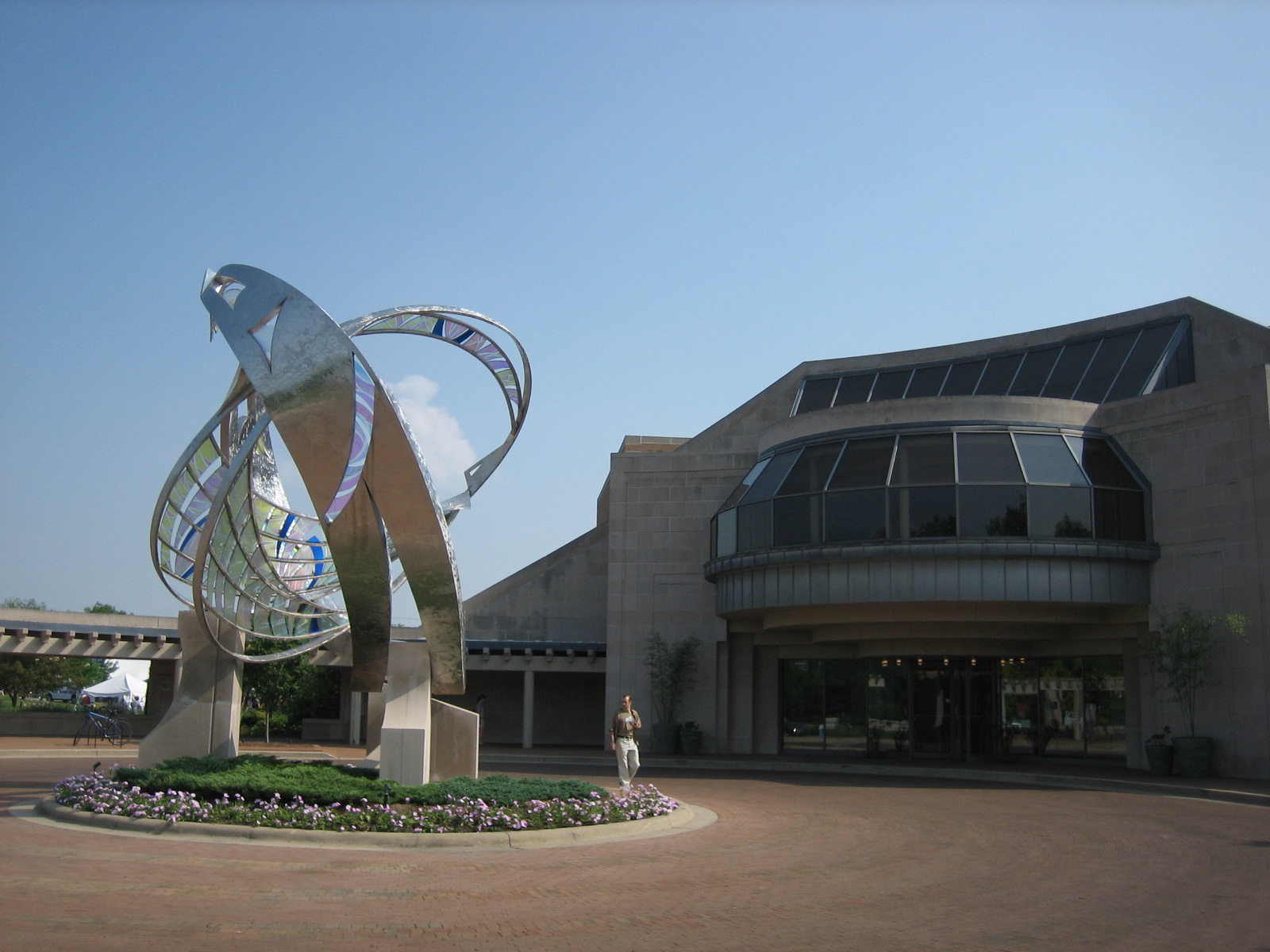
Ball State University is focusing a study on the northwestern Indiana city of East Chicago, concentrating on the Grand Calumet River and a portion of the Indiana Harbor Canal south of East Chicago Avenue. The team looked at the opportunities to leverage a recent cleanup and redevelopment projects as a catalyst for neighborhood redevelopment.

East Chicago is the corporate home to the following industries and businesses: ArcelorMittal’s Indiana Harbor Works, considered the largest steel mill in the USA. Indiana Harbor Works comprises East mill, originally Inland Steel, and West mill, owned over most of its existence by Youngstown Sheet and Tube.

However, the need is evident for area reinvestment. A transit-oriented development, also known as TOD, near the South Shore train station stop is said to have hopes of greatly enhancing the southern edge of the city.

Ball State’s landscape architecture and urban planning students examined ways to weave together this fragmented city, which is challenged by transportation and natural elements that divide neighborhoods and impact the quality of life for residents.
The team is set to develop design ideas based upon input from critical stakeholders, existing plans and research, and best practices related initiatives. The study also included a two-day visit and a workshop that provided direct contact with community leaders and residents.

9 ways to get employees to buy into your brand

0

By: Ebony Chappel

Organizations, both large and small, are spending more money, time, and effort on marketing and developing unique branding strategies. Getting your employees to buy-in to these concepts, also known as brand assimilation, is particularly vital. Prophet, a brand strategy and marketing consultancy firm, breaks the process of brand assimilation down into three structured phases

Strategic Development: your company’s internal audience is defined and an assimilation road-map is created

Foundation Building: materials are developed to train key leaders in the organization on how to disseminate branding messages to other staff members

Implementation: internal communications are used to maintain brand dialog

Prophet’s staff recommends a company-wide, brand-driven approach to help foster customer loyalty that will ultimately translate into increased profitability and competitive advantage.

Read on for nine ways to get your employees on board:

1) Make it Personal

Encourage employees to live out your company’s brand by helping them to understand how it relates to them personally.

2) Keep it Fresh

If you’ve visited a Walgreen’s store lately, chances are you’ve heard an employee end your transaction at the cash register with the phrase “Be Well”. The two words are a simple yet refreshing way to drive home to consumers one of Walgreen’s cornerstone focal points, health and wellness.

3) Make it Clear

Take an informal poll of your employee’s knowledge of current marketing campaign slogans, or even your company’s mission/vision statement. You may be shocked to learn that a large majority of them may be unaware of what you have undoubtedly spent tons of dollars developing. Start simple by making sure these key messages are posted strategically around the office in high-traffic areas.

4) Involve Everyone

Every member of your staff will at some point, either directly or indirectly, interact with your clients and customers. It is important that even the building maintenance staff or IT department buy in and feel connected to the brand. 5) Measure Your Efforts Identify key measurable points surrounding branding such as employee awareness and customer satisfaction. The information you glean here can be helpful in determining whether or not a particular message is as effective as it should be.

6) Make it Cyclical

Although they have garnered their fair share of bad press, major U.S airline Southwest was considered one of the “Best in Class” for leading brand marketing agency Brandemix for their corporate culture of freedom and fun. Potential employees are asked to tell a joke in their interviews, and once hired, you enjoy a “Freedom to Dress” open dress code as well as a week-long celebration during Independence Day called Freedom Week.

7) Pep it Up

Who doesn’t love a good party? Have a fun company lunch or family event to launch new branding initiatives. This is a surefire way to ensure that employees not only know, but love, what you’re doing.

8) Follow up

After everyone has partied like rock stars, it’s important to build on that momentum with action. Consider a long-term plan that will further drive efforts to align everyone with the essence of your brand.

9) Incentivize Your Team

Create an award system centered on brand awareness and implementation that challenges employees to go that extra mile. Reward those diligent foot soldiers with cool perks and fun prizes.

Technology firm provides solutions for small businesses

0

058By Ebony Chappel

Maintaining a sound technological element to your company is an integral part of any businesses success. Unfortunately, it is one need that many small to mid-sized businesses seem to neglect, primarily because of a to lack of industry knowledge and limited financial resources.

According to a survey released by multination electronics company Brother International, the technology tides are changing as 72 percent of owners who were surveyed shared that they anticipated receiving a greater return on investment from new technology than new employees. On the other hand, 63 percent of respondents admitted that they feel overwhelmed at the amount of technological solutions available to them.

Cody Rivers, COO and Lamont Hatcher, CIO of Indianapolis-based technology firm Apex Infinite Solutions (AIS) share their company’s success story as well as offer insight into technology problems many small to mid-size companies encounter.

IMBM: How did Apex (AIS) come about? How long have you all been in business?

Hatcher: We got started in June of 2012. I come from a pretty extensive consulting background and after a while you know; you just decide it’s time to go out on your own. At the time I was working with Cody at E Source. I pulled him on in and then we (began) Apex.

What were you all doing at E Source?

Rivers: We were specializing in enterprise consulting at the IT standpoint. We saw a niche for bringing those enterprise IT solutions down to the small to mid-sized business space at a cost that was more suitable for this market.

How has AIS grown since you originally started the company?

Hatcher: AIS has been blessed to grow exponentially since inception. We’ve grown from one office in Indy to an office in Florida, as well as, DC.  Our company projections state that we’ll double in growth by the end of 2015.

That’s considerable growth in a couple short years. What does your clientele list look like these days?

Hatcher: We have clients in Massachusetts, Kentucky, DC, Florida, Illinois, Ohio, Michigan, and of course, Indiana. These clients range in size from 5-250 in size.  The majority of our clients are in the construction, as well as, the not for profit industry.

Why Information Technology? Why is that something that the both of you are so passionate about?

Rivers: It’s an art for me and I like to see the things that we do help businesses become more efficient and profitable, as a lot of our focus is on the revenue generating benefits. IT just came naturally to me at a young age. Lamont is actually the one who got me started when I was 10 so he has built me up. I guess you could say I graduated from the Lamont Hatcher University of Information Technology. I’ve always gotten satisfaction from making businesses more efficient and allowing them to focus on what they’re good at so they are not worried about things that are outside of their expertise. For instance, I know my strength is not legal or accounting so that’s the approach we take with AIS. We want people to focus on running their business and not the IT stuff.

How did you all meet?

Rivers: Lamont worked with my father at his IT company in the early 1990s and I was a little rambunctious 10 year old that would come in the office with dad and wanted to learn IT. Lamont wasn’t too much older than me so he took me under his wing and showed me the ropes. He’s been there as a mentor to help guide me and show me which route to go and to this day I’m always learning something new from him.

What was it like mentoring Cody?

Hatcher: It’s easy to mentor people who want to learn. He did the work; I just gave him the opportunity.

What does it feel like everyday to come into the office and do what it is you love?

Rivers: It’s amazing. Everyday is something new. This is probably one of the fastest changing industries and if you don’t stay up on your game then you fall behind very quickly. It’s a constant seesaw so we’re always trying things out ourselves first to see what works and doesn’t work before we present anything to our clients.

What sets AIS apart from other IT companies?

Hatcher: What sets AIS apart from other IT companies is our customer service, process and progressive use of technology.  We were recently ranked one of the top 5 MSPs (Managed Service Providers) in the U.S. based on customer service. We understand that our clients are the reason we exist and we treat them accordingly.

Tell me about the services that you offer small businesses?

Rivers: What we try to do is act as the IT department for a smaller company. We are the support desk, the consultants, the solutions. (We are) an IT on demand executive without the salary that such an employee would demand. We give companies the strength of a department at a price level that is attainable for them and their needs so that they can continue to grow their business in a scalable way.

So, let’s say I’m a small business owner and I give AIS a call looking for some assistance. What is one of the first things you would do for me?

Rivers: We look for pain points. Similar to what would happen at a doctor’s visit. We assess the damage, look at the areas that need fixing, and determine what needs to be resolved immediately. From there, we would put you on a fitness plan so to speak to keep everything running and maintain the current state. We’re big data heads and we love data and reporting so we use the info from all the computers and servers to assess, optimize, manage, and report on the network.

Is there a particular system problem that you generally find your small business clients have when they initially secure your services?

Hatcher: Most small businesses take a ‘reactive’ approach to dealing with their IT company.  Our service offering philosophy takes a ‘proactive’ approach to dealing with issues.  Our model and processes allow us to deal with most of the daily issues before we receive the call.  It allows the client to focus on growing their business and not worrying about whether the network is running correctly.

What are some of the biggest IT issues that you see companies experience?

Rivers: Using too much money on the wrong solutions. We eat, sleep, and breathe IT so we know what’s out there. For someone who doesn’t have that background, they see 1,000 solutions available. We come in with our knowledge of what works and help them put the right dollar amount towards to right solution instead of wasting resources on the wrong solution – we try to guide them through their IT journey to help eliminate some of those falls.

Why do you feel some businesses neglect to spend the money needed to address their IT needs?

Rivers: I compare it to the human body sometimes, as far as health care is concerned. Unless you’re actually aching, you’re not going to look for issues. The same concept works for IT – by not thinking ahead, you set yourself up for those situations of unplanned downtime. Something may crash at a critical moment. The last thing you want is to be in the middle of a big project and something go wrong and you not know about it. Now at that point, you’re losing money and that becomes an even bigger issue. So we try to be proactive and reactive to catch those areas. We watch your back.

What are some of the ways that a company can benefit by upgrading their current system with AIS?

Rivers: Off the top, you’re going to have a fixed price as far as IT services are concerned. Its almost like insurance, if something goes wrong your price is not going to change. Customer satisfaction and employee morale are also other benefits of an upgrade that can eventually result in an increase in income. Then there’s always that guy that gets stuck doing all the IT related tasks around the office, not because he’s qualified necessarily, but because he knows a little bit more than anyone else. In turn, he ends up spending his time doing a task that he was not originally hired to do thus neglecting his primary responsibilities. By hiring a company like ours, you’re helping people to be more productive and efficient in the workplace.

What are your plans for the future?

Rivers: We want to establish our name in the community and continue to grow our brand. We’ve never lost a client so we want to continue that. Customer satisfaction is number one for us. We love to see our solutions grow our clients’ business. The more successful they are, the more successful we are.

Starting a company is a bold step. What advice do you have for aspiring entrepreneurs?

Hatcher: We read a lot of books, blogs, forums, etc. and stay involved in a lot of business circles.  One thing we always say to each other is to stay hungry and don’t get comfortable.  That hunger will drive growth and force you to evolve while improving your product.  “Do what you love to do and you’ll never work a day in your life”.  While it’s a totally cliché, it’s very true.

For more on Apex Infinite Solutions, visit aisllp.com.


Obama visits Hoosier State, talks economy

0

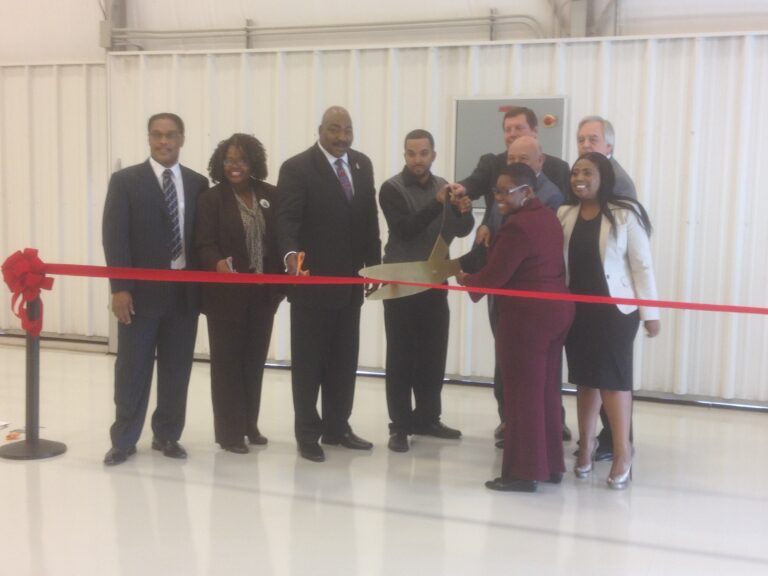
President Barack Obama’s recent visit to southwestern Indiana included a stop at a minority-owned steel processing company to discuss steps his administration has taken to help restore the economy.

Obama visited Millennium Steel Service LLC near Princeton to mark Manufacturing Day. Millennium’s steel is used in the fabrication of various vehicles, including those produced at the nearby Toyota plant.

Millennium Steel was founded in 2001 as a joint venture between Henry Jackson and Toyota to supply processed steel for Toyota Motor Manufacturing. The company’s website says revenue grew from $37 million in 2001 to $250 million in 2011. Black Enterprise Magazine rates the company one of the 100 Top Black-owned Businesses.

The company began with 10 employees, and according to Gibson County officials, has grown significantly and currently consists of 58 employees.

We need more Americans like Bill Mays

0

By Shannon WilliamsShannon Williams

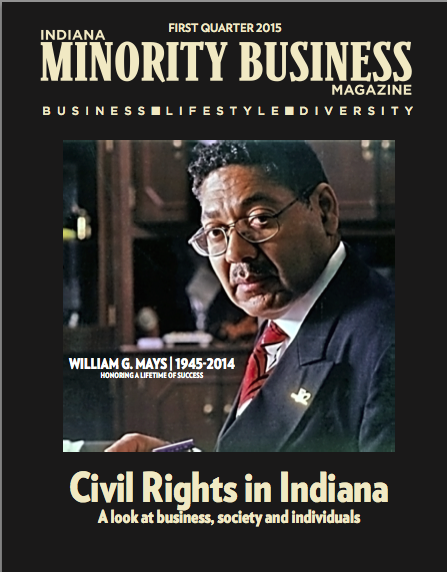
Sadly, as I and other members of the Indiana Minority Business Magazine staff were finalizing this first issue of 2015, we were given the painful duty of reporting on the death of the publication’s owner and publishers, William “Bill” Mays.

This issue had long been planned to focus on the progression of Civil Rights in the state of Indiana. As we worked to complete this issue, the realization dawned upon me that Mays’ life and many aspects of progressive Civil Rights era are deeply intertwined.

Mays, who came of age in racially divided, segregated city of Evansville, Ind. would nonetheless brilliantly fulfill his potential, and eventually attain the success and opportunities that equality advocates always envisioned.
Mays was an African-American male reared in Southern Indiana during a time when racial unrest was at its peak, yet even as a youth, he was determined to simply be the best – regardless of color, class or creed.

Part of that staunch determination came from Mays’ parents who were both educators and the other part came from Mays’ personal willpower, his innate ability and sheer determination to succeed.

Mays never considered his ethnicity as a reason something couldn’t happen. Instead, he tackled every obstacle and goal with the grit of a prized fighter – and usually, he emerged the victor.

The great thing about Mays is that while he effectively transitioned into the majority culture, he never forgot his own roots. As a matter of fact, Mays was a lifelong, staunch supporter of minority entrepreneurship, helping countless entities start their own businesses.

Mays was a self-made man who spoke the language of success. His hard work and skill set afforded him opportunities that few others were given and he paved the way for others who came behind him to have a seat at the table.
I imagine that’s exactly what those countless freedom fighters advocated for time and time again: an opportunity for minorities to have a seat at the table.

Diversity is a mosaic rainbow that is not only comprised of various colors, but also various perspectives. That is why the Civil Right Movement of the 60s is still a major item of discussion, as are present-day Civil Rights issues. We need diversity of thought to make this state and nation a better place. Bill Mays saw the beauty of diversity. Now it’s up to us to see the beauty of his life’s impact by striving to be more Mays-like.

Since his passing, I’ve heard numerous people state that there will never be another Bill Mays. While that certainly seems true, it’s also very unfortunate. Why? We need more business leaders like Bill Mays. We need more people who are unafraid to take those giant leaps of entrepreneurial faith. We need people who are committed to helping others.

Bill Mays was just one man, yet his influence impacted so many people. Imagine how much further along we would as a state and nation if there were more Bill Mays. Moving forward, we can preserve the legacy of Bill Mays and contribute to Indiana’s economic and social fabric by investing in one another more and being daring in our pursuit towards self-sufficiency.


Indiana Minority Business Magazine celebrates 10th Anniversary with ceremony honoring Champions of Diversity

0

Inaugural William G. Mays Award will recognize a notable entrepreneur

Indianapolis business owner, John T. Thompson will be honored with the inaugural William G. mays Entrepreneur Award at this year's awards dinner.
Indianapolis business owner, John T. Thompson will be honored with the inaugural William G. mays Entrepreneur Award at this year’s awards dinner.

On January 16, 2015 business owners, dignitaries, and community leaders will gather to celebrate the 10th Annual Champions of Diversity Awards Dinner. The Indiana Minority Business Magazine will recognize 14 individuals, organizations, and institutions that have shown tremendous effort in the areas of diversity and inclusion.
Recipients will be honored during the annual Champions of Diversity Awards Dinner on January 16 at the Hyatt Regency Hotel in downtown Indianapolis. A networking reception begins at 5:30 p.m.; dinner will be served at 6:30 p.m. with the awards presentation immediately following. Local media personalities Amos Brown (Radio One), Aishah Hasnie (WXIN), and Rafael Sanchez (WRTV) will serve as hosts for the evening. Tickets to the 10th Annual Champions of Diversity Awards Dinner are $55 per person. The night will conclude with a free red-carpet after party featuring complimentary liquor tastings and music. The party is open to business professionals ages 21 and over.
“Honoring such a deserving class of individuals and organizations over the years has been a true pleasure,” said IMBM President Shannon Williams. “Every year I am amazed at the level of commitment to diversity and inclusion the awardees exhibit and 2015’s ceremony will be no different. I couldn’t think of a more fitting way to celebrate ten years.”
Below are the 2015 Champions of Diversity award recipients in addition to IMBM’s Rosa Parks Trailblazer Award and Dr. Martin Luther King Jr. Freedom Award recipients. The honorees of these two distinctive awards have worked exceedingly above and beyond in their professional lives and with their outreach statewide. In addition, the inaugural William G. Mays Entrepreneur Award will be distributed to John Thompson of Thompson Distribution Company. William Mays was a prominent entrepreneur and owner of the Recorder Media Group. He passed away in December of 2014.
Here is a list of the 2015 Champions of Diversity recipients:

Cornerstone Center for the Arts
Governor’s Council for People with Disabilities
Indianapolis Indians
NCAA Office of Inclusion
Richard Propes (Public Speaker, Quaker minister, Advocate for the disabled)
Henry Jackson (Owner, Millennium Steel)
Tom Snyder (President, Ivy Tech Community College)
Terri Cope-Walton (News Director, WRTV 6)
Joe Slash (Former CEO, Indianapolis Urban League
Brenda Stallings (CEO, Matrix Integration)
University of Southern Indiana
Karen Freeman Wilson (Mayor, Gary, Indiana)*Rosa Parks Trailblazer Award Recipient
Shrewsberry & Associates *Martin Luther King Freedom Award Recipient
John T. Thompson (CEO, Thompson Distribution Company) *William G. Mays Entrepreneur Award Recipient

Promising Futures

0
Life skills may seem unimportant until we notice they’re missing

Jena Bellezza

Jena Bellezza new

By Jená Bellezza

Part of my job is to explain to industry what the Indiana Parenting Institute (IPI) does, and usually in a vernacular that speaks to their interests and concerns. Not an easy task for me, I tell you. I often communicate my concern for those we serve, our desire to help them accomplish, and the success stories we’ve been blessed to be a part of. My passion is obvious, but I’ve learned that more than passion is needed for business buy-in.

“As a business owner, why should I be interested in life skills education?”

Have you ever noticed you don’t realize how important that screw is until it pops out of its place? Happened with my doorknob recently. We don’t realize how important life skills education is to success until it comes up missing.

What is this otherwise anonymous “life skills education” anyway?

I’m glad you asked. It’s the cultural rules and standards currently in effect that result in security and success within that culture. Without this critical information and knowledge, citizens are doomed to make ineffective, even destructive decisions, that not only affect them but indirectly ¾ or directly ¾ affect us all.

Take the life skill of parenting. If parents don’t understand the current cultural norms and rules for achieving success and security, they will not engage in such things as reading to their young children to prepare their vocabulary levels for school success. They won’t teach them, through example, the social skills or behaviors needed to get things accomplished in today’s environment.

When you don’t understand the rules of success, you are relegated to become a burden, whether through dependency or through crime, contributing nothing. This is what happens when the life skills “screw” pops out of place.

Part of the reason for the decline in life skills knowledge is parents are getting younger and younger, and often have not yet acquired this knowledge when they became parents. And as parenting is a full-time enterprise, they often don’t find the opportunity or the outlet to acquire this critical knowledge. Instead, they find their knowledge level restricts them to crisis living, and it’s difficult to get anything accomplished when you exist there. And this is what they end up teaching and passing on to their children, our future.

IPI noted this gap, and decided to provide an outlet to get it re-filled. By educating parents on these cultural rules and norms, on their role to teach them to their children, and on how to make them work for the vision and goals they desire, we see parents getting re-motivated as they realize their dreams are attainable, and understand how to help their children attain theirs as well. As a result, we have seen communities starting to flourish as their residents not just seek, but now know how to improve their quality of life, accessing the education and resources needed to become productive members of their community.

If you are a business, and you see the community in which you are located, and primarily serve, struggling, reach out to community organizations engaged in providing this all-important tool of life skills to community residents. For they noted the “missing screw” and are working to get it back in place, so that the community can return to proper functioning. These organizations have business’ interests at heart, for they are helping to cultivate for you a well-prepared and effective workforce and client base ¾ a wise investment in your business’ future.

Jená Bellezza is marking and community relations director for Indiana Parenting Institute (IPI), a not-for-profit parent education and resource center headquartered in Gary. Belleza helps ensure that IPI is able to serve the entire state of Indiana by building collaborations and partnerships with schools, community organizations, parents, individuals, and the business community in support of parenting education as a viable tool in the protection and advancement of the wellbeing of Hoosier children and families.There is no greater calling for us at IPI than helping our children and families thrive.”


Beyond the Grave

0

Smith Bizzell & Warner’s Kelvin J. Pennington breathes life into struggling Gary community

By Leslie L. Fuller

Kelvin J. Pennington steps through the doors of Smith Bizzell & Warner Funeral Home in Gary, as he has done hundreds if not thousands of times before, to help family, friends and coworkers say their final farewells.

As owner of the single-story funeral home with the pillared portico and immaculately manicured lawn at 4209 Grant St., death was a fact of life for Pennington. But from the 18-page commemorative program to the remarks from Purdue University Trustee Mamon Powers Jr., this emotional “homegoing celebration” in March 2009, was no typical day for Pennington or Smith Bizzell & Warner.

“There were tons of floral arrangements; I couldn’t even describe the number,” he recalled. “It was comparable to the passing of the mayor of Gary in terms of the scale and presence of it. It was also a family coming out to pay respect to a great leader and family member.” The deceased was Pennington’s mentor – the man he, like countless others, came to view as a father figure – Dr. Cornell A. Bell, retired director of Purdue University’s Business Opportunity Program.

Perhaps ironically, it was his close association with Bell, an Evansville native and Sagamore of the Wabash, that led Pennington to that day, to his ownership of that funeral home. But that close association also meant he was less involved than usual in the planning of this grand event.

“My role would normally be there for the family and being the service provider. But when it’s someone you care about, someone else has to handle that role because you’re more of the family,” he said.

As a business leader who owns a variety of enterprises, Pennington’s Concord Family Services Inc., chain is considered among the top five largest African-American-owned funeral management services in the United States.

AT THE ROOT OF THINGS

Growing up, the Hammond native, 56, knew he wasn’t a true Pennington. His mother Clara had married and divorced a man named Melvin Pennington, yet his father remained unknown to him.

Then one day, he and his older brother, Melvin Pennington Jr., walked into an area barbershop, Pennington recalled. “There’s this guy in there that looked just like me, and I thought, ‘Isn’t that amazing?’” he said.

Later, Pennington asked his mother about the man. “She said, ‘He’s nobody. Don’t worry about it.’ Five years later, I found out that was my father,” he said. By age 12, Pennington was riding his bicycle secretly from his mother and stepfather’s home in Hammond, to his father’s Gary residence, more or less 10 miles away.

Meeting his biological father Willie James Davis filled a void, Pennington said. He also found encouragement from male schoolteachers, first at Lafayette Elementary School in Hammond, and later, Hammond High.

“I was spending more time in school and liking it, because this is where the encouragement is coming from,” he said. In high school, Pennington found he could flourish on little sleep.

“I’d go to school, then work 4 to 10, go by my girlfriend’s house to 10:30 p.m., go home, study until 1:30 in the morning, sleep five hours and get up and go to school,” he said.

MEETING A MENTOR

Upon graduating in 1976, Pennington knew he wouldn’t be content working in a steel mill and wanted “some executive-type” job. He planned to attend Indiana University. Then came a knock at the door from Dr. Cornell A. Bell.

The former Gary high school administrator wanted young Kelvin to join other talented minority students in the Business Opportunity Program (BOP) of Purdue’s Krannert School of Management. “I wasn’t interested,” Pennington recalled.

“I was highly confident, I’d graduated summa cum laude; there was nothing you could tell me. “Then Dr. Bell told me, ‘You probably couldn’t handle it at Purdue, you’re just going to Indiana University because it’s easy.’” The perceived insult spurred Pennington to change course.

“I went to Purdue, got into the BOP program, and at the end of the first semester, I wanted to show Dr. Bell how well I had done,” he said. However, Bell employed a different motivational technique on Pennington’s half-brother Clinton Wilhight, Pennington noted. “Dr. Bell always got under my skin to bring out the best in me, but my younger brother got more nurturing; he’d respond to that,” he explained.

Pennington describes his Purdue years as a stirring time. “(Bell) started bringing those successful African-American kids back to campus, so you could see it. Then we were learning about networking, making sure you got that great summer job, leading to the next summer job. Once you got in, you just kept growing from there,” he said.

During his sophomore year, Pennington’s first child, daughter Tenesha Franks, was born.

“Again, there were various meetings and advice from Dr. Bell,” he said.

Embracing parental responsibility benefitted his work ethic and career, Pennington added.

“I’d probably say my daughter made me sharpen my focus,” he said. “I’ve got to first have enough money to pay child support for a year, to save enough money to pay for tuition. I had someone to take care of.” Today, Pennington notes proudly, Franks is a Purdue alumna herself, married with children and employed by the Veterans Administration. “She (Franks) is studious. She’s got the studious focus like me,” he said.

BELL KEEPS SHOWING UP

Even after Pennington was graduated from Purdue’s Krannert School of Management in 1980, he found that his college mentor continued to show up in his life.

“I was working my first job at Prudential Capital Corp. in New York. Guess who checked up on me: Dr. Bell. Just because you graduate, doesn’t mean you’re not still one of his kids,” he said. In 1982, Pennington earned an M.B.A. degree from the University of Chicago Booth School of Business. After a five-year courtship, Pennington married Audrey J. Anewishki on June 21, 2002, in Las Vegas.

“I dated a lot of women who aren’t comfortable with the long hours that go with being an entrepreneur and starting your own business,” he said. “But Audrey understood.”

As with previous milestones in his life, Pennington noted, at the wedding, “there was Dr. Bell with his dark suit on.”

Today, the Penningtons have a 10-year-old son, Brent, who attends the University of Chicago Lab School. In 1990, Pennington left Prudential, where he had held positions, including vice president of corporate finance. But there was one glaring void.

“I had no opportunity to work with African-Americans at all,” he says. “Corporate finance? We weren’t there.”

Pennington’s decision to strike out on his own was difficult for some to understand. “At the time, everyone said, ‘Don’t leave,’” he said. “They wanted me to stay. I’d done an excellent job.” But entrepreneurship proved too compelling.

“It’s the challenge of starting something, being in the marketplace, create a business. You train for it; you’re ready for it. It was one of the things, from this point in my career, that I wanted to do,” he said. He formed the investment management and financial consulting firm, Pennington Partners & Co, headquartered in Chicago, where he serves as managing principal. Pennington also has served as general partner of PENMAN Asset Management, L.P., the general partner for the PENMAN Fund, since 1991.

BROADENING HIS REACH

In 1996,Pennington began serving as a director of Atlanta, Ga.-based Popeyes Louisiana Kitchen, a post he recently resigned. “All boards have to continue to evolve, and I felt at 18 years, it was time to transition off and get new blood involved,” he explained.

Though about one-third of Popeyes’ board included people of color, the participation of an African-American on a major corporate board is a rarity. The Alliance for Board Diversity reported in 2010 only 5.7 percent of board seats at the nation’s 500 largest publicly traded companies were held by African-American men, and only 1.9 percent were held by African-American women.

“That’s a public, big brand, a $2 billion system, with stores all over the world,” Pennington said. “When you’re getting ready for something like that, you need a certain type of academic experience, business background. Start by serving on a nonprofit board, or community or charity type board so that you get into the activity of being a board member.”

Also in 1996, Pennington learned that Smith Bizzell & Warner Funeral Home was for sale and moved to acquire the historic business. Though most mortuary service providers inherit their funeral homes, he saw the buy as good business and as a chance for involvement within his childhood community.

“It was my first opportunity to work with African-Americans, Black people, to get involved in community activities. I didn’t have that avenue in what I was doing,” he said.

Pennington soon acquired several other community funeral homes: Golden Gate Funeral Home in Chicago; Wilson Funeral Home in Tampa Bay, Fla.; the Thomas T. Edwards Funeral Home in Buffalo, N.Y.; the Stinson Funeral Home in Detroit; Williams & Williams in Savannah, Ga.; Tunsil Funeral Home in Palmyra, N.J.; and Henry L. Fuqua Funeral Service in Bloomfield, Conn. He has no current plans for expansion.

GIVING BACK TO BOP

It’s important that Smith Bizzell & Warner give back as well, said Pennington.

“We care about what you’re doing, we care about your health, we care about your kids’ education, we care about you as a citizen, and we enjoy doing it. We enjoy doing that to be part of the community. It’s part of who we are,” he said.

“Social good is just a big aspect of what we do. We look for opportunities to display it, enjoy it,” he said. “It’s a two-way street. We’re getting a good feeling.”

Darren L. Henry, managing director of Purdue’s Dr. Cornell A. Bell Business Opportunity Program, said Pennington emulates his mentor’s legacy by giving his time and finances to the BOP program.

“To date, no one has given more to the BOP program than Kelvin Pennington; no one,” Henry said. “It’s in the six figures, and he is not seeking credit. He gives back all the time, and he is a great person for Purdue, not just BOP.”

Giving back is good business, Pennington said. “In business, there is competition,” he said. “You have to think about, ‘How do you compare with the competition?’ I’d say for our funeral homes, doing good is our strategic advantage. You can make money, do strategic good and be a better organization.”

Although “social good” may sound abstract, it’s a concept that assumes tangible form when businesses make it a priority, said Pennington, who received the Distinguished Hoosier Award in 2008.

“We look at how should we focus on community. Where do we get involved; how do we give back? When you make social good part of your budget, part of your activities, you dedicate the resources to it, then you’ll have it,” he said.

KRACKERJACK THE CLOWN

Those company resources, Pennington said, include the right hires.

“I hire a dedicated, full-time person like Sandi Cogan to lead up an effort to do social good,” he said. Cogan is director of Community Affairs and Public Relations for Smith Bizzell & Warner. She’s a former director of public information and a director of special events for the City of Gary, as well as being the former mayoral press secretary.

Under Cogan’s direction, throughout the calendar year, the funeral home hires Krackerjack the Clown to entertain children with her antics at area events, and donates sheet cakes to Bible Bowl and the veterans home. In the summer, Cogan dispatches “Ice Cream on Wheels,” a program to donate Blue Bunny frozen treats to families attending the Annual City Wide Health Fair at the First AME Church, 2001 Massachusetts Ave., in Gary.

In 2010, the Gary Public Library sponsored author Sapphire to discuss her book and the resulting film, “Precious,” as part of its African-American History Program. Cogan was there to present the visiting literary celebrity with a bouquet of flowers on behalf of Smith Bizzell & Warner.

When Dr. Evelyn Idell Bethune, granddaughter of famed African-American educator Dr. Mary McLeod Bethune, flew in from Florida to speak at the Gary Library, funeral home staff arranged her transportation.

Boston Celtics basketball star E’Twaun Moore, who previously played for East Chicago and Purdue, conducted a Skills Camp at East Chicago Central High School. Cogan arranged for a photographer to shoot photos of students with “No. 55.”

Each event represents the potential for community outreach, Pennington said.

“This is a community-based business. You need to provide good community support,” he said. Pennington also serves on the advisory board of Learning Enhancement Corp., a business run by CEO Roger Stark, and has sponsored the educational software BrainWare SAFARI in the local public schools. “Kelvin can run with the best and brightest regardless of their cultural background,” said Stark. “Quite a few people leave a disenfranchised community – leave and never come back. Kelvin wants to help others and help them get a leg up.”

‘BEST KEPT SECRET ON GRANT STREET’

Smith Bizzell & Warner also is qualified to conduct military funerals, and has helped area vets, Cogan said. At the funeral home, veterans can receive traditional military honors including the playing of “Taps” and a gun salute during their funeral services, and can be buried within the grounds of Abraham Lincoln National Cemetery in Elwood, Ill.

U.S. Army Retired Lt. Col. Antonio Daggett praised the business for recently sponsoring 50 student JROTC cadets on their trip to Washington, D.C.

“It was the first time many of the Gary students had even been out of the neighborhood, and we were in the White House,” he said. “Without Smith Bizzell & Warner, I don’t think I would have been able to do it because the resources we were receiving from ROTC were just not enough.”

The cadets also received the opportunity to give back by assuming honor guard duties during veteran funeral ceremonies, Daggett says.

“It really impacted them in such a way, they saw value in doing something positive,” he said. “The conversation used to be who got shot, how many drugs were being found, and now it was about how to assist grieving families even after the service was over. It changed the conversation; it elevated their thinking.”

Karyn DuBose said she was surprised by the outcome of her recent trip to Smith Bizzell & Warner to pick up a check supporting the 15th annual Walk for Sojourner Truth House.

“I walked inside and heard gospel music playing,” the director of development for Ancilla Systems Inc. said. “I was thinking, ‘I don’t want to be putting my head in different places in a funeral home.’ Then Sandi greeted me with a hug, and instantly, I knew this would be something different.”

The expected quick errand to pick up a check turned into a two-hour coaching session, DuBose recalled. Cogan arranged for the event to be featured on the Saturday morning Gospel Express radio show on Gary-based WLTH-1370 AM and provided suggestions on promoting the charitable event.

“Why is a funeral home doing all this?” DuBose asked. “Why are they the best kept secret on Grant Street?

“They’ve engaged in the life of the community,” she said. “They care about you, not just when you’ve passed away, but also about the living.”

Under Construction

0

Hoosier stores and boutiques develop power looks for engineer students, faculty

By Jessica R. Key

Andrea Schultz Mechanical Engineering major Class of 2017 Rose-Hulman Institute of Technology A fun and flirty dress can work for an after work event or weekend party. (Dress, Studio NTK by way of Boomerang BTQ ; shoes, Steve Madden by way of More Than A Boutique; jewelry, Styles by Ms. Ely.)
Andrea Schultz
Mechanical Engineering major
Rose-Hulman Institute of Technology
A fun and flirty dress can work for an after work event or weekend party. (Dress, Studio NTK by way of Boomerang BTQ ; shoes, Steve Madden by way of More Than A Boutique; jewelry, Styles by Ms. Ely.) 


Hoosiers are known for their hospitality but unfortunately, not for their style. Fashion experts say not only are they inclined to certain styles and colors, but being en vogue is not high on the priority list.

Those who are skilled at finding interesting pieces to construct great style would disagree. Indiana has a plethora of brands, stores and  boutiques offering an assortment of great pieces that when put together create a stylish look.

This issue of Indiana Minority Business Magazine features faculty and students from Rose-Hulman Institute of Technology’s engineering  program who model clothing that has been constructed with great style.

Ian Fong Mechanical Engineering major Class of 2015 Rose-Hulman Institute of Technology When constructing your attire, think about uniform sizing as well as unexpected colors that work great together. (Sweater, shirt, pants, J. Benzal; shoes, Stacy Adams.) You can find a plethora of grey in almost any store in Indiana. Take it from drab to fab with a pop of a seasonally- appropriate color. (Suit and vest, H&M; bow tie, American Armadillo.)
Ian Fong
Mechanical Engineering major
Class of 2015
Rose-Hulman Institute of Technology
When constructing your attire, think about uniform sizing as well as unexpected colors that work great together. (Sweater, shirt, pants, J. Benzal; shoes, Stacy Adams.) You can find a plethora of grey in almost any store in Indiana. Take it from drab to fab with a pop of a seasonally-appropriate color. (Suit and vest, H&M; bow tie, American Armadillo.)

Asset Protection

0

7 ways to secure your business from misappropriation of funds

By Ebony Chappel

Rosilene M. Taylor
Rosilene M. Taylor

FROST ILLUSTRATED, FORT WAYNE’S OLDEST weekly newspaper, was dealt a horrific blow in October of last year when it discovered that a thenemployee, Rosilene M. Taylor, had forged checks she’d stolen from the owner’s office. At the end of Taylor’s spree, the paper was out more than $5,000, not including overdraft fees, and it  accounts had been frozen.

In an interview with the Journal Gazette, Frost Illustrated owner Edward Smith said the future of the 45-year-old publication, which serves Northeast Indiana’s Black community, was uncertain.

“We’re trying to save this,” he said.

The most recent estimates from the Association of Certified Fraud Examiners’ Report to the Nation show a typical organization loses 5 percent of its revenues each year to internal fraud. Losses are compounded for small businesses, which according to a study by the Association of Certified Fraud Examiners, suffer the largest median losses.

Xin Liu, a senior accountant at Calumet Specialty Products Partners, a leading refiner and processor of specialty hydrocarbon products  headquartered in Indianapolis, said small or midsized business can benefit from keeping a close eye on employees.

“In cash-related jobs, no one person should be solely responsible,” she said. “No one should be doubted, but no one should be totally trusted either.”

Liu also suggests that employers use some form of rotation with the responsibilities of employees who handle the company’s money.

“A lot of cash-related jobs are forced to take days off,” she said. “When someone else from the department does the work, they may find gaps.”

Here are seven additional ways to protect your business from loss:

  1. Conduct Random Checks. Follow up with customers and clients on invoices to make sure what your financial records show is accurate. Also, do periodic confirmation on accounts payable and accounts receivable.
  2. Don’t have too many hands in the cookie jar. Limit the number of employees who are authorized to conduct financial transactions. Make daily deposits to the bank yourself to prevent anyone potentially slipping $20 in their pocket when no one is looking.
  3. Don’t replace your John Hancock with an ink or electronic stamp. Signing every check yourself is a great tool in preventing misuse of funds.
  4. Perform background checks. It seems like a Captain Obvious-esque request, but all employees should be subject to preliminary background checks.
  5. Use bank alerts. Many banks offer alerts that come directly to your cell phone and email. Liu suggests that employers not only utilize them, but keep employees out of the loop. No one likes to know they’re being watched but it may be your best line of defense.
  6. Keep your eyes open. According to the AFCE, 81 percent of fraud perpetrators displayed behavioral red
    flags that are often associated with fraudulent conduct such as living beyond their means, financial difficulties, unusually close association with vendors or customers; and excessive control issues.
  7. Get a second opinion. If you suspect issues, have an outside accountant come in and go through the books. Their findings may surprise you.
Translate »