Monday, April 6, 2026
Home Blog Page 85

Tips for Diversifying Your Nonprofit Board

0

Making a nonprofit board more diverse and inclusive won’t happen overnight and changing a culture takes time. Here are some steps leaders in nonprofit can take to make sure their organization is headed in the right direction to become part of the solution and not the problem. 

Take inventory of your current board’s strengths and weaknesses.

There are many types of board members. Some will be able to bring large donations to an organization, another will be plugged into the population your nonprofit mostly serves and another member may bring business knowledge from their experience in corporate America. According to the National Council of Nonprofits, recognizing your board’s strengths, but also their weaknesses is a great place to start when trying to diversify your board. Maybe your board is majority white even though your organization serves mostly populations of color, or perhaps your organization serves families in poverty, but doesn’t have any board members who have themselves experienced similar levels of poverty. Bringing these voices into the organization will help fill necessary voids that can lead to greater impact.

Recruit for skills, not just for a look or education background.

Jermaine Smith, development director for Educare New Orleans and Sean Thomas-Breitfeld, co-director of Building Movement Project in New York City, encourage leadership at nonprofits to rethink their qualifications. Think about what roles on your board and in your organization can be filled by a person who has life experience outside of a classroom. A degree doesn’t always guarantee a person will be able to do a job effectively. Look beyond the traditional lens of qualifications members on your board currently have.

Turn to your constituency for help.

Oftentimes, the community you serve is a great resource when it comes to filling vacant positions. Talk to your community and ask them who they’d like to see serving on your board and in other leadership positions within the organization. 

Train your current board on what diversity and inclusion looks like when it works. 

We all have implicit bias — or attitudes and stereotypes that affect our understanding of a situation. Work as a board to confront those and work through them. Then, consider what overcoming those barriers will take and make a plan to do just that. Recognize that board members don’t have to be perfect, they just have to start.  

They get it!

0

Leadership Indianapolis’ board exemplifies diversity in its truest form 

By Grace Michaels

Experts have ingrained the word diversity in our minds for eons, however, for some businesses and organizations, actually applying the principles has been challenging.  

Angela White, senior consultant and CEO of Johnson, Grossnickle and Associates, a philanthropic consulting company, has a solution.  

“It is important to align your board composition with your organization’s mission, values and priorities. If boards clearly define their priorities and foster a culture of continuous learning, greater diversity will lead to a more engaged board.”
Leadership Indianapolis not only understands this philosophy, but they have also applied it, resulting in true diversity.

Leadership Indianapolis, the “parent” of the Stanley K. Lacy Leadership Series, the Lacy Leadership Association, and Civic Boot Camp advocates for diversity in its programming and exudes it from a personnel and board perspective. 

Rebecca King, president and CEO of the leadership training and deployment organization says when it is time to attract new members, the organization is intentional about broadening the skillsets and perspectives represented. 

“We assess what our most pressing needs are based on where we are as an organization.

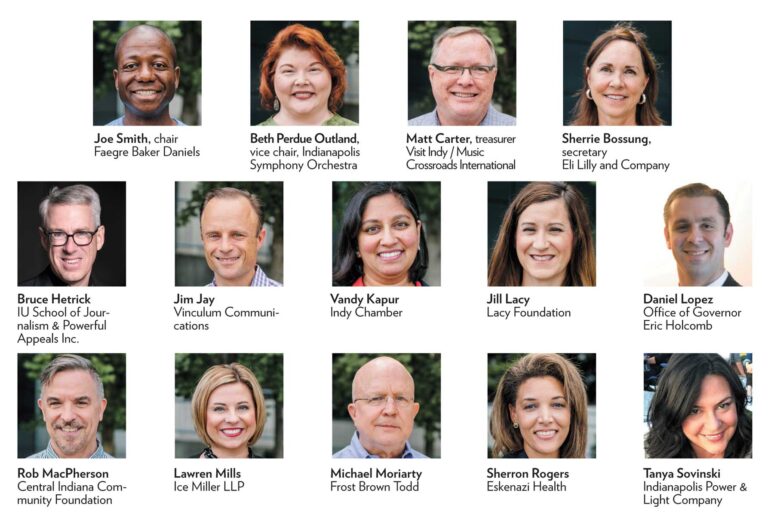
“Because Leadership Indianapolis supports and interacts with so many community leaders, we know that there isn’t actually a conflict between skillset and diversity. It isn’t a question of whether we need the expertise of a lawyer or the perspective of an African-American man. There are highly qualified African-American male lawyers in Indianapolis and one of them, Joe Smith, currently serves as our board chair. This city is filled with talented professionals in a variety of fields who are also people of color and/or women, who would make tremendous board members. Many of them simply haven’t been given the opportunity.”

King says diversity is a guiding premise of the organization. 

“We have also tried to incorporate diversity as a core value throughout the work of our organization including our staff, the participants in our programs, the speakers we highlight at our events, and our community partners. So, it isn’t an isolated objective of our board, but rather a priority in our larger culture.” 

Of Leadership Indianapolis’ 14 board members, half are women and four are ethnic minorities.

Gender neutral

0

Indiana nonprofits work to close gender pay gap

By Oseye Boyd

When Jan Virgin learned she made less money as executive director of Dance Kaleidoscope than the male artistic director, she demanded pay equity.

“I wouldn’t stand for it,” Virgin said. “One day we were talking and said, ‘This is absolutely ridiculous. We do the same job.’”

Today, both directors receive the same salary. However, it’s not unusual for women employed by nonprofits to receive less compensation than men in similar positions. 

Women hold the top spot in about 72 percent of nonprofits, according to Leading with Intent’s 2017 report. A 2016 study from GuideStar revealed women who headed nonprofits made eight percent less than their male peers. This pay disparity is a “sleeper threat to nonprofit effectiveness and sustainability,” according to an article from the National Council of Nonprofits.

New dancers with Dance Kaleidoscope all receive the same pay, Virgin said. Pay for office staff is based on the responsibilities of the position, not gender, she added.

Closing the pay gap may seem daunting for any organization. For nonprofits, whose tight budgets already are stretched thin, it may seem insurmountable. 

It’s not.

Three years ago FirstPerson completed a salary study for Keep Indianapolis Beautiful. That study helped the nonprofit determine the correct salary range for each position as well as what it could afford to pay employees in those positions. While the focus wasn’t on closing the gender gap, it was an unintended consequence.

“We, actually, since that study have spent the past two or three years getting people to a place that we consider a minimum of what our aspirations are,” said David Forsell, Keep Indianapolis Beautiful president.  

Keep Indianapolis Beautiful did the study to make the organization as competitive as possible with for-profit companies, Vice President of Finance and Administration Jenny Skehan said.

Before an organization determines salaries, it should decide its compensation philosophy. It must decide if salaries should be in the bottom, middle or top of the pay range for that market. Once the philosophy is established, it’s time to look at the compensation range for individual positions, Julie Bingham, compensation advisor at FirstPerson, said.

“For nonprofits the mission of the organization is often a very fair exchange of being paid more somewhere else because it’s very meaningful work, but pay can’t be so low that you feel exploited or that you literally can’t pay the bills,” Bingham said.

Knowing the pay range for an individual position helps an organization decide the salaries for someone with little to no experience or someone with years under his or her belt.

“The challenge is there are entire job families and career paths that have been traditionally filled by females, and the market’s just reinforcing those pay inequities,” Bingham said. That’s another hurdle the world is trying to tackle.”

A salary study and compensation philosophy also keeps nonprofits honest with employees by allowing them to explain why salaries may be lower than the market range, but there’s a plan in place to raise them as the financial situation allows.

“One of the best things the data does is it neutralizes the emotions and it empowers decision making,” Bingham said.   I

A path to nonprofit

0

Multiple roads available to nonprofit success

By IMBM staff

There is no one way to end up at a nonprofit organization, the three leaders below talk about their journey into the nonprofit world. One thing the all agreed on, if you don’t have a passion for the organization you’re serving, you won’t enjoy the work. 

Ashley Jordan, Executive Director at Evansville African-American Museum

Ashley Jordan’s path to the nonprofit sector was a circuitous one. Initially, Jordan majored in journalism and mass communications, but she realized something very important between her sophomore and junior years of college — she didn’t like it. She tried other majors and still no luck. After an advisor noticed Jordan performed well in history courses, the advisor suggested Jordan study history, specifically public history.

Jordan landed an internship at the Smithsonian National Museum of American History in Washington, D.C., through a political science internship program at Kent State University.

“It was the internship that changed my life,” Jordan said. “I finally found what it is I wanted to do.”

Jordan credits great mentors who helped her cultivate her interest in working with African-American history and offered educational and professional advise to improve her future employment opportunities.

Before landing her current role, Jordan was curator of the National Afro-American Museum and Cultural Center in Wilberforce, Ohio, and curator at the National Underground Railroad Freedom Center, Cincinnati, Ohio. 

 “What I can say about being in this nonprofit environment, I would say in the museum world, I was able to find mentors who were concerned about the next generation in a sense,” Jordan said.

“You learn a lot about partnerships and cultivating your donors.

Sometimes you get into situations where you’re building things from the ground up.

It’s probably one of the most tangible working experiences I’ve ever had. Challenges do come, but you have to back bounce quickly. You’re going to hear the word ‘no’ but it helps you to become more resilient.”

When approached to be executive director of the Evansville African-American Museum, Jordan had never heard of the city. Now, she’s trying to make sure people far and wide know about the museum, which is located in the only building left of Lincoln Gardens, the second federal housing project under President Franklin D. Roosevelt’s New Deal.

“It’s not enough that we think that people are going to come to us,” Jordan said. “I’m just looking to exhaust all mediums and get the word out about our museum. It’s a little unsung hero.”

Robert Shegog, Director of Operations 

at PACE (Public Advocates in Community Re-Entry) 

Since he was very young, Robert Shegog knew he wanted to help people. 

“Growing up in Mississippi, I saw a lot of people who had no one to help them. I saw a lot of inequities and a lot of discrimination. I also saw a lot of hurt as a result of those things. For as long as I can remember, I knew I would dedicate my life to helping others.”
He did exactly that. 

After serving in the Navy, Shegog immersed himself into public service, spending over 20 years in law enforcement, including serving on the special investigations unit. 

After relocating to Indianapolis, he began working at PACE, an organization that helps ex-offenders lead progressive lives post-incarceration. The organization is able to help clients establish normalcy by offering financial coaching, mental health services and employment training among other programs and services. 

“PACE gives me the opportunity to help an underrepresented and often stigmatized demographic of people. It is extremely important for me to not only ensure our clients have access to the services they need, but that they are also equipped with the proper tools to ensure they can be self-sufficient and not return to jail. Doing these things while also treating clients with dignity is fundamental to our team,” Shegog said. 

PACE is one of the premier re-entry programs in the state. Shegog says that is largely because of the highly dedicated staff who works to execute the organization’s mission on a daily basis. 

“PACE has been able to serve clients so effectively because of the collective efforts of our team. It truly takes active participation from our entire staff to serve the community in such an exemplary way. PACE is blessed to have such a dedicated team who takes pride in their work and helping the clients we serve.” 

Kelly K. Shrock, President,

The Community Foundation of Muncie and Delaware County 

When Kelly Shrock joined Sigma Kappa sorority as a student at Ball State University, she had no idea it would lead to a career in the nonprofit sector. What Shrock did know, however, is she wanted her career to make a difference and help others. 

“All because I got involved in a social sorority, I found my calling in leadership organizations,” she said.

After graduating, Sigma Kappa hired Shrock to work in leadership development. That was her first step into the nonprofit world and she hasn’t looked back. She eventually went to work at Ball State University as associate director of development. 

Shrock almost missed the chance to work at the The Community Foundation of Muncie and Delaware County. The first time she saw the job opening, she read it and dismissed it. Shrock was quite happy at her alma mater, and she enjoyed working to support higher education. However, the job began to require more travel, conflicting with her desire to spend more time with her family. The job posting appeared again. This time she applied. 

She joined the staff at The Community Foundation of Muncie and Delaware County as the development officer in 2012 and assumed the leadership position when longtime president Roni Johnson retired in 2013.

“I think for most folks in nonprofit work, we live our mission every day,” Shrock said. “Sometimes people are intimidated or nervous about the fundraising piece. Fundraising is about establishing relationships and telling a compelling story. I think sometimes fundraising can tend to be oft putting to folks because they don’t feel like they know how to do it. We all have to hone our fundraising skills because we have to add resources to help us in our mission.”

The Community Foundation of Muncie and Delaware County supports and encourages philanthropy, helps donors build charitable assets and helps direct assets to improve quality of life in Muncie and Delaware County.  I

Ahead of the curve

0

Protections against sexual harassment not new for nonprofits

By Oseye Boyd

It started with a ripple here: The Women’s March in Washington, D.C. to protest President Donald Trump’s treatment of women’s issues.

A wave there: Former Uber engineer Susan Fowler’s blog detailing sexual harassment at the company.

Eventually, the floodgates opened. 

By October 2017, Americans were inundated almost daily it seemed with new claims of sexual harassment, intimidation and rape by some of entertainment’s most powerful men. Each more sordid, shocking and appalling than the last. Unlike in the past, these stories didn’t die after a couple of days in the news cycle. The year 2017 became a watershed moment for sexual harassment and violence against women.

While most Americans aren’t Hollywood elite, what’s happened there shined a spotlight on sexual harassment in the workplace. The #MeToo movement, already a decade old and founded by Tarana Burke, a black woman, received renewed vigor as women from all walks of life began recounting their experiences on social media. Americans now are looking at sexual harassment with fresh eyes, so it makes sense that local nonprofits do the same.

“I imagine that my governance committee is going to rewrite some things,” Dance Kaleidoscope Executive Director Jan Virgin said.

Dance is an intimate affair, and therefore, a deep sense of trust is imperative. Dance Kaleidoscope implemented policies against sexual harassment long ago, Virgin said. The board of directors also includes a human resources professional to keep standards current.

“Being in dance we’ve thought about this a long time ago,” Virgin said. “For DK (Dance Kaleidoscope) it is just causing us to pay attention; make sure our documents, agreements, contracts are all in a row. All of our dancers have had background checks — that’s a must. If there was something that came back questionable, I doubt that person would be hired.”

Although Keep Indianapolis Beautiful addresses sexual harassment in the employee handbook, managers reminded everyone of the policy and what it covers, said Jenny Skehan, vice president of finance and administration. 

“I think, perhaps, because we work with youth, we’re very sensitive to not creating a hostile work environment,” Skehan said. 

President David Forsell says the mission of Keep Indianapolis Beautiful is just as important inside the office as it is outside.

“Our mission here is helping people and nature thrive in the city, so we take that really seriously not just in terms of who we work with but also here,” Forsell said. “We want people to feel comfortable and free; that they’re respected.”

The #MeToo movement caused Keep Indianapolis Beautiful to examine its relationship with other businesses. It’s not uncommon for women working with Keep Indianapolis Beautiful to drive big trucks, trailers and haul heavy equipment — jobs that are stereotypically male. Sometimes those women receive unwarranted comments from men on the job site.

“One of the things I think the #MeToo movement probably is helping us do is to encourage our staff to speak quickly, speak up, let us know,” Forsell said. “If there’s a company that we are working with that will harass our employees, I’m not real interested in working with them and so that is something we have talked about.”

Since many nonprofits rely on volunteers, trusting non-employees is vital to their work.

As the only employee for Indy FringeFest, Pauline Moffat relies on volunteers to stage successful events.  All volunteers receive a policy handbook and undergo training workshops to prevent sexual harassment, she said. 

“We’ve always had a harassment policy,” Moffat said. I

Tips on taxes

0

How the new tax act could affect your nonprofit

By Brandon A. Perry

Nonprofit organizations across America have been on alert since passage of the new Tax Cuts and Jobs Act. The law contains the most sweeping changes to the tax code in over 30 years, which affects both nonprofit organizations and their donors.

Charitable giving is expected to decrease by at least $13 million due to changes to the standard deduction, according to recent research by the Indiana University Lilly Family School of Philanthropy. The same report, however, found that a new charitable deduction for non-itemizing taxpayers may generate up to $4.8 billion in additional giving.

Given the pros and cons of the law, the long-term impact of the act is unpredictable. However, experts say there are several steps charitable and nonprofit groups can take to prepare for the changes.


Seek professional guidance

Seeking advice from a professional tax consultant is one of the best ways a nonprofit organization can prepare for the changes. This can free up more time for an organization’s cause and prevent costly mistakes from not observing changes to the tax code.


Prepare for reductions in contributions

Perhaps the best-known effect of the new tax law on nonprofits is the potential decrease in donations. An increase in the standard deduction on personal tax returns could cause charitable giving to fall significantly. The deduction increased from $6,350 to $12,000 for single individuals and from $12,700 to $24,000 for married couples. The IRS says about 30 percent of taxpayers currently itemize their deductions. 


Adjust to new UBIT

The new tax act changes how the unrelated business income tax (UBIT) is calculated. Nonprofits should immediately begin tracking all sources of UBIT. They should also review different trades and businesses that generate UBIT and consider consolidating them for lower taxes. Some fringe benefits and rewards offered to employees will be subject to UBIT for the first time. Nonprofits should consider whether offering increased compensation would be a more tax efficient option.


Watch for changes to state tax laws

The Tax Cut and Jobs Act State caps local income taxes and property taxes. Some states and counties may face budget shortfalls because of this and could create new taxes on nonprofit organizations to make up for any loss in revenue. Tax caps and budget cuts could also lead to the reduction or elimination of state and local social programs. Nonprofits will be expected to fill the void.


Revamp you donor outreach and fundraising plans

Nonprofits can protect themselves from possible changes from the tax act by creating a new and energetic fundraising plan. This plan could be based on a successful communications model that will excite donors about contributing to an organization’s cause, regardless of the possible tax benefits.

Refresh newsletters, social media posts, brochures, fundraising events, press releases and websites. Treat donors and volunteers as valued, caring partners — not just faceless, nameless sources of donations and labor. Revamp plans to expand the volunteer roster, which may help your organization save resources and get people excited about actively supporting a meaningful cause. Taking these steps can offset any potential impact of the new tax act.


Sources: Indiana Department of Revenue, Indiana University Lilly Family School of Philanthropy and Peterson/Sullivan. I

Lafayette

Lafayette and West Lafayette offer small-town charm

By Arriel Vinson

The Wabash River passes through both Lafayette and West Lafayette, two historic Indiana cities. Lafayette was founded in 1825, with West Lafayette being founded about 35 years later. West Lafayette has about 42,000 residents on top of Lafayette’s 71,000 residents. Home to Purdue University, these cities are bustling with popular attractions, students and plenty of things to do. 

Lodging

Union Club Hotel

101 North Grant St.

West Lafayette, Indiana 47906

765-494-8900

union.purdue.edu/hotel

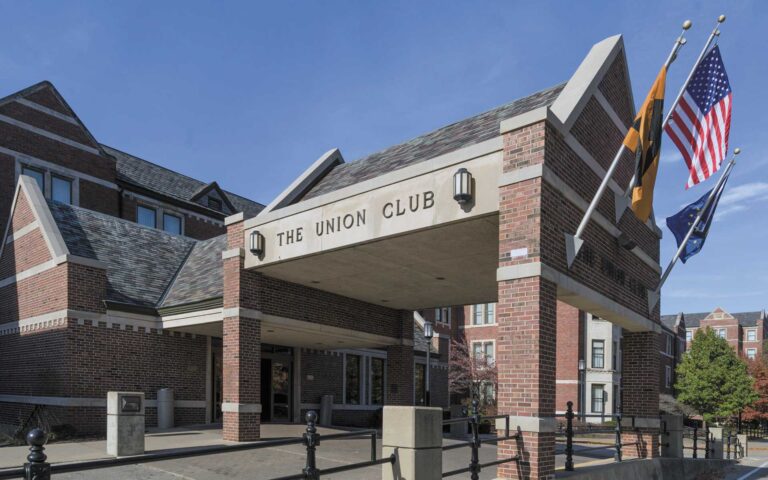
Located at Purdue’s Memorial Union, the Union Club Hotel offers 200 rooms, which includes eight luxury suites and 60 deluxe rooms. The Union Club Hotel also offers family rates, along with a hotel restaurant and shuttle. The hotel even offers entertainment at Union Rack & Roll, featuring bowling and billiards fun. Explore the historic campus while enjoying a well-serviced stay.  

Prophetstown State Park

5545 Swisher Road (Main Gate Entrance)

West Lafayette, Indiana 47906

765-567-4919

in.gov/dnr/parklake/2971.htm

If you want to camp out, the Prophetstown State Park offers hiking, fishing, wildlife observation and birding. Established in 2004, the park is home to native wildflowers and wetlands. In the warmer seasons, campers can enjoy the Aquatic Park. The location of Prophetstown State Park allows guests to explore nature then visit some nearby attractions, less than 10 miles out. 

Hilton Garden Inn West Lafayette Wabash Landing

356 East State St. 

West Lafayette, Indiana, 47906

765-743-2100

hiltongardeninn3.hilton.com 

The Hilton Garden Inn promises comfort. With more than 100 rooms and suites, guests are able to enjoy everything from evening room service to an indoor heated pool. The Hilton Garden Inn offers bed and breakfast, family fun or romance packages. It is within five miles of West Lafayette’s most popular attractions and is four blocks away from Purdue University. 

Dining

Harry’s Chocolate Shop

329 West State St.

West Lafayette, Indiana 47906

765-743-1467

harryschocolateshop.com

Founded in 1919, Harry’s Chocolate Shop is a family business. The restaurant and bar boasts as the number one gathering place for Purdue students and alumni. Their menu items range from burgers to 10-inch pizzas, and they offer a variety of beers and liquors. 

Lafayette Brewing Co. 

622 Main St.

Lafayette, Indiana 47901

765-742-2591

lafbrew.com

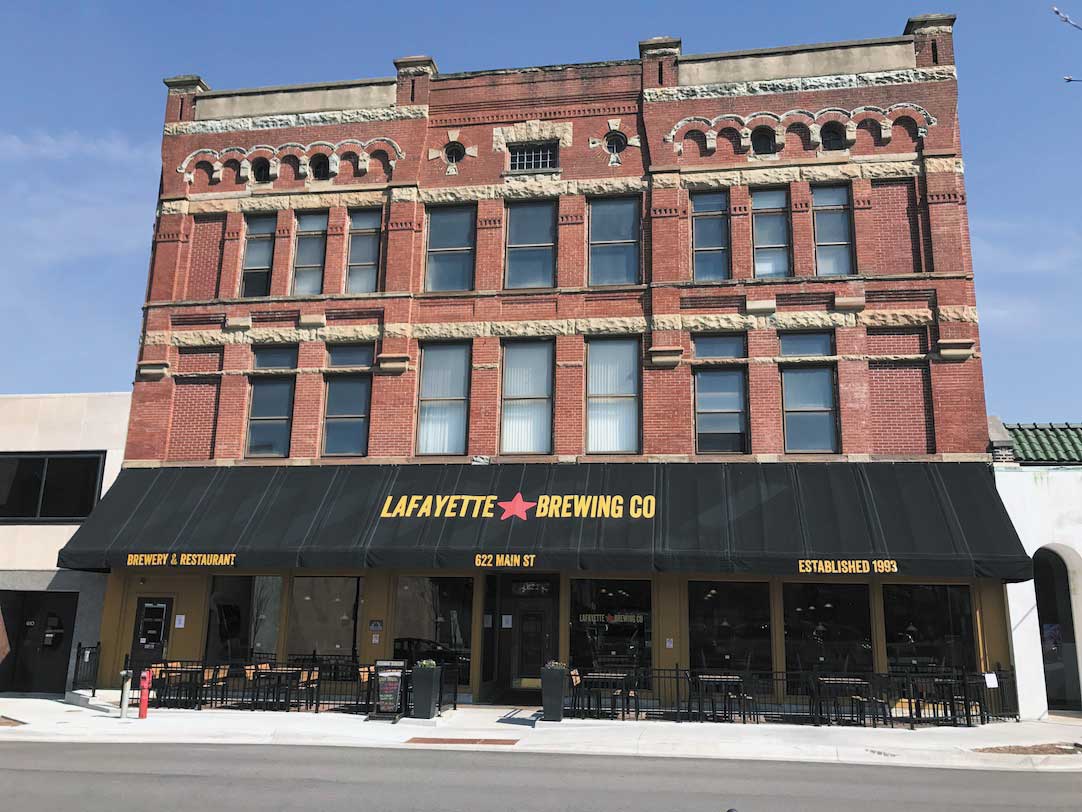
Lafayette Brewing Co. is located in the heart of downtown Lafayette. Founded in 1993, they produce all of their house beers on a custom-built, 7-barrel brew house. LBC has a family-friendly environment, with a menu offering kids’ meals as well as starters, sandwiches and burgers for adults. 

Triple XXX Family Restaurant 

2 N. Salisbury

West Lafayette, Indiana 47906

765-743-5373

triplexxxfamilyrestaurant.com

This family restaurant is Indiana’s first and oldest drive-in, founded in 1929. Triple XXX Family Restaurant offers shakes, burgers, desserts and an all-day breakfast menu. It sits on Chauncey Hill, a short distance from Purdue University.

La Scala

312 Main St.

Lafayette, Indiana 47901

765-420-8171

www.lascalaitalianrestaurant.com

Family-owned La Scala has been in business for more than 15 years in downtown Lafayette, serving Italian dishes. La Scala uses local producers to offer fresh, savory Italian classics, cooking orders by scratch. The restaurant has a full bar but is also family-friendly.

Attractions:

Purdue University

610 Purdue Mall

West Lafayette, Indiana 47907

765-494-4600

purdue.edu

Known for engineering, Purdue University is one of West Lafayette’s most prized treasures. Visitors can explore the historic campus by attending public events, such as exhibitions or plays. College sports fans can catch a game of men’s or women’s basketball in the Mackey Arena. Some of Purdue’s well-known landmarks include the 160-foot Purdue Bell Tower and the Purdue Mall Fountain, which runs from April to October. 

Art Museum of Greater Lafayette

102 South 10th St.

Lafayette, Indiana 47905

765-742-1148

www.artlafayette.org

Founded in 1909, the Art Museum of Greater Lafayette’s mission is to “celebrate the power of art to inspire, instruct, challenge and build community through collections, exhibitions, events, educational and cultural programs.” Artists featured at the museum are both local and worldwide, offering both temporary and permanent exhibits. The museum also hosts monthly music events, as well as art courses. 

Tippecanoe Battlefield Park

200 Battle Ground Ave.

Battle Ground, Indiana 47920

765-567-2147

tippecanoehistory.org

The Tippecanoe Battlefield monument marks the November 7, 1811, Battle of Tippecanoe. The attraction is a national historic landmark, with its park spanning 96 acres. Visitors can explore the site’s museum, complete with maps and exhibits, or go hiking and enjoy a picnic at the park. 

Imagination Station

600 N. 4th Street

Lafayette, Indiana 47901 

765-420-7780

www.imagination-station.org

The Imagination Station is a volunteer-run education center for children to get familiar with science, technology and engineering. At the Imagination Station, children can be hands-on with activities and interactive exhibits. Events are hosted each month as well as recurring monthly programs for children and families.  I

Filling the gap

Contractors and freelancers and temps … oh, my

By Lauren Caggiano

Temporary, part-time or contract help can be a boon to companies facing tight budgets and tighter deadlines. But with the added help comes a need for employers to do their due diligence when it comes to understanding and following employment law. 

For starters, those in the position of hiring need to brush up on the different types of employment classifications, says Seth Morales, president of the Morales Group Inc. (MGI) The company was founded in 2003 and is headquartered in Indianapolis, with additional offices in Columbus, Indiana, and Louisville. Over the past 13 years, MGI has successfully placed over 40,000 associates throughout the Midwest in temporary, temporary-to-permanent and performance-based positions.

Information supplied by the IRS affirms Morales’ advice. According to a July 2017 fact sheet from the agency, employment status touches on several areas, including tax liability:

“Worker classification is important because it determines if an employer must withhold income taxes and pay Social Security, Medicare taxes and unemployment tax on wages paid to an employee. Businesses normally do not have to withhold or pay any taxes on payments to independent contractors. The earnings of a person working as an independent contractor are subject to self-employment tax.”

Another way to demarcate the relationship is by examining the expectations regarding how work is done. According to the IRS, generally speaking, the worker is an independent contractor “if the payer has the right to control or direct only the result of the work, not what will be done and how it will be done.” 

In other words, is the person getting paid solely to produce a determined deliverable, or is there some amount or degree of monitoring and managing of the person and the work in the process? If the answer is yes to the latter, then the person should be considered an employee and treated as such. There can be consequences for mistakes or oversight. “Classifying an employee as an independent contractor with no reasonable basis for doing so makes employers liable for employment taxes,” according to the IRS.

That can be avoided with some work on the front end. Morales said the easiest way to make the distinction about worker classification is to look at who handles the “back office activities.”

“When working with temporary (workers), a lot of the time they are being pay-rolled by another company,” he said. 

Employment agencies are contracted to handle the necessary activities associated with employing a worker, including payroll, benefits, taxes, etc. In the case of a contract relationship, however, the responsibility rests on the self-employed individual to report their income to the IRS, pay local and state taxes, acquire benefits, etc. In essence, they are running a small business and managing the day-to-day responsibilities that entails. 

Another lens through which to examine this issue is via the nature of the work, Morales says. Temporary workers tend to be more “blue collar” and paid an hourly rate to handle tasks that don’t necessarily require a high degree of specialty or advanced education. The example he cites is the front office administrative assistant. The individual may require more coaching or management than a white-collar employee. On the other hand, a contractor relationship can accentuate or complement your core product or services. 

“A lot of times it’s contracting with someone with a specific skillset you don’t have in your internal staff,” he said. “Hiring a programmer or content writer are prime examples of 1099 or contractor relationships.”

Morales said in light of the gig economy, this type of work arrangement is being more widely adopted — what he refers to as a “secular shift.” As much as 20 percent of the workforce, he said, is currently freelance or contract labor. “It’s becoming more mass market,” he said. “The model of work is changing. It’s a cool space to be in now.”

While this may be a brave new world for some companies looking to expand their freelance workforce, they don’t have to go it alone. There are resources available for companies of all sizes and across all industries. Morales said employment law attorneys, online forums and organizations like the Society for Human Resource Management (SHRM) can help employers stay current on industry trends and changes.  I

Made in Indiana

Eight products to make you proud to be a Hoosier

By Keshia McEntire

Founded by Julie Bolejack, Chocolate for the Spirit sells artisan chocolate in Indiana and beyond. The treats include chocolate bars, toffee and chocolate barks and are handmade fresh daily in limited quantities. Chocolate for the Spirit also offers classes to teach Hoosiers how to make their own sweet treats. Learn more at chocolateforthespirit.com. 

If you are looking for that purr-fect greeting card for the cat lover in your life, consider Cat People Press. This Fort Wayne, Indiana, based company sells quirky feline-inspired greeting cards with hints of dark humor. Cards celebrate birthdays, love, friendship, anniversaries and more. Check them out at catpeoplepress.com. 

Hand crafted in Indianapolis, Indiana, Fresh Bakery Candles use natural waxes and pure fragrance oils to create dessert-inspired candles that look and feel so real you’ll have to hide the forks.  Favorite pastries such as carrot cake, peach pie and hot fudge brownies, inspire these candles. Order at freshbakerycandles.com.   

Owned by twin sisters and with locations in Broad Ripple Village and the Indianapolis International Airport, Just Pop In! sells playful and scrumptious gourmet popcorn across Indianapolis. The unique flavors include Smoking Goose caramel bacon and cheddar, and hot wing and ranch. Just Pop In! also offers more traditional tastes such as caramel nut crutch. Get your fill at justpopinpopcorn.com.

Founded in Muncie, Indiana, JohnTom’s BBQ is a Black and family-owned business crafting award-winning southern-inspired BBQ sauce. The sauce is served in Hoosier restaurants and sold on the shelves of local grocery stores. Learn more at johntomsbbq.com. 

Revitalize your skin with high-quality skincare products made in the Hoosier state. Muncie-based family business The Lotion Company sells lotion enriched with aloe vera, sesame seed oil and macadamia nut oil, plus vitamins and minerals for extra nourishment. The handcrafted lotions are made from an old, Dutch family recipe. Learn more at thelotioncompany.com.

Looking to beautify your home? Travel and nature photographer Mikala Lomax sells matted and framed prints and greeting cards that reflect Earth’s natural beauty. Learn more mikmochaprints.com. 

Shea Bodyworks is a Black and female-owned natural skin care company selling facial oil, lip balm, body shine, bath salts, hair butter and more. All products are plant-based, non-toxic, cruelty free and eco-friendly. Purchase products at Good Earth Natural Foods as well as select Kroger’s and Whole Foods or visit sheabodyworks.com

To have your product or service considered for inclusion in “Hoosier Marketplace,” please email newsroom@indyrecorder.com with the name of your company, contact information, a short description and a link to your Website. Only products and services for which images can be provided will be considered.

Going paperless

Five tools for creating a paper-free office

By Keshia McEntire

While technology has all but rendered phonebooks and paper maps antiques, the usage of paper products has actually increased 126% in the past 20 years. According to the Paperlessproject.com, Americans consume more paper per capita than anyone else on earth. With the goal of benefiting both our environment and our pocketbooks, many companies are starting to “go paperless” by moving all documentation, files and records into a digital format. These five products will help you get in on the game.

Start with a document scanner

Digitizing company files is often the biggest and most time-consuming part of the process of going paperless, but after that initial investment your files will be accessible anywhere and can never be lost or damaged. Some document scanning software, such as Neat and Readiris Pro, can interact with Outlook and similar programs to maintain document layout.

Collaborate with Google Drive

Before you print out that PowerPoint presentation or put a copy of your company’s newsletter in each employee’s mailbox, consider using Google Drive.  From creating spreadsheets and presentations to giving feedback on a co-worker’s presentation, Google drive makes collaboration easy. Drive offers 15 GB of free Google storage for photos, stories, designs, drawings, recordings and videos. The files can be reached from any smartphone, tablet or computer, and any individual with a Google account may view, download and interact with the documents. Drive syncs to the cloud so everyone’s always accessing the most up-to-date content.

Make use of E-Signature tools

When sending official documents electronically, you don’t have to print, sign and scan. Utilize E-signature tools to add a personal touch. With some e-signature tools, there’s an option to use pen and paper to create your signature and then snap a picture of it to upload for future use. Adobe Reader, Adobe Acrobat, Hightail and Preview are all examples of software that includes include e-signature tools.

Bank Online

Making use of an online bank account will not only reduce paper at your company, it will allow you to pay bills and transfer funds without the restrictions of needing to check in at a brick-and-mortar bank. Many banks also offer special services for business accounts. 

Streamline bookkeeping online

Managing records is a task for all businesses, but it is especially burdensome for small business owners who don’t have assigned staff members keeping your books. Online bookkeeping services, such as Bookkeeper.com or Bench, provide cost-effective services for all of your bookkeeping, tax and payroll needs. I

Translate »