Check out photos from our Traveling Launch Party at Borel’s Cajun & Creole Cookery


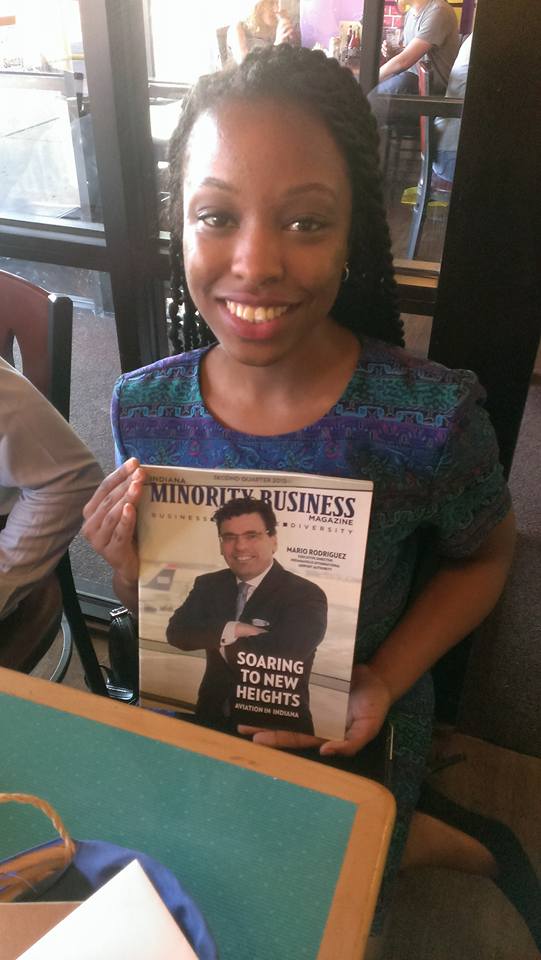


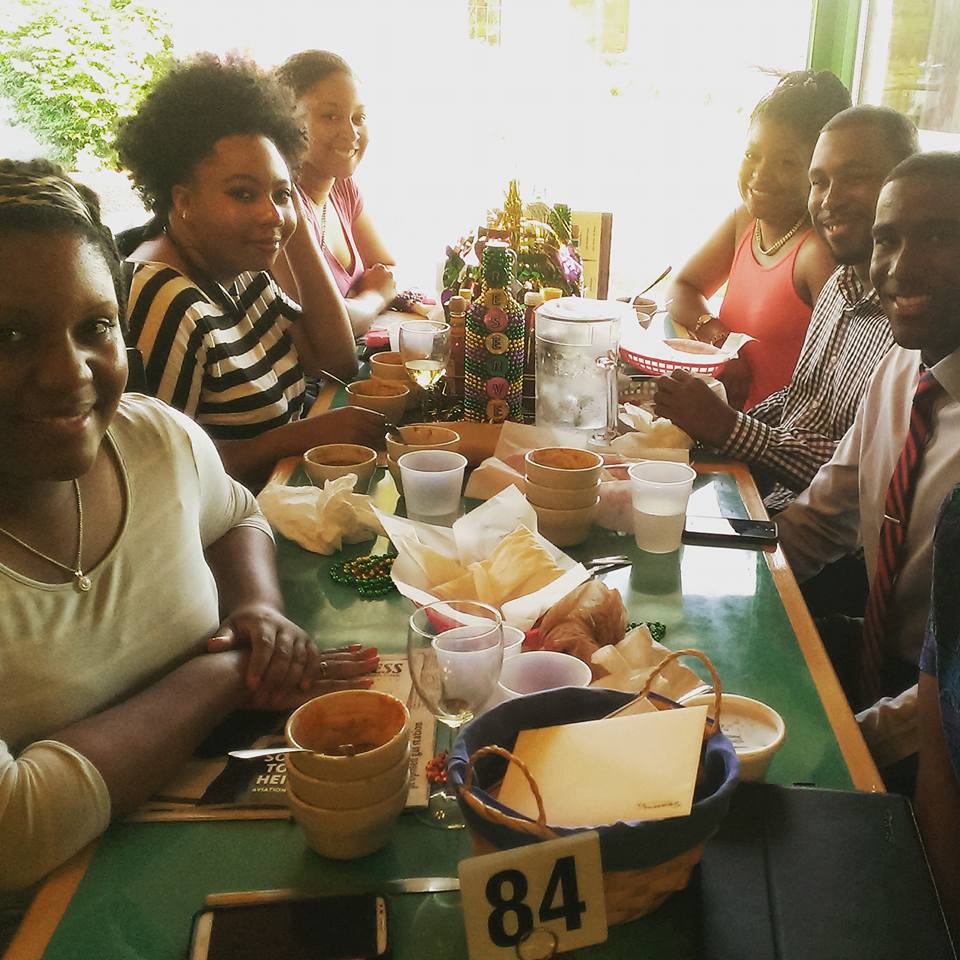

Check out photos from our Traveling Launch Party at Borel’s Cajun & Creole Cookery


The Indiana Minority Business Magazine, the state’s leading publication that focuses on business, lifestyle, and diversity is searching for freelance writers for its upcoming issue. The quarterly publication is most effective in reaching diverse populations and those interested in the importance of diversity. There is information for everyone from the small business owner, to the large corporation and even the young professional who’s just embarking on their professional career.
Potential freelancers should have strong writing and verbal communications skills. We prefer our freelancers to reside within the State of Indiana, however some assignments do not require research done within the state. Freelancers may be assigned lead profile stories or given other assignments from sections of our magazine such as Hoosier Marketplace, Startup, Skill Set or others. Payment is based upon word count and writers are paid once the magazine is published.
If interested, please send an email to newsroom manager, Victoria Davis at victoriad@Indianapolisrecorder.com introducing yourself and submit a resume along with writing samples. We look forward to hearing from you.

The Indiana Minority Business Magazine is searching for two online bloggers for our website, indianaminoritybusinessmagazine.com. Bloggers will contribute one blog post per week, which will be market on the publication’s social media platforms. Bloggers should be well versed in the business industry and have an interest in minority businesses in the state.
This position is unpaid, however, bloggers will have their work published weekly online and possibly receive letters of recommendation upon request.
If interested, please send an email to newsroom manager, Victoria Davis at victoriad@Indianapolisrecorder.com introducing yourself and submit a resume along with writing samples. We look forward to hearing from you.
Join us at Borel’s Cajun and Creole Cookery as we launch the second quarter of the Indiana Minority Business Magazine. Delicious Food, Fun Giveaways, and More!

John Wise and Octave Chanute were some of the first in Indiana to test the theories of flight on Hoosier soil. Wise sought out balloon travel beginning in Crawfordsville, Ind. and Chanute, one of America’s foremost civil engineers, built a glider and conducted test flights in what is now Gary, Ind.
Although these individuals may be known as leaders of flight in the state, they weren’t the only ones to contribute to Indiana’s rich aviation history. Wilbur Wright, Lawrence Bell, Blanche Stuart Scott, and Amelia Earhart all began their journeys in the Hoosier state, as well as several others.
Today the Indianapolis Motor Speedway is known for racing cars, but at one time they raced balloons in 1909. The home of many aviation firsts, Indiana has now come to be known as state with several universities that have dedicated departments to aviation such as Purdue University and Indiana University as well as a state that achieves some of the highest rankings.
The Indianapolis International Airport has been recognized as the “Best Airport in North America” for the fourth time by Airports Council International as part of its annual Airport Service Quality awards for performance and excellence.
While Hoosiers have been taking flight for centuries, many residents and organizations are finding their path on the journey to discovery.
By Ellen Ernst Kossek
National statistics indicate that American employees, whatever their background, age, or marital status, are experiencing increased stress and conflict in work, family, and life.

One reason for this is the explosive growth in the use of portable electronic devices, including tablets and cell phones. Now our boss and our co-workers can contact us at all hours at home via email, while our families and friends in turn can easily text us at work.
As a university professor and an organizational consultant and leadership development expert, I have led training and change efforts for leaders and teams. Members consciously work to change the culture and structure of work to give employees more boundary control and have clear times they are on and off line. Employees also work to back each other up so that the work gets done. Taking a team approach makes it more possible for individuals to set boundaries and share preferences as part of team-structured dialogue. Think about how your workplace can develop processes for groups and individuals to discuss personal needs for support and control over how to best synthesize work and nonwork for positive dual engagement on and off the job.
I have developed several evidence-based leadership tool including one called “flexstyles” that promotes inclusion by increasing boundary control to support diversity in work-life preferences. Flexstyles are the different ways individuals manage work-life boundaries and interruptions from use of cell phones, e-mails, texts, social media, and other electronic communications Based on a book I co-authored, CEO of Me: Creating a Life that Works in the Flexible Job Age, this assessment measures an individual’s perceptions of their work life identity fit and control. It builds an individual’s capabilities for increasing self-regulation to control work-life boundaries. Feedback is given on varying preferences in boundary management styles and differential work/engagement patterns.
Whether integrating work and family throughout the day; separating work and private life as much as possible; or cycling back and forth between work focus and an emphasis on home life, the strategies for how to achieve work-life balance are diverse as today’s workforce.
Diversity expectations for segmentation, integration, and having the ability to shift patterns of control to more or less integration at different times of the week or year can be linked to sexual identity, cultural values, gender, immigrant status, or generational cohort.
For example, an individual who is gay and who is not “out” in the workplace or wishes to keep his or her personal life private may choose to segment work and personal life.
An immigrant employee who works for a university during the school year, may desire to do his job remotely in his native land during the summer months when not teaching, and work remotely while living with elderly parents. Diversity of work-life balance may simply be a function of day-to-day values and sleeping patterns shaping when one works best. A Gen-X employee may wish to integrate work and personal life by taking a long lunch hour to exercise and might be a night owl who arrives to work at 10 a.m. instead of 8 a.m. and work until 7 p.m. instead of 5 p.m.
Your organization will likely reduce turnover and increase engagement by training leaders how to support diversity in work-life working time and availability needs, and giving employees greater flexibility, to increase positive control over where, when, and how work is done. My research demonstrates the importance of job control and schedule control for employee well-being. When individuals perceive high work-life control, they report greater time adequacy to be engaged at work and home, have higher well-being, and experience lower work-family conflict.
Dialogue between leaders and employees; employees and co-workers and teams; and employees and family members is increasingly needed to ensure shared values regarding individual work-life boundary management needs. I have conducted work life training with employees in many occupations: doctors, faculty, scientists, business leaders, and full-time students. More research and practitioner collaborations are needed on how to design, implement and evaluate positive workplace change efforts to reduce work-life conflicts in ways that reflect the growing diversity of employee references for work-life support and control. The workplace has a powerful impact on societal health and well-being. Think about how you can help your workplace implement initiatives and promote leader action to foster inclusion for all members to enable individuals to thrive in joint participation in employment and family and personal roles.
Ellen Ernst Kossek (Ph.D., Yale) is the Basil S. Turner Professor of Management and Research Director of the Susan Bulkeley Butler Center for Leadership Excellence at Purdue University’s Krannert School of Management. Elected the 2014 President of the Work Family Researchers Network, her research has won awards for advancing the work-life field and understanding of gender and diversity in organizations. Kossek is the author of a popular book on control of work-life boundaries, CEO of Me: Creating a Life that Works in the Flexible Job Age http://www.amazon.com/CEO-Me-Creating-Flexible-paperback/dp/0132480581. She can be reached at ekossek@purdue.edu.

As deputy commissioner of the Indiana Division of Supplier Diversity, Terrie Daniel’s professional focus is the promotion of businesses owned by minority, women and veterans. Below is a FAQ checklist created especially for the Indiana Minority Business Magazine —frequently asked questions and answers — that Daniel fields in her daily workweek.
Question: What motivates you to promote diversity?
Answer: Supplier diversity and inclusion on all levels creates a climate of economic development in our community for everyone. It is our responsibility as diversity champions to change the mindsets of those who may not recognize valid opportunities for minority, women and veteran business enterprises. Inclusion is not just something to do to meet a percentage or a goal on a contract, it’s just the right thing to do. Through our diverse culture we can draw upon relevant features of individual backgrounds and better serve clients and constituents.
Q: How does your agency make a difference in this regard?
A: The Indiana Division of Supplier Diversity promotes, monitors and enforces standards for certification of minority, women and veteran business enterprises. State officials formed the division in 1983 in response to Public Law 34 (I.C. 4-13-16.5 and 25 IAC-5) to provide equal opportunity to minority and women enterprises in the state’s procurement and contracting processes.
Public Law 34 also created the Governor’s Commission on Minority Business Development, which is now known as the Governor’s Commission on Minority and Women’s Business Enterprises (MWBE). Commission members work to advocate minority and women’s enterprises in state contracting in their respective regions.
Q: Do you set specific goals for the percentages of contracts awarded to diverse businesses?
A: The current weighted average goal for minority business enterprises’ (MBE) participation is 6 percent of the state’s competitive contracts for purchase of goods and services. The goal for women’s business enterprises (WBE) is 7 percent. Finally, the goal for veterans’ business enterprises (VBE) is 3 percent.
Q: As you said, the state formed a division more than 30 years ago to promote contracts with minority-owned businesses. Is the emphasis on veteran-owned businesses something more recent?
A: Yes. On April 25, 2013, Gov. Mike Pence established the Indiana Veteran Business Enterprises Program when he signed SEA 564. The goal is to provide additional economic opportunities for men and women who return home after serving their country to start or expand their own businesses.
Q: All these initiatives are part of state law, then?
A: Yes. The program is governed by Indiana Code 4-13-16.5.1-9, which defines the role of the minority and women business enterprises and provides an overview of state requirement and grievance procedures. Specifically, 25 IAC 5-1-1; 5-1-3; 5-2-1; 5-3; 5-4 detail the certification standards for certification application review, certification acceptance and denial.
Q: Obviously, these programs help minority, veteran and female business owners. Do others benefit as well?
A: Absolutely. Working with diverse suppliers can improve customer satisfaction. Companies and government entities benefit from having more options and flexibility within the supply chain by working with diverse suppliers. Utilization of diverse suppliers can result in cost savings and better service. Finally, through a diverse culture, we can draw upon valuable features of individual backgrounds and better serve clients and constituents.
We are better because of our differences — not despite them. I am committed as the leader of the state’s supplier diversity efforts to do what I can to make sure those differences are celebrated and businesses have an opportunity to grow in our state and globally.
Q: So how do people get their businesses eligible for consideration?
A: Minority and women business enterprises that wish to provide goods or services to state agencies as a sub-contractor should be certified by the Division of Supplier Diversity.
There are eight basic steps for Indiana based businesses to become MWBE-certified. Those steps are:
Q: How about out-of-state firms?
A: Based on the outcome of the Governor’s Commission meeting held on Jan. 12, 2009, the Division of Supplier Diversity will only consider applications from out-of-state companies that are based in a state that recognizes Indiana MWBE certification from the Indiana Department of Administration Division of Supplier Diversity. For additional information on out-of-state certification procedures, please visit http://www.in.gov/idoa/mwbe/2492.htm.
Q: Is there a different process for a veteran-owned business?
A: Yes. To be considered a VBE with the state of Indiana, a firm must:
Q: What does a business gain by becoming certified?
A: A business may qualify for MBE, WBE and VBE subcontracting opportunities on state contracts. It receives notification of state business opportunities and upcoming events. It may qualify as an MBE/WBE/VBE for purchasing by casinos and state universities, as well as other public and private partner organizations.
Also, certification means a business receives priority registration and display preferences at all Division of Supplier Diversity events statewide, including regional business conferences that feature expert educational content and access to partner organization (public and private) procurement decision makers.
A certified business also may receive one-on-one business development consultation assistance. Appointments must be scheduled for these sessions.
Q: What if a business needs help navigating all the necessary steps?
A: Free step-by-step training for MBE, WBE and VBE certification is available the third Wednesday of each month for new applicants. To register or learn more about clinics and other outreach programs, visit the Division of Supplier Diversity “News and Events” webpage located at http://www.in.gov/idoa/mwbe/2749.htm.
Q: Last fall, there was talk of an upcoming disparity study? What’s that about?
A: In November 2014, the state of Indiana Department of Administration Division of Supplier Diversity commissioned BBC Research and Consulting to conduct the 2010 disparity study. Following is specific information outlining the parameters of the study:
Q: Who will be included in the study?
A: The partners included in the study are state agencies, including Indiana Department of Transportation, and state educational institutions including Indiana University, Indiana State University, Purdue University, Ball State University, Vincennes University, University of Southern Indiana, Ivy Tech Community College, the Indianapolis Airport Authority and the Hoosier Lottery.
Q: What is a disparity study?
A: Disparity studies examine whether or not there is evidence of discrimination in the utilization of minority- and women-owned firms. Disparity studies are a way for government agencies to examine whether programs are needed to assist small businesses and/or minority- and women-owned businesses in government contracting and purchasing.
The purpose of the 2015 State of Indiana disparity study is to compare the actual number of minority and woman-owned business enterprises (MWBEs) that exist in the state against the actual number of MWBEs being utilized in state government contracts. A disparity exists when there is underutilization of available MWBEs.
Q: Why is a state disparity study needed?
A: The last Indiana disparity study was commissioned in 2009 and completed in 2010. The state has not completed an updated disparity study since then; per IC 4-13-16.5-2, the state is required by law to update its disparity study every five years. An updated disparity study must be completed in order to establish the legal validity for maintaining an MWBE program.
Q: Will the study be made public?
A: The results will become public record. The study results will also provide the basis for future state policy and procurement decisions that rely on current information for determining MWBE participation levels. To see progress of the current study or the results from the 2010 disparity study, please visit our website at http://www.in.gov/idoa/mwbe/2674.htm.
Q: What will it cost to fund the study?
A: The cost of a disparity study ranges from approximately $1 million to $1.5 million based on studies commissioned by states of comparable size. It is estimated that Indiana’s disparity study would cost approximately $1.5 million based on the cost of the previous study performed and cost of other comparable state studies.
Q: How will the study be financed?
A: Indiana’s Minority and Women’s Enterprises Division, a program within the Indiana Department of Administration, along with other state agencies and quasi-government agencies, will share combined resources to fund the disparity study.
Q: What is the commission’s role?
A: The firm commissioned to complete the study will track capacity for Indiana MWBE firms vs. the entire population of firms, then assess utilization vs. that capacity. The firm will present findings to the Governor’s Commission on Minority and Women’s Business Enterprises.
Based on that presentation, it is the commission’s responsibility to set the participation goals for the year ahead. The company conducting the study does not make recommendations on what the goals should be.
Q: Are there ways businesses can help with you overall cause?
A: Of course! Share your experiences working in the local marketplace by visiting our website http://www.in.gov/idoa/mwbe/2674.htm. You can also call our office directly at 317-232-3061 to leave responses in regard to your experiences.
Also, respond to our requests for an availability interview. If you are a business owner in Indiana, you may be contacted as a part of the availability interview process. If you are contacted for an availability interview, please help the study team by responding to the request in a timely manner.
Call us at (317) 232-3061 or email us at mwbe@idoa.in.gov if you have any questions about the study.
Q: Thanks so much! Any parting words?
A: I have challenged my team to come alongside me and make this one of the best – if not THE best — diversity programs in the country. I know that will take a lot of hard work, perseverance and support from the business community — and possibly legislation — but it can be done.
With the continued support from the community, our governor and lieutenant governor are committed to making Indiana a place where businesses want to be as well as taking the lead on making Indiana a state where businesses can grow. We are moving forward, taking this program from ‘good’ to ‘great!’
INDIANA BASED BUSINESS
Total number of firms – 482,841
Black-owned firms – 4.6 percent
Native American- and Alaska Native-owned firms – 0.5 percent
Asian-owned firms – 1.8 percent
Native Hawaiian and Other Pacific Islander-owned firms – 0.0 percent
Hispanic-owned firms, percent – 1.8 percent
Women-owned firms – 26.8 percent
*As of 2007 United States Census Data

By Victoria T. Davis
Beat the Heat Habanero Dip – A Spice Above
A Spice Above, located in Crown Point, Ind. carries 18 different varieties of all natural gourmet dips. The company boasts that its products are all natural, low carb and contain no MSG or preservatives. Their Beat the Heat Habanero dip is A Spice Above’s hottest product made with onion, Parmesan cheese, salt, spices, garlic, Habanero peppers, and paprika.
Horse-Eye Decorative Bowl – Dick Lehman Pottery
A variety of pottery dishes and vases can be found at Dick Lehman’s Pottery in Goshen, Ind. The Horse-Eye Decorated Bowl is inspired by Japanese potters in the Aichi Prefecture and a decorative pattern called “umanome” or Horse-eye pattern. This piece is priced at $295. For more information visit, Dicklehman.com.
Salty Carmel Swirl – 240sweet
Delicious, handcrafted artisan treats can be discovered in Columbus, Ind. where 240sweet can be found, a shop that specializes in marshmallow puffs. The shop’s most popular flavor is Salty Carmel Swirl, which is made with all-natural ingredients. A $10 Flavor Pack will buy you “A perfect pack of 10 petite puffs.”
White Hot Chili – U relish farms
Are you a crockpot fanatic? You may enjoy Cara Dafforn’s pre-mixed recipes, which are bagged and ready for cooking. Dafforn’s company, U-Relish Farms located in Indianapolis offers three lines of flavorful recipes totaling over 13 different meals. Her White Hot Chili includes 8 ounces of tasty ingredients; directions on the front of each bag for accurate preparation. The recipe mixes are preservative free. This product can be purchased at the Indianapolis City Market.
Victorian Rose- Bethlehem farm soap
Bethlehem Farm Soaps can be found in a variety of places in Southern Indiana as well as Kentucky. This family owned and operated business offers a line of handcrafted soaps, lip balms, lotions and candles. Their Victorian Rose soap is made with essential oils and is recommended for dry skin. To purchase, visit Bethlehemfarmsoap.com.

By Ebony Chappel
Like other means of public transportation, airplanes are a place where people of all ages, backgrounds and personalities converge in one space. The average American workplace shares very similar characteristics. Both places, have spoken and unspoken codes of conduct which at times, appear to go unnoticed by those that are oblivious or even believe they are above the law.
In late 2014, Expedia and GfK, one of the world’s largest market research agencies, released the findings from their second annual Airplane Etiquette Study. The study, which surveyed 1,000 people, ranked the most annoying on-board behaviors, some of which you may also encounter every day in the office. Read on for the top four offenders, workplace comparisons, and creative solutions.
Rear-seat kicker
The rear-seat kicker came in at number one on the list with 67 percent of those surveyed ranking this the worst of the worst. Depending on the proximity of your desk to others, the rear-seat kicker may be akin to the chewing gum popper, the fingertip on desk tapper, or the hummer. Expedia suggests offering candy as an incentive to stop but that may make your situation worse or even socially awkward. A nice pair of earbuds and calming music from your favorite streaming service may be the best remedy.
Aromatic agony
56 percent of respondents listed the aromatic passenger as most annoying. You may recognize this as the co-worker who wears entirely too much perfume, or the one who considers daily showering an option and not an obligation. Speaking to someone about their body odor can be quite petrifying. The best course of action here is to be discreet, tactful and delicate. There may be cultural differences or even medical issues that have contributed to this issue. Speaking with your manager or HR specialist may help ease the burden of tackling this alone.
Audio Insensitive
When a tree falls in the forest, does it make a sound? Maybe. If my co-workers can’t hear my new favorite Spotify playlist at high volume is it still great? Yes. Most offices have policies on sound from electronics during work hours. If yours does not, a conversation with those in charge would be a great idea. An effectively worded email or poster in the break room stating the sound policy is a great way to inform everyone.
Chatty Cathy
Distractions are inevitable. Phone calls, emails, and Facebook breaks for mental health are part of the average worker’s day and so are interactions with chatty co-workers. Catching up at the water cooler on the latest world events or business developments is normal. However, having to play nice while your office mate holds you hostage by waxes poetically on the obscure fascination of the moment during critical moments of productivity can be downright frustrating. The survey suggests warding off garrulous coworkers by switching the conversation to that big, upcoming meeting or claiming to be narcoleptic and then falling asleep. Of course, the choice is yours but a simple, “I’m really busy right now. Could we chat later?” may suffice.

By James Turner
The concept of storing information in a central location formed during 1950s, when the mainframe was deemed the future of computing. The room-sized, traditional mainframe has come and gone. Today, the information stored within our computers, tablets, and smartphones can be stored within the Cloud.
The Cloud simply refers to a place where people upload information to the Internet while making it accessible anytime, anywhere, from any device. Most people are already using the Cloud in their personal lives by accessing Gmail, uploading files to Dropbox, and shopping at Amazon. Cloud technology unlocks numerous benefits that has far reaching implications for business including:
Although the cloud has many advantages, it’s important to acknowledge its potential negatives. The largest concerns include security and the loss of control over your own data. There are ways to ensure you’re protected. For example, use and manage complex passwords, and review of your cloud partner’s privacy policies to ensure your data is protected.
Large enterprises aren’t the only business that can benefit from cloud technology, small business can use the cloud to level the playing field. Here are the top three ways business can quickly integrate cloud technology into their business today.
According to one online source, “Nearly 50 percent of Small Business Owners don’t backup their data, and those who do report spending 15 minutes a day which equates to about 8 business days a year”. Cloud solutions can simplify this process and provide a place to store copies of your data off-site.
Cloud-based applications permit businesses to access their data from anywhere in the world, using any device. This offers solutions where employees can be productive outside the office while providing more flexible work arrangements, which will lead to recruitment and retention of top talent.
Cloud technology allows small businesses to built robust solutions without the traditional required IT investment. These solutions provide video conferencing, simultaneous document editing, and a white board experiences that provides mimics an in person meeting that increase collaboration while decreasing travel cost.
We only discussed the top three easiest ways to use the cloud. Are you ready to start using cloud technology? I recommend starting small to allow the benefits to unlock more advanced cloud capabilities that will delight your customers.
By Jamar Cobb-Dennard
After attending a invigorating networking event that featured coffee, networking, and stirring speakers, a longtime friend noticed something striking. When he was a business owner some 12 years ago, he did not spend his time networking and building relationships to build his company. My response to him included the assertion that networking, in its current form, did not exist a decade ago. However, relationship building is essential to success in today’s marketplace.

Of course, people have been doing business by forming professional relationships forever, but how they initially enter into those relationships has changed. New connections and opportunities are created by people making referrals.
As a result, I routinely run into professionals who can attribute 60-80 percent of their accomplishments to relationship building or networking.
The challenge for 21st Century leaders is how to build effective business relationships.
The following keys to building relationships will help you establish and leverage a network to achieve professional and personal growth:
Building relationships is the cornerstone to success in 21st Century business. Professionals without a strong network are a commodity, and those who put in the work to create long lasting bonds are invaluable.
Jamar Cobb-Dennard is a sales recruiter who was recognized as a Top 50 Business Connector and Networking Rookie of the Year. You can learn more about him at http://hire-sales.net.
Website Created By: KI NuMedia