Owned and operated by Meredith Kong and Kelly Ryan, Lick is one of Indy’s hidden gem ice cream shops.
What started as homemade ice cream for friends and family morphed into a lucrative family-owned business. Lick was born more than 13 years ago, when sisters Kong and Ryan decided to take their talent and love for making ice cream to a new level, “elevating the experience” of the classic dessert.
The idea was to not only create ice cream they could be proud of, but that guests would feel good about eating. Despite Kong and Ryan’s passion for experimenting with new flavors, they made a commitment to never use stabilizers, preservatives or artificial ingredients in any of their products.
Everything is made from scratch in their Indy-based production space for both the downtown Indy and SoBro locations, and ingredients are sourced locally to give it that “homemade” feel.
Lick specializes in new and unique flavors and always has something new on rotation, such as margarita, key lime pie, passion fruit and French violet, as well as a few staples including brown butter cookie dough, coffee chip, chocolate cherry amaretto, gingersnap lemon curd, cookies and cream, vanilla bean and milk chocolate.
Lick currently has two locations, including inside the Garage at Bottle worlds, 906 Carrollton Ave. Ste. 360, and in Broad Ripple, 1049 E. 54th St. Hours at both locations vary. For more information, visit lickindy.com. To get in contact, email lickllc@gmail.comor call 317-979-0237.
Contact Arts & Culture Reporter Chloe McGowan at 317-762-7848. Follow her on X @chloe_mcgowanxx.If you would like your business highlighted by the Indiana Minority Business Magazine, click here.
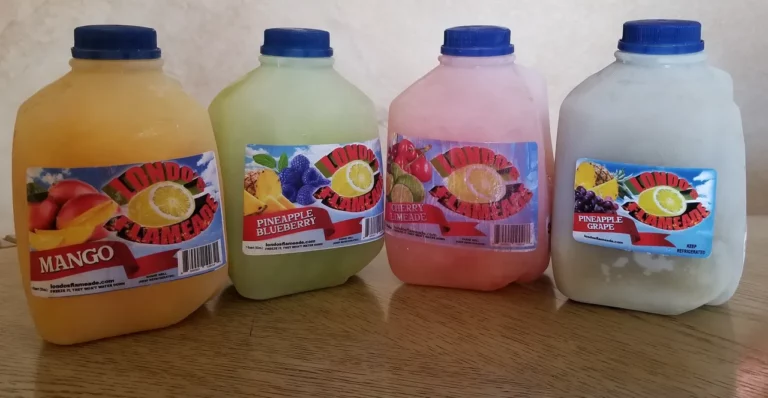
Londo’s Flameade is more than just a lemonade stand; it is an Indy success story that has captured the hearts and taste buds of people around the world.
Founded by Londo Hall, this vibrant business owner began humbly, selling homemade lemonade from his car’s trunk.
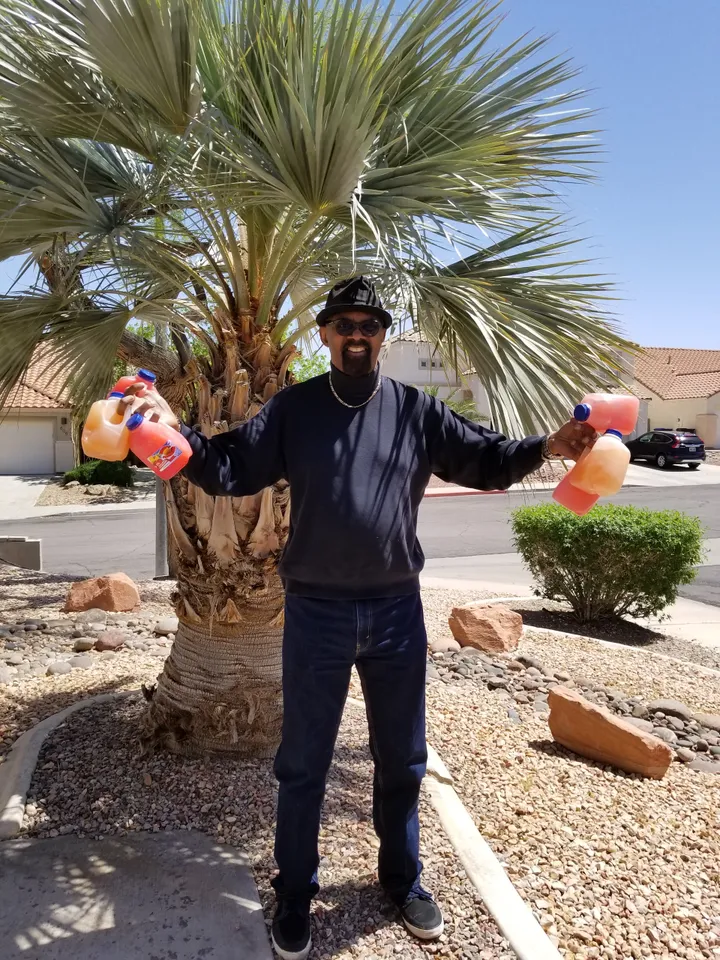
Entertainer, entrepreneur and Indianapolis native Mike Epps poses with his drinks purchased from Londo’s Flameade. (Photo via official website)
Today, Hall provides customers with over 30 unique flavors ranging from classic to tropical. Londo’s Flameade quickly gained a dedicated following on platforms such as Facebook, Instagram and X (Twitter). The buzz on social media helped transform the brand into a sensation, ultimately leading to the opening of a brick-and-mortar store during the spring of 2019.
Londo’s Flameade is a story of the power of entrepreneurship and the unwavering support of a community. As the business continues to grow, many are excited to see what the future holds for this Londo Hall and his tasty, unique assortment of lemonade.
Those interested in Londo’s Flameade can visit their store at 1940 East 46th Street. Visit their website here to learn more.
This highlight was composed by Multi-Media & Senior Sports Reporter Noral Parham III. Contact him at 317-762-7846 or via email at noralp@indyrecorder.com. Follow him on X @3Noral.
If you would like your business highlighted by the Indiana Minority Business Magazine, click here.
Jamey Callane has been appointed head of school for Indiana Gateway Digital Academy, a leading online accredited K-12 school.
Callane has an extensive background in education with roles as an educator, administrator and advocate for digital learning, dedicating his career to serving students and families and encouraging the power of online education.
“I am thrilled to join the Indiana Gateway Digital Dragons and to continue the mission of doing whatever it takes to leverage personalized learning experiences so that every student is prepared to enroll, employ or enlist after graduation,” Callane said in a press release. “Our goal is to empower students to achieve their academic potential in a flexible, supportive online environment. I am committed to fostering a community where every student feels valued and equipped for success.”
In his new role, Callane will work to expand Indiana Gateway’s offerings to meet the needs of students and families, providing a comprehensive curriculum with a range of courses designed to prepare students for college and careers.
“Jamey is a seasoned executive and servant leader with deep roots in Indiana. He has the knowledge, experience and passion necessary to deliver on our commitment of inspired teaching and personalized learning for every student,” Adam Hawf, Superintendent of Schools at Stride, said in a press release. “We are confident that Indiana Gateway will continue to thrive under his leadership.”
For more information about Indiana Gateway Digital Academy, visit ingda.k12.com.
Contact Health & Environmental Reporter Hanna Rauworth at 317-762-7854 or follow her on Instagram at @hanna.rauworth.If you would like your business highlighted by the Indiana Minority Business Magazine, click here.
Cannas Capital Holdings, a national nonprofit, has announced the launch of the Bank Black Initiative, an AI operating system to develop social enterprises. The system considers disadvantages and advantages of offering provisions for diverse business owners to shrink the racial wealth gap.
The AI operating system performs comprehensive due diligence for grants, loans and investments and is designed to recognize the unique challenges faced by minority business owners.
While the operating system considers management team, payment history and collateral support, it also integrates the following:
Community & Demographic Analysis
Social Capital Assessment
Institutional Support
Risk Mitigation Strategies
Long-Term Sustainability
Regulatory Compliance
Continuous Monitoring
By evaluating the above, the AI operating system encompasses the full spectrum of the context and potential of a business, promoting fair and equitable access to resources.
Founded in 2023, Cannas Capital affects more than 5,000 lives annually through various programs and initiatives. They offer a range of programs and services for economic empowerment, including financial literacy, business credit building and small business development.
The Bank Black initiative echoes Cannas Capital’s previous social equity initiatives. From Michigan’s Social Equity Programs to the Social Equity Discount Program for commercial cannabis businesses, the Bank Black Initiative is just one project that helps achieve their mission.
In 2016, I walked into a school’s career day on the west side of Chicago and met a great young man. This honor roll student played basketball and was respected by his peers. But despite these wonderful qualities, he sold drugs to pay for the things he desired.
He was one of thousands of young Black men in Chicago who have the ambition, intelligence and leadership acumen to become successful, legitimate entrepreneurs but have no idea how to find that path, let alone follow it. There are tens of thousands more like him in cities across the country. Some put their entrepreneurial drive and leadership skills to destructive, and illegal, use.
You’ve heard the statistics: 22% of Black men aged 18-24 are no longer in school but don’t have jobs. When they look around their own disinvested neighborhoods, they don’t see a lot of great options for the future.
That’s where business comes in. Commerce is the key to vibrant communities, and it can also serve as a path for personal growth, development and success. Initiatives across the country have demonstrated the power of business skills and mentorship in transforming the lives of young people of color.
(Photo/Getty Images)
Just look at Baltimore’s Youth Rising Coalition and Oakland, California’s Youth Business USA, which provide young entrepreneurs from underrepresented backgrounds with mentorship, training and resources to foster economic growth and community development. There’s also Atlanta’s Village Micro Fund, which supports to Black-owned businesses by emphasizing community investment and sustainable growth.
Inspired by these models, and mindful of the honor roll basketball player and other young Black men I’d met who see no legal path to a good life, I founded the Male Mogul Initiative (MMI) in 2017. It offers entrepreneurial training and mentorship that gives young men the tools to become business leaders, and inspires them to become role models in their neighborhoods. I played football in college and the NFL, and that helped with recruiting. We set up a place to gather, and then opened the Male Mogul store to sell products that participants in the program designed.
Then, coming out of the pandemic, supply chain issues and rising costs jeopardized our ability to offer quality products at reasonable prices. It was a teachable moment in overcoming obstacles and finding innovative solutions. This past April we launched Co-LLAB, a small business incubator and workshop for Chicago’s young creatives, located in the South Side neighborhood of Englewood. Co-LLAB allows our young entrepreneurs to bring elements of production in-house, stabilizing costs. It also aligns with our broader goals of fostering entrepreneurship and self-sufficiency.
Co-LLAB reaches beyond the MMI community to bring collaboration, innovation and education together so that young people can develop new businesses in arts, entertainment, and retail. Like other incubators in cities across the country, it is demonstrating how organizations serving youth can go beyond leadership training and soft skills to offer skills training and resources that set our young people up for business success. Our budding entrepreneurs can use the incubator’s machinery to create products such as clothing and art prints, which they can sell at our store. Members can consult with experts in accounting, finance, taxes, branding and marketing. They can attend workshops on careers in construction and trades such as welding, electrical work and aviation; these offer on-ramps to stable, long-term careers.
Our incubator is managed by two young graduates of MMI. They are among the hundreds of young men we’ve worked with, all between the ages of 14 to 24, who have developed leadership skills and learned about business creation and self-sustainability. These young men have grown up in some of the toughest and most under-resourced neighborhoods in the nation, but they are succeeding in school and launching promising careers and successful businesses.
Take Brashen. He entered our program at 16 as an intelligent but troubled teen. Last year, Brashen was able to buy his first multi-unit investment property. He was 21.
Or consider Keith. Kicked out of his home as a senior in high school, he ended up on the streets and then in jail. We covered Keith’s legal costs and offered other support as Keith worked hard to rebuild his life. He got his first apartment, developed personal and business skills, and at 22, closed on his first multi-unit property. Keith is on his way to becoming a successful real estate investor.
Stories like Keith’s and Brashen’s show how Chicago — and cities across America — can make room for all of their residents to live, learn and work.
Given the opportunity to envision successful lives for themselves and the tools and guidance they need to get there, our young people continue setting goals and working hard to achieve them. They can start the kind of community-based businesses that offer hope, possibility, and economic revitalization, with young people of color leading the way.
We can acknowledge our cities’ problems, identify underlying causes and work to fix them. And we can turn the harsh realities of capitalism upside down and use business training and entrepreneurship to help our most at-risk youth build productive, successful lives that strengthen their communities.
For more entrepreneurs news courtesy of the Indiana Minority Business Magazine, visit our homepage.
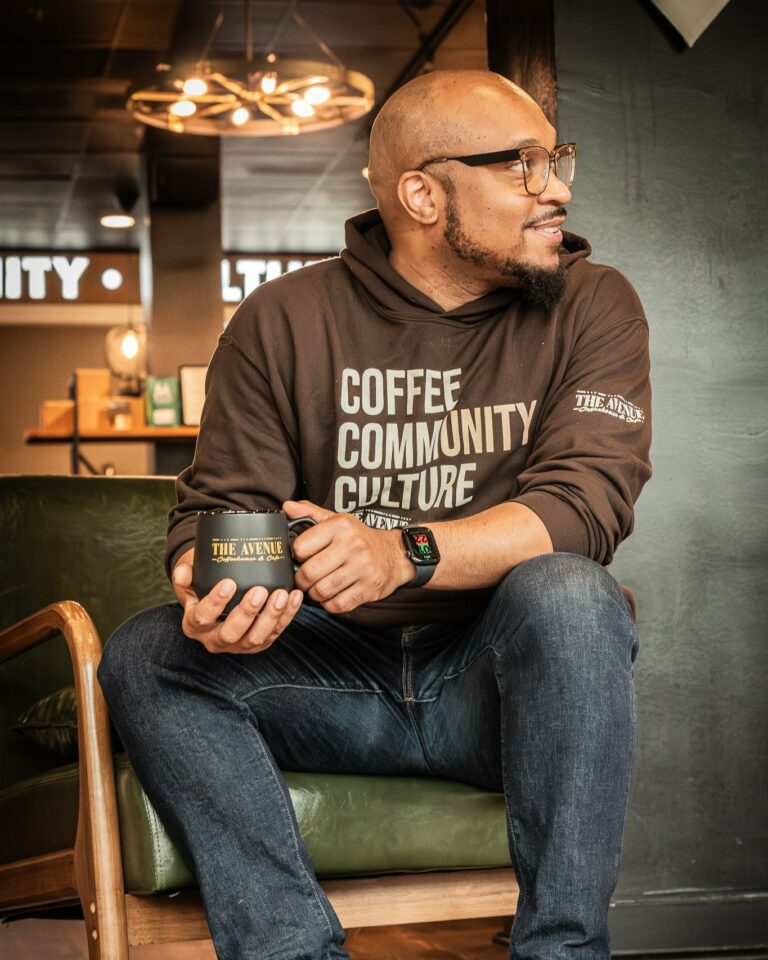
In the heart of the neighborhood, The Avenue Coffeehouse isn’t just serving coffee — it’s brewing community. This Black-owned spot has quickly become a local favorite, where every cup comes with a side of connection and culture.
At the helm of the business is founder and owner Eric LeSure, whose mission for The Avenue Coffeehouse is simple: to create an inclusive space for community that pays homage to the history of Indiana Avenue and Black culture.
LeSure’s coffeehouse is the first Black-owned specialty coffeehouse in Indianapolis. His goal is to become a leader in the specialty coffee movement while uplifting Black culture.
Namely, LeSure wants to “breathe Black life back into the Indiana Avenue Historic District,” according to the official website.
Indiana Avenue was the epicenter of Black culture in Indianapolis from the 1860s to the 1970s. To renew the area to what it once was to Black Hoosiers, LeSure established The Avenue Foundation, dedicated to building racial and economic equity.
LeSure’s overall goal for the coffeehouse is to have a brick-and-mortar location on Indiana Avenue, where they will serve up their specialty drinks like the Madam Waker — made of espresso, caramel and chocolate sauce, pecan syrup and milk — or The Hampton Sisters — espresso, cookie butter, vanilla syrup and milk.
The coffeehouse also offers breakfast and lunch options like Jazzy Toast, their take on avocado toast, and classics like the BLT.
Focusing on “commUNITY,” the Avenue’ is dedicated to empowering and uplifting other Black entrepreneurs, like the ones that once lined both sides of Indiana Avenue.
Visit this minority-owned business at 6283 N. College Ave. or browse their online menu at theavenuecoffee.com.
Contact Health & Environmental Reporter Hanna Rauworth at 317-762-7854 or follow her on Instagram at @hanna.rauworth.If you would like your business highlighted by the Indiana Minority Business Magazine, click here.
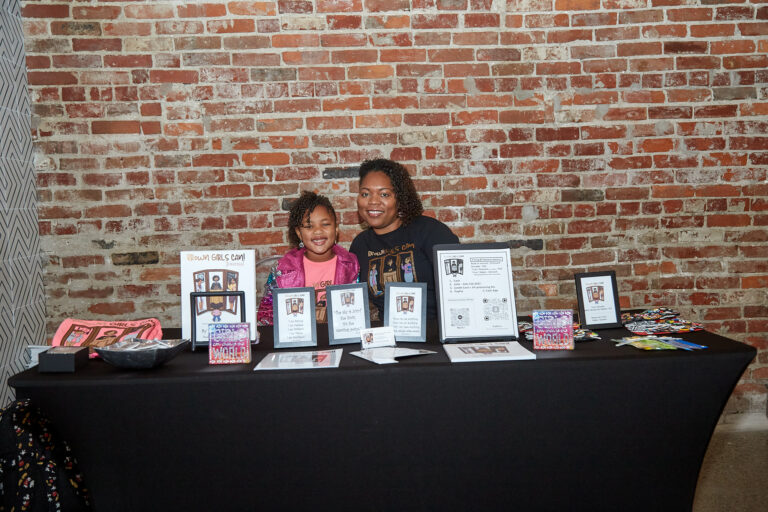
“Brown Girls Can” by KaMara “KK” White aims to inspire young Black and brown girls.
When she was younger, White knew helping people was her dream. At first, she thought that would be through nursing or counseling, but a different path took her through health care administration and project management. However, White received her therapist license from the State of Kansas in 2017, and when the pandemic hit, she used the opportunity in 2021 to take a leap of faith and leave her job to become a full-time therapist — and then an author.
“I’ve always written, and I’ve journaled since I was 10, so I’ve always loved writing, but I had my little girl, and we bought a home in New Palestine not knowing that they lacked a lot of diversity,” White said. “I kept thinking about, ‘What can I do to try to remind her that you could do anything that you want to do, regardless of race or sex or whatever?’ And so, I wrote a children’s book.”
“Brown Girls Can” is essentially about her daughter, White said.
The main character, Laila, is named for and illustrated to look like her as well. The story follows Laila as she navigates the world, placing an emphasis on the idea that Black and brown girls can do anything and be anything they want, regardless of the color of their skin.
Although White said she is originally “from all over,” including Kansas City and Louisville, having spent time in South Bend, Lexington and Cincinnati, she moved to Indiana about five years ago. They were both uncomfortable being one of — if not the only — Black family in their New Palestine. White said the people were nice, and it was too late to move again.
However, that meant her daughter would grow up and go to school with little to no representation around her.
“I wanted her to know that no matter what you see around you, that you can be anything, everything that you want to be,” White said. “We’re all beautiful regardless of the skin that we’re in, and so the book touches on that, but also touches on big picture things. You can be a president, you can be a business owner, you could be a doctor. You could be some of the bigger titles and careers that you don’t frequently see African Americans be a part of.”
“Brown Girls Can” was then published in May 2021 and the following year, White wrote and published the guided journal version for teenagers.
The “Brown Girls Can” children’s book and guided journal are available on Amazon as well as on White’s website. For more information about the book or her practice, visit thehealingcenterus.com.
Contact Arts & Culture Reporter Chloe McGowan at 317-762-7848. Follow her on X @chloe_mcgowanxx.If you would like your business highlighted by the Indiana Minority Business Magazine, click here.
The Indy Chamber has announced a trio of key leadership appointments: Blaine Zimmerman has been named chief talent and marketing officer, Joe Pellman has been promoted to vice president of talent and image and Aletha Dunston has been appointed vice president of strategic initiatives. These moves are set to enhance the Chamber’s talent, marketing and redevelopment efforts.
Blaine Zimmerman
Prior to his appointment, Zimmerman was the CEO of INvets and worked to attract veterans and their families to Indiana. In his role, he generated $30 million in economic impact, and his team and budget more than doubled within two years.
His civic leadership involvement with the Indiana War Memorial Foundation echoes his 16 years of military leadership experience as he steps into the new role, where he will lead the regional talent and work to enhance the Chamber’s engagement.
“I am deeply committed to the success of our community and passionate about making the Indianapolis region a thriving place for all,” Zimmerman said in a press release. “Joining the Indy Chamber allows me to further contribute to the community I care about and to work alongside a dedicated team focused on fostering a vibrant environment for talent and business.”
Joe Pellman
Pellman has been a member of Indy Chamber for more than 11 years where he played a pivotal role in several successful initiatives like the Accelerate Indy economic development strategy, the “Transit Drive Indy” campaign, the Rapid Response Hub and the Life in Indy initiative.
“Blaine’s demonstrated success attracting talent to the Hoosier state, and Joe’s decade-long stewardship of our marketing efforts make both the perfect fit to lead this critical area of focus for our organization in the coming years,” Matt Mindrum, President and CEO of the Indy Chamber, said in a press release. “Developing, retaining, and attracting talent is the heart of our strategy to further the Indy region’s position as the fastest growing and most attractive in the Midwest.”
Aletha Dunston
In the newly created role of vice president of strategic initiatives, Dunston brings a wealth of knowledge from experience in citywide development and revitalization initiatives. Dunston will oversee strategic initiatives and project management, implement community-wide development strategies and promote investment across the region.
“I am honored to take on the role of Vice President of Strategic Initiatives at the Indy Chamber. A career dedicated to helping communities implement complex community visions has provided valuable insight into evolving redevelopment patterns and strategies,” Dunston said in a press release. “I am passionate about Indy’s potential and excited to work with community partners and the talented team at the Indy Chamber to drive impactful regional initiatives and the mission of the organization forward.”
For more information about Indy Chamber, visit indychamber.com.
Contact Health & Environmental Reporter Hanna Rauworth at 317-762-7854 or follow her on Instagram at @hanna.rauworth.
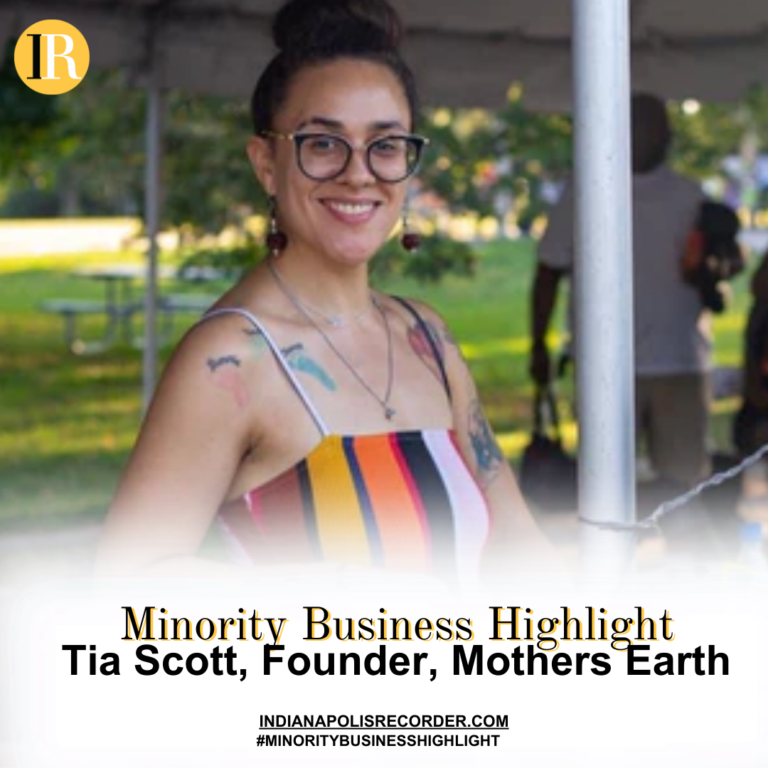
Tia Scott’s Mothers Earth is redefining oral care with its holistic approach.
Offering natural products like Down to Earth toothpaste and Tooth Dirt, the company merges traditional wisdom with modern wellness for a healthier, eco-friendly smile.
Scott’s story begins years ago when she discovered she was allergic to conventional toothpaste. Each time she brushed, her mouth was coated in a filmy build-up, and she sought a solution. After research, Scott determined the main ingredients in conventional toothpaste — fluoride, sulfates and parabens — were causing the reaction.
The next step for Scott was replacing her conventional toothpaste with an all-natural one that doesn’t have all those ingredients, but that didn’t fix the problem.
She then dug into the oral biome, brain health, heart health and the body’s all-natural detoxification process. From this research, she set off on a journey to heal herself and create an allergy-free oral care line using only natural products. Down to Earth Tooth Dirt was born.
Scott’s passion is oral and body care, and she continues to study oral hygiene, Ayurvedic medicine and ancestral practices to better herself and her products. Mothers Earth’s products include rinses, toothbrushes, tongue scrapers, whiteners, oil pulls and floss.
The original product, the Tooth Dirt, is a mouth cleanser and detoxifier used as a replacement for toothpaste. Simply dip your toothbrush into the tub and scrub as usual. The product is child-safe, and opened jars have a shelf life of up to one year.
Mothers Earth offers skincare products as well. Scrubs, cleansers, serums and moisturizers are all available for purchase on their website, mothersearth.com. Locally, their products can be found at Black Label Premium Product Exchange and the Cheesecake Lady Indy.
Contact Health & Environmental Reporter Hanna Rauworth at 317-762-7854 or follow her on Instagram at @hanna.rauworth.If you would like your business highlighted by the Indiana Minority Business Magazine, click here.
Owned and operated by Marsha Quarles and her family, Masha’s Specialty Desserts has been serving sweets and treats for more than 30 years.
The family-run bakery and catering business has been an official business based out of Avon for the last 14 years, despite an affinity for baked goods having run in the family.
All catering options — including plated meals for weddings, box lunches for orientations, tiered cakes, and assorted dessert bars — are prepared fresh each day and are available to be customized for all special occasions, including baby showers, anniversaries, weddings and graduations.
In addition to a breakfast, lunch, dinner and children’s catering menu, Marsha’s Specialty Desserts offers a variety of customizable cakes, cupcakes, cake pops, pies, brownies, cobblers, cookies and more.
Marsha’s Specialty Desserts is at 10834 E. US Highway 36 in Avon. The storefront is open by appointment only, but the Quarles family can be found at pop-ups and festivals around Indianapolis, including the Juneteenth Foodways Festival and Indiana State Fair.
Contact Arts & Culture Reporter Chloe McGowan at 317-762-7848. Follow her on X @chloe_mcgowanxx.If you would like your business highlighted by the Indiana Minority Business Magazine, click here.