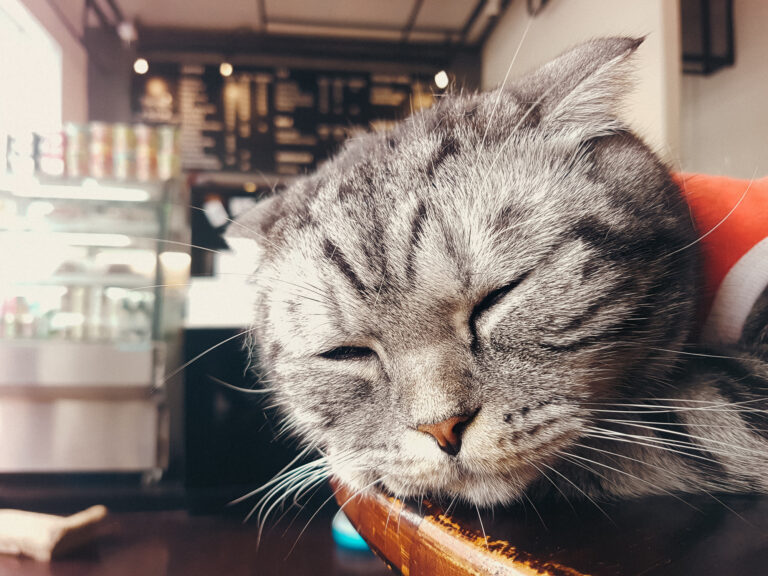
The Smitten Kitten Cafe and Coffee Shop is the spot for those who love cats and coffee. This café offers a variety of beverages and treats from local businesses, and a free-roam cat lounge.
This cafe is owned and operated by Holly Moss. Moss and her team welcome everyone to come in, have a coffee, and possibly find fellowship with a furry friend. Guests may also consider adopting a companion for their home.
“Our mission is to reduce the number of surrendered, abandoned, and homeless cats in our community,” the website states. “Our playful, stress-free, interactive environment allows for a stronger bond between the adopter and the cat. Our cat lounge is a safe, cage-free, peaceful environment for adoptable cats to reside, relax, and play with our guests and hopefully find their own human to go home with.”
Guests are encouraged to make a reservation. The cafe limits the number of people permitted in the cat lounge and may not be able to accommodate walk-ins.
Staff Writer Malik Simon created this highlight. If you would like your business highlighted in the Indiana Minority Business Magazine, contact him at 317-762-7847 or via email at maliks@indyrecorder.com.
Long before the shutter clicks and the flash pops, there’s a relationship being built. For senior sports photographer David Dixon, known to nearly everyone in Indianapolis sports circles as “Defro,” that connection between photographer and subject is just as important as the final portrait.
“Most of the athletes I have photographed over the past two decades probably don’t know my real name,” Dixon said. “They call me Defro. So that is what I decided to name my business.”
What started as a hobby evolved into Defro LLC, a minority-owned, for-profit photography enterprise. Dixon’s work spans multiple sports and events, but his heart remains rooted in the high school basketball culture. His business has grown to encompass partnerships with other photographers. Today, Defro LLC is contracted by the Indiana High School Athletic Association (IHSAA) for state championship events, in addition to working with individual schools and venues across Indianapolis.
His philosophy, distilled from those early lessons, is simple: “Never take your finger off the trigger.”
Dixon arrives hours before tipoff to scout scenes and prepare. The best shots happen after the play — the reaction, the emotion, the bench exploding.
“I want to capture images, not photos, that hopefully ignite something in somebody,” Dixon said.
Beyond his business success, Dixon has made community investment a cornerstone of his life’s work. He serves as a founding mentor of 300 Cameras for 300 Kids, an initiative dedicated to providing underserved high school students with pathways into photography careers. The program offers mentorship, professional training, and actual equipment to students who might otherwise never access the industry.
For Dixon, the initiative is about paying forward the generosity shown to him. He regularly shares tips with young photographers, emphasizing that the technical aspects of photography matter less than genuine connection and relentless preparation.
As Defro LLC continues to grow, Dixon shows no signs of leaving the baselines. Whether he’s documenting championship celebrations or mentoring the next generation with a camera for the first time, his mission remains consistent: capture the moment, build the community and keep the shutter clicking and the bulb beaming.
Contact Dixon and Defro, LLC at 317-590-8744. Follow Dixon on Instagram @Defroinc.
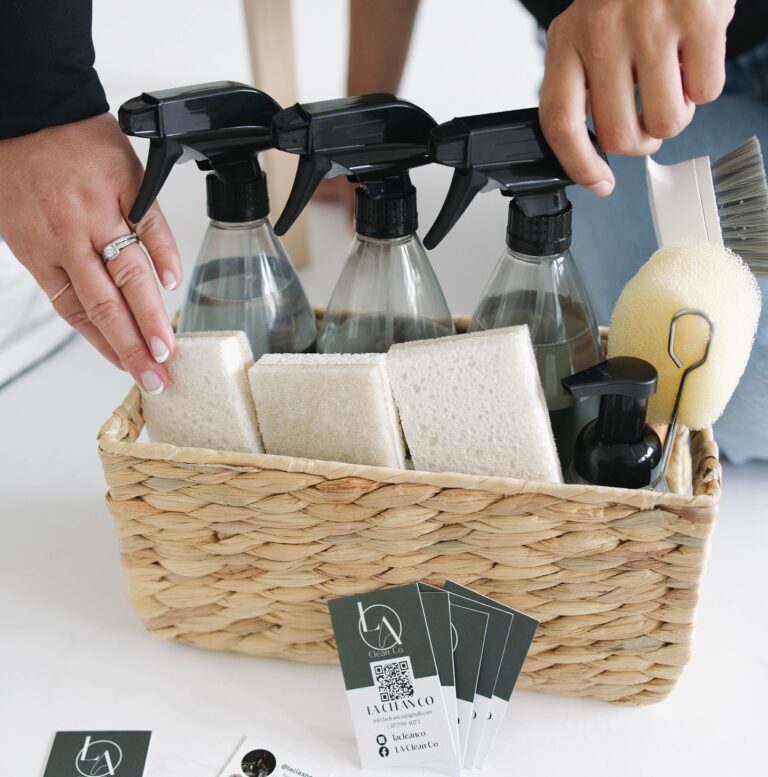
Based in Greenwood, Indiana, LA Clean Co is a woman-owned business dedicated to providing exceptional cleaning services tailored to its community’s needs.
Founded by Alexis Orchard and Anna Ruble in 2023, LA Clean Co specializes in providing clients with a spotless home and seamless transition, “ensuring a healthier and more inviting living environment, according to the website.
“Founded on the principles of integrity, reliability, and excellence, our mission is to create pristine living spaces that promote health and well-being for our clients,” the website states. “With experience in the industry, we understand that a clean home is essential for a happy life.”
LA Clean Co employs a team of fully trained, insured and motivated professionals who aim to deliver the highest quality of service, according to the website. Services range from residential cleaning, designed to keep the home tidy and organized through regular dusting and sanitizing, to move-in and move-out cleaning to prepare spaces for new occupants by thoroughly cleaning all surfaces and areas, and to commercial cleaning, which maintains cleanliness throughout a workspace.
“Where you own your time and peace of mind,” is LA Clean Co’s motto, and the team believes in building lasting relationships with its clients, taking the time to listen to their preferences and customize each service accordingly, according to the website.
The business also uses eco-friendly cleaning products and the latest techniques to ensure their clients’ homes sparkle while keeping family members and pets safe.
For more information about LA Clean Co or to book services online, visit lacleanco.net. To get in contact, email info.lacleanco@gmail.com or call 317-759-4073.
Contact Arts & Culture Reporter Chloe McGowan at 317-762-7848. Follow her on X @chloe_mcgowanxx.If you would like your business highlighted by the Indiana Minority Business Magazine, email chloegm@indyrecorder.com.
Decor By Dannie is a creative event and decor company based in Indianapolis, Indiana, that has grown from a simple canvas painting service into a multifaceted experience provider since its founding in 2019.
What began with basic paint and canvas offerings has expanded into a premier destination for artistic events, at-home craft kits, event rentals and unique party experiences across the region.
The business hosts immersive canvas-themed parties and events designed for artists of all ages and skill levels. From romantic date nights to themed group gatherings, Decor By Dannie’s event calendar invites participants to explore their creativity in fun, social settings. In addition to studio events, the company offers a variety of paint-and-party kits for adults and children, including canvas kits, glass paint kits and themed art bundles that customers can enjoy from home.
Decor By Dannie also provides event planning and rental services that include tables, chairs and party enhancements like inflatable photo booths and 360 spin booths, giving hosts tools to elevate celebrations ranging from birthdays to corporate functions. Their Paint & Party bus brings the creative experience directly to date nights, family outings or private gatherings, offering a mobile option that adds fun to any occasion.
(Photo/Decor by Dannie)
Located on East Washington Street, Decor By Dannie combines art, community and personalized service to make every event memorable. With a focus on hands-on creativity and inclusive experiences, the company continues to build its reputation as a one stop shop for arts-based celebrations and memorable moments in Indianapolis and beyond.
Contact Health & Environmental Reporter Hanna Rauworth at 317-762-7854 or follow her on Instagram at @hanna.rauworth.If you would like your business highlighted by the Indiana Minority Business Magazine, click here.
A Longer Table, formerly The Patachou Foundation, is a foundation whose mission is to “make sure every student has access to good food. We started with meals—and built from there.”
In Indianapolis, one in every five kids face what is known as food insecurity. Food insecurity is defined as a condition of limited or uncertain access to adequate food. In partnership with schools and students, A Longer Table has worked to “strengthen how food is served and what it makes possible,” according to their website.
Along with fresh meals, A Longer Table also provides paid job training for high school students and systems that reflect the needs and leadership of school communities partnered with the organization.
Martha Hoover is the founder of A Longer Table. In 2013, Hoover founded the A Longer Table foundation. Hoover was also the founder of a collection of restaurants in Indianapolis. Petite Chou Bistro & Champagne Bar, Napolese Pizzeria and Cafe Patachou are among the various restaurants which are now operated by the Won’t Stop Hospitality restaurant group.
These renowned local restaurants have served local communities for years. Cafe Patachou has been long described as “a student union for adults,” by locals, according to their website.
“Today, food is still at the center of what we do. But our work goes beyond the plate,” says A Longer Table’s website.
Staff Writer Malik Simon created this highlight. If you would like your business highlighted in the Indiana Minority Business Magazine, contact him at 317-762-7847 or via email at maliks@indyrecorder.com.
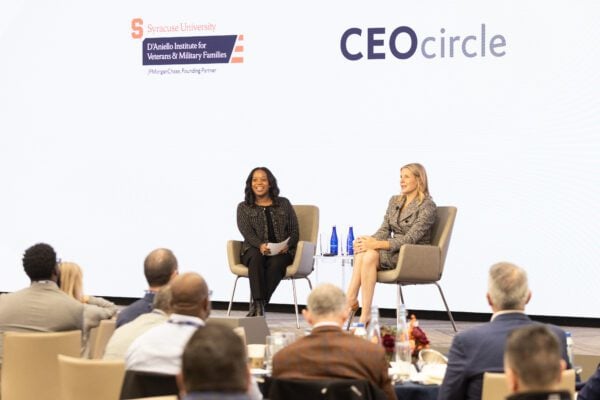
Shaunte Robinson, Business Development Executive and Midwest Segment Lead for Inclusive Banking at J.P. Morgan Commercial Banking, sat down with the Recorder to discuss financial inclusion, inclusive banking and assisting in the growth of Black and minority-owned businesses.
The inclusive Banking Team of J.P. Morgan provides connections, access and various educational opportunities to middle market business owners from any industry or background.
J.P. Morgan has also recently supported the Indianapolis Urban League, the Indy Chamber, and the Indiana Black Expo with various grants.
Grants such as a $475,000 grant to support LISC Indianapolis to expand and strengthen the Indianapolis CDFI Collaborative, an alliance of six mission-driven Community Development Financial Institutions, are among the many grants provided to local entities. This grant is committed to closing persistent capital access gaps for small business owners from historically low-income and low-wealth communities in Indianapolis. By giving over $22.6 million in philanthropic contributions from 2019-2024, J.P. Morgan has invested in the success and growth of organizations all over Indianapolis.
This Q&A has been edited for length and clarity.
Can you explain a little bit about yourself? And how did your position at JPMorgan and Chase help Black and minority businesses achieve their overall strategy of financial growth?
Shaunte Robinson: I am a Midwest lead for our inclusive banking team [and a] business development executive. Our role at the bank is to provide access and growth opportunities to help businesses scale. We have a particular focus on businesses that come from underrepresented areas and have had historical challenges in obtaining and having access to capital cover banking products. So, our role is to help give them a leg up, help them navigate the firm and then also help them access external opportunities.
Shaunte Robinson, Business Development Executive and Midwest Segment Lead for Inclusive Banking at J.P. Morgan Commercial Banking (Photo/J.P. Morgan)
With your strategic focus being on supporting minority, women, and veteran owned businesses, what resources do you provide or what kind of coaching and banking advice do you provide people?
Robinson: Over the last several years that we established this team, we’ve worked with a number of external organizations on understanding that business service organizations are kind of the heartbeat of local communities. Also, as these businesses are scaling, they’re going to these organizations for information and resources whether that be certification or you know, for them to expand their network.
So, we’ve created a few programs and partnerships with these business organizations. One is CEOcircle, and that’s in support of our veteran entrepreneur community and each year we bring together approximately 70 CEOs for a 12-month program where they have about 4 in-person meetings a year.
What is financial inclusion? Who does it affect, and how does financial inclusion help Black and minority-owned businesses in the current economic climate?
Robinson: I generally say, one: if you look at the rate at which capital has been provided, particularly for Black entrepreneurs, it’s less than half a percent. And so those are what we understand to be the barriers of growing businesses and even can be preventative in individuals starting that business. What we’ve, as a firm, understood is that the entrepreneurial world track should be for everyone and inclusive of everyone.
Not everyone has a Harvard network, right? So, if you don’t have the Harvard network, you just don’t know where to go. And what we’ve also seen is that minority businesses are often first-generation business owners, so they’ve never seen it before. And as they continue to hit different inflection points of growth in their business, they stumble, and they do not have some of the resources, or folks need to rely on that understands where they are in their business journey… So inclusive banking to us is that everyone has opportunity to grow a business, and what we are trying to do is bridge the gap of information and access to the things they need to sustain that business.
J.P. Morgan provides programming, networking and educational opportunities to founders – including programs tailored to U.S. Veterans, women in business and entrepreneurs from underrepresented backgrounds (Photo/J.P. Morgan)
What other organizations do you work with to enhance your involvement in the overall growth of Black and minority businesses?
Robinson: We play a role in in our engagement across our different markets; I have counterparts all across the country. We play a role in building relationships with the local chambers, the local Black chambers as well, offering not only guidance and support, but identifying areas for some of those challenges that we could possibly solve for or come up with programs or solutions. I think about some of the chambers, and I think about some of these across, and we call them designations, but across backgrounds or inclusive organizations that check a few different boxes.
Overall, how would you say that strategy is developed or succeeded over time to where we are now?
Robinson: You generally hear financial literacy and help on an individual bases, but the communities that we work in some of our employees live in and then what that can do to uplift individuals and put them on the right track once they feel more highly secure… we dove very deep into not only some of the challenges around rebuilding infrastructures around affordable housing, but the overall impact, the long-lasting impact that [we] can create for communities.
Love Indy Bar and Grill offers a culinary fusion experience on Indianapolis’ near east side, combining made-from-scratch comfort food, Mexican favorites and live entertainment.
Located at 4623 East 10th Street, the restaurant has quickly positioned itself as a destination for those seeking bold flavors and a welcoming atmosphere.
The menu is an introspection into culinary diversity, reflecting the city’s complex, comforting cultural fabric. Patrons start with shareable appetizers like bang bang shrimp or a sampling of innovative egg rolls, including southwest, Philly steak & cheese and buffalo chicken. A highlight is the soul-food egg rolls, a Sunday-only special that embodies the restaurant’s creative twist on tradition.
(Photo/Love Indy Bar and Grill)
Entrees span a wide range of cravings. Southern classics like smothered chicken, fried catfish, and slow-cooked oxtails with rice share menu space with Mexican specialties, including enchiladas, fajitas and breakfast dishes like huevos a la Mexicana. Seafood options, such as shrimp and grits or a spicy seafood stew (Picante de Mariscos), round out an extensive offering designed to satisfy diverse palates. Desserts, including brownie sundaes and sweet potato pie, provide a lovely finish.
Beyond the food, Love Indy Bar and Grill cultivates a social hub atmosphere. The venue regularly hosts live music, creating an environment where smoke, spice and satisfaction meet the good times. It aims to provide not just a meal, but a memorable experience for casual dining, celebrations and special moments.
For more information, including the whole menu and event schedule, visit loveindybarandgrill.com.
If you would like your business highlighted by Multimedia Reporter Noral Parham, contact him at 317-762-7846 or email him at noralp@indyrecorder.com. Follow him on X @3Noral. For more, visit indianaminoritybusinessmagazine.com.
Since 2022, Instant Giving Home Care has provided essential in-home care “with a purpose” to Hoosiers in the Indianapolis area.
Founded by Crystal Ewing, Instant Giving Home Care specializes in non-medical home care services, including daily living. Caretakers promise reliable, dedicated, instant care in the comfort of one’s home, as well as developing a lasting relationship with clients and their loved ones.
“What differentiates us from other businesses is our ability to truly connect with our customers and provide the exceptional, compassionate service they deserve,” the website states. “We provide support and care to your loved ones in assurance to remain in their home with normal daily living and instant care.”
Instant Giving Care understands that one’s needs can change on a dime, and as such, caretakers are ready to adapt services quickly to ensure their client’s success, according to the website. Caretakers are trained to assist with any housekeeping and meal preparation needs, daily living, medication reminders, companionship, transportation to appointments and respite care.
Instant Giving Home Care is accredited with the Better Business Bureau, with an A+ rating. The company accepts Humana, UHC, Anthem and private pay clients.
Instant Giving Home Care’s offices are located on the third floor of 55 S. Senate Ave., #333. For more information or to book a consultation, visit instantgivinghomecare.net. To get in contact, email cewing@instantgivinghomecare.net or call 317-419-3004.
Contact Arts & Culture Reporter Chloe McGowan at 317-762-7848. Follow her on X @chloe_mcgowanxx.If you would like your business highlighted by the Indiana Minority Business Magazine, click here.
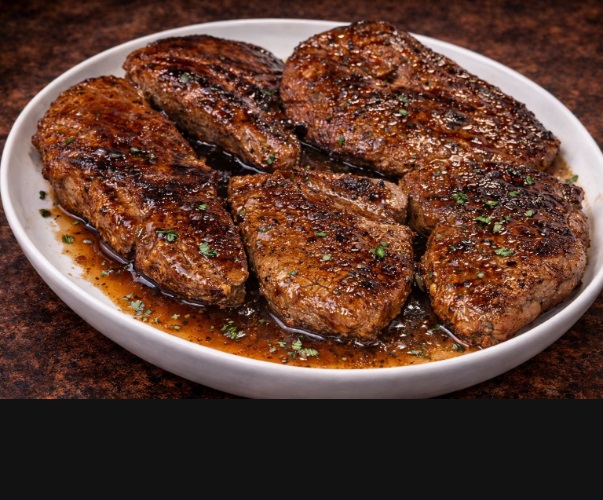
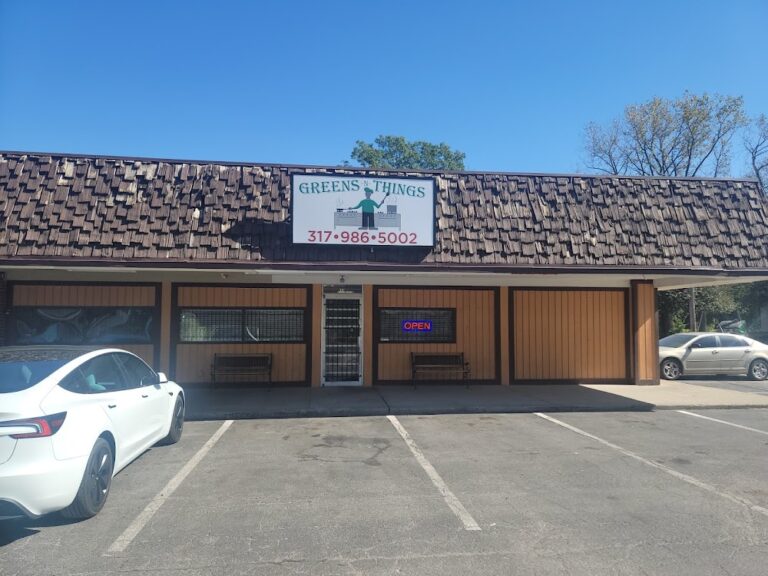
Greens N Things is a southern restaurant at 4815 Shadeland Ave in Indianapolis, offering hearty comfort food and homestyle favorites that keep locals coming back. Known for its welcoming atmosphere and a menu filled with soul-satisfying dishes, Greens N Things has built a reputation as a neighborhood favorite for breakfast, lunch and dinner.
The restaurant’s menu features a range of classic southern items, including breakfast options, sandwiches, soups of the day and signature sides such as fried green tomatoes. Diners can also enjoy hearty entrées and traditional comfort staples that reflect authentic home cooking.
Customers consistently praise the warm, friendly service and generous portions, with many noting that the food feels like a meal you’d find in your own kitchen. Popular offerings mentioned in reviews include tender turkey ribs, flavorful greens and rice, and fried chicken — dishes that embody the rich, well-seasoned flavors of southern cuisine.
(Photo/Greens N Things)
Open most days of the week with extended hours for lunch and dinner, Greens N Things welcomes guests for dine-in, takeout and pickup. The restaurant’s environment is casual and family friendly, making it a comfortable choice for both group meals and solo dining experiences.
Whether you’re craving a classic southern plate or a satisfying comfort meal, Greens N Things offers a welcoming space and flavorful food that reflect the heart of Indianapolis dining.
Contact Health & Environmental Reporter Hanna Rauworth at 317-762-7854 or follow her on Instagram at @hanna.rauworth.If you would like your business highlighted by the Indiana Minority Business Magazine, click here.
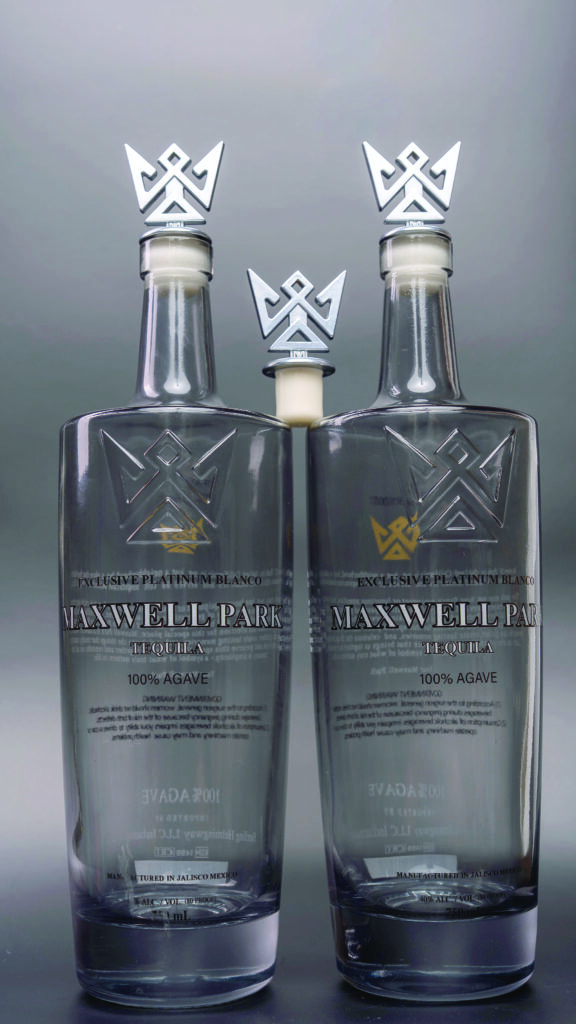
On a quiet afternoon in Indiana, far from the dry fields of Jalisco, Mexico and even farther from the slick glow of celebrity-backed liquor brands, Dominick Wilkins tells the story of a tequila that began with a simple truth: every person deserves a moment of connection.
Maxwell Park Tequila is only months old, officially first sold on July 8, 2025, but it carries the weight, warmth, and wisdom of something older, heritage-rooted and human-centered. At its heart is a man who never set out to become a tequila producer, a businessman and is believed to be the first Hoosier of color to launch a tequila brand. He simply set out to do something the right way.
But stories told with humility tend to become the ones worth hearing.
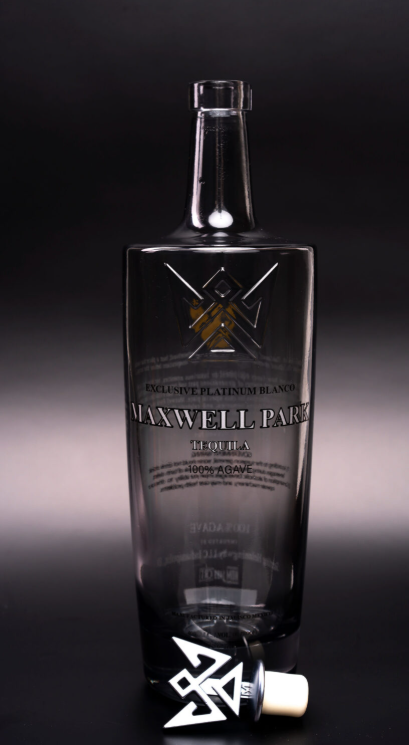
(Photo provided/Maxwell Park Tequila)
‘I was graced into a tradition’
Wilkins doesn’t talk about entering the tequila world through deals or corporate handshakes. He talks about being graced into it — welcomed into the Casa Aceves family’s generational craft. They opened not just their distillery to him, but their heritage.
“They allowed me to see the proper way things are done,” he said. “There are no shortcuts. You have to respect the process and the people behind it.”
So, he didn’t skim. He learned. He flew to Guadalajara. He walked the fields. He listened. He watched agave turn from firm green to the speckled brown sweetness that signals readiness. He saw the piñas split open, brick-oven roasted, shredded, fermented and distilled.
The debut release is a small-batch blanco, clean and bright, with naturally sweet agave notes carried from the slow-roasted piñas.
He didn’t want a surface understanding; he wanted hands-in-the-soil knowledge.
It shows.
Craftsmanship as accountability
Maxwell Park Tequila is a small-batch product, not because it’s trendy, but because it’s the only way Wilkins believes he can honor the tradition he was entrusted with.
Other brands speed up the process with younger agave or industrial shortcuts. He refuses.
Quality, for him, is not a technique — it is a moral stance.
“We’re not trying to be the largest producer,” he said plainly. “We’re trying to be the most responsible one.”
The partnership with his distillery works like a handshake between two people who expect honesty from each other. They keep each other accountable. They protect the culture they both represent. They honor a lineage.
It’s iron sharpening iron — agave field to bottle.
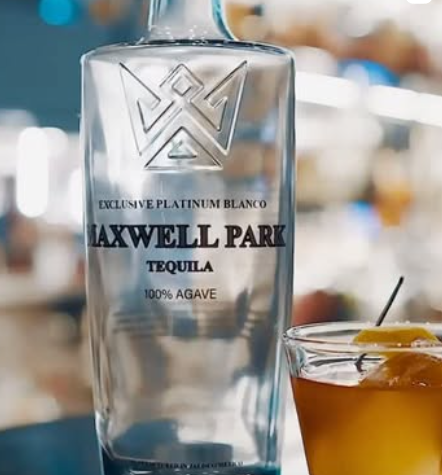
(Photo provided/Maxwell Park Tequila)
The crown has arrived — not as royalty, but as integrity
When asked what theme song would play upon opening a bottle, Wilkins laughed, caught off guard. But he found the answer anyway — not in a lyric but in a feeling.
“If there were a song,” he said, “it would be centered on the idea that the crown has arrived.”
Not a crown of ego. Not a crown of fame. A crown of transparency.
A crown of honor.
A crown of doing things the right way, even when no one is watching.
It’s a declaration, but a humble one: You no longer have to worry; this spirit was made with integrity.
Maxwell Park moments: A language of connection
Ask Wilkins what success looks like, and he won’t talk about market share, expansion or celebrity endorsements. His brand wasn’t built on those metrics, so why measure its success by them?
“Success,” he said, “is when the message of embracing Maxwell Park moments becomes fully understood.”
What is a Maxwell Park moment?
It’s simple. Ordinary. Beautiful.
It’s your neighbor clearing your driveway before you get home. It’s being invited to a celebration because someone sees you as part of their joy. It’s a shared laugh, a shared story, a shared porch, a shared breath.
It’s humanity, unpolished.
It’s the spirit of Wilkins’ grandparents, the way they searched for something to love in everyone they met.
It’s the opposite of a world speeding toward disconnection.
Maxwell Park Tequila is not only asking people to drink responsibly, but also to try tequila in its natural habitat — not in a rushed, biting second, but as a settled, refined conversation starter that asks people to notice each other again and enjoy.
The doubt that fueled the dream
When Wilkins first mentioned he wanted to start a tequila brand, the most common response he got was: “How are you going to do that?”
He wasn’t a celebrity. He wasn’t located in Mexico. He didn’t come from money or a legacy of business ventures. He was a regular man living in Indiana, remembering his childhood home in Oakland, California, with the name “Maxwell Park, the foothills’ best-kept secret.”
He is an ordinary man with a vision bigger than his circumstances. And somehow, here he is — with a brand that feels less like a product and more like a love letter to humanity.
(Photo provided/Maxwell Park Tequila)
A tequila built for community
Wilkins has big dreams for Maxwell Park, but not in the usual entrepreneurial sense.
He wants to build a physical Maxwell Park in Indiana — a community space, a source of scholarships, a vehicle for giving back.
“If people put their trust in me,” he said, “I have a responsibility to give back to them.”
Part of that responsibility, he says, is making the spirit accessible. At $59.99 a bottle, Maxwell Park Tequila is already carried in over 150 locations from Gary to Evansville — a footprint that mirrors the community he hopes to serve.
A regular man with an extraordinary purpose
At the end of the interview, Wilkins offered one final truth about who he is, separate from the brand.
“I’m not a celebrity,” he said. “I’m the guy on the bread aisle at Kroger, trying to pick which loaf to buy. I’m the guy on the stair master, sweating and wishing I didn’t eat that Long’s Donut.”
He laughed when he said it, but it’s the most revealing line in the entire conversation.
Maxwell Park Tequila is not built on the mystique of a founder. It is built on the accessibility of one. The brand’s message is not ‘Look at me,’ but rather, ‘Look at us.’
Because we all deserve a moment of connection.
The heart of the story
In a world leaning increasingly toward speed, noise and artificiality, Maxwell Park Tequila rises as a quiet, steady reminder: A spirit crafted with care can remind us to care for one another. A small-batch brand can hold big truths. And a regular man can build something extraordinary when he refuses to compromise on doing things the right way.
Wilkins said, “Maxwell Park Tequila is more than a beverage. It is a belief: Every human deserves a moment — A Maxwell Park Moment: to be seen, to be valued, and to be connected. Open a bottle, welcome the human experience and let the crown arrive.”
LaTasha Boyd Jones is a journalist, poet and cultural critic exploring language, liberation, identity, fashion, beauty and Blackness.