

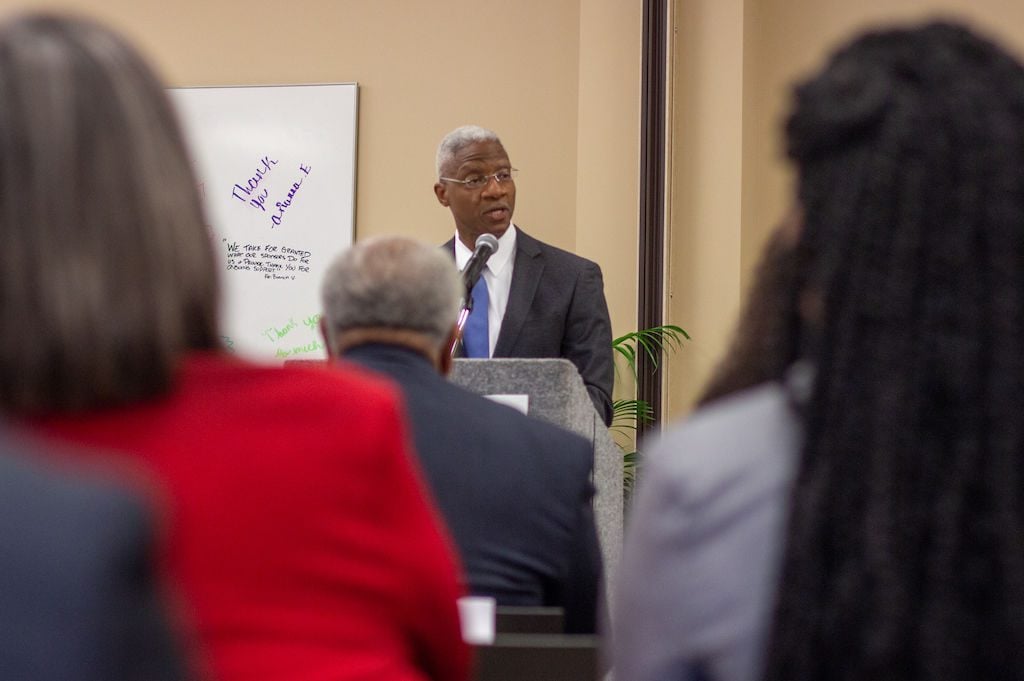
Dennis Bland, president of the Center for Leadership Development (CLD), sat down with the Recorder to discuss the mission and legacy of the organization. CLD is a nonprofit that has served the Indianapolis community for nearly five decades by providing minority youth with an opportunity to cultivate leadership skills, character and professional growth.
CLD, whose mission is to be a talent pipeline, is also celebrating its 49th year of service. Established in 1977, CLD has exposed youth to educational and career opportunities. The CLD Principles for Success are character development, educational excellence, leadership effectiveness, community service and career achievement, according to the website. CLD uses these five principles as fundamental pillars for providing youth with the values needed for professional and personal success.
Founded by S. Henry Bundles, CLD was initially funded by Lilly Endowment. The Indiana University School of Business, now the Kelley School of Business, was also an integral part of the organization’s inception. Bundles, an IU alumnus along with community leaders such as Schuyler Otteson, then-dean of the Indiana University’s school of business and Dr. Frank Lloyd established the organization, which has since contributed to guiding generations of community leaders and professionals.
This Q&A has been edited for length and clarity.
Can you explain a little bit about yourself? And a little bit about your position in the organization?
Dennis Bland: I am a native of Indianapolis, Indiana. I grew up attending Indianapolis Public Schools. I was actually involved in this organization during my senior year in high school, which would have been five years after the organization started. After I went to college, and after college, I began volunteering at the Center for Leadership Development. I’ve had some role in the Center for Leadership Development literally since my return to serve as a volunteer. So, as they say, once they get a hold of me, it never let me go. It’s probably more accurate to say, once it got ahold of me, I never let it go. Through college, law school and the practice of law, I was becoming more heavily involved in the Center for Leadership Development until the year 2000, where I left the practice of law, came to the Center for Leadership Development full-time, and have been here since 2000 as an employee.
What do you feel like has been the most challenging part of managing the organization and completing its mission?
Bland: When you’re starting a new organization, you’re trying to find resources even as you try to plant your feet and try to establish credibility. And so, you are trying to build credibility. The challenges, I’m imagining, in the early and mid-seventies was people questioning the need for an organization with a mission of helping African American youth thrive and excel. Then there’s always the challenge of receiving the funding and resources that you need to not just operationalize an entity or a business, but to sustain that business and grown that business. It always comes with its share of challenges.
The last thought I would share in terms of a challenge is …the idea of how you stay mission focused and how you remain mission focused in the midst of changing times, changing environments, changing prioritizations in community and society and mores.
Can you find a way to sustain your business, sustain your work so that it can be viable and helpful and impactful even as years go by, as decades go by? Even as generations start to change, can you create a quality of experience that is high quality and impactful enough to let people want to do it and people can see themselves as needing to do it.
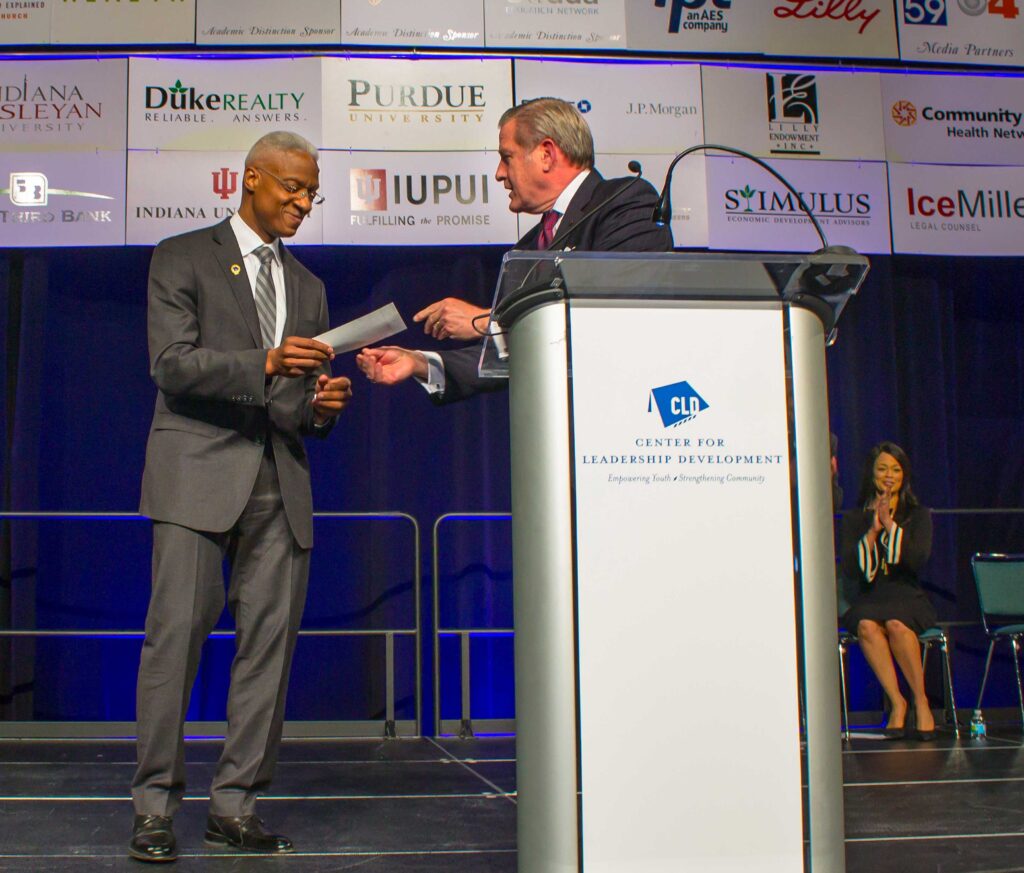
What are some of the partners the organization has been working with, and how has that helped develop that strategy of training minority youth to be professionals?
Bland: Again, to the point about the challenge of sustaining a business there would have been some businesses where they’re prominent, they’re supportive and, you wouldn’t imagine at five years later,10 years later, 20 years later, those businesses would no longer be in existence, that it wouldn’t be in existence in the community. That’s certainly been a part of our experience where you have these good relationships and partnerships and then they’re moving their headquarters or shuttering , so you just never know what the future holds, so to be able to sustain the organization even as you have funders come going in and out that’s real.
There have been companies that have just been right there like Elly Lilly comes to mind, so from this standpoint of creating internships, creating opportunities for young people to come and just be exposed to Fortune 500 businesses. The word exposure literally means to reveal art to open light. And so, companies like Eli Lilly and OneAmerica Financial have created opportunities for young people to get exposure to get internships. So, they have a chance to really meld their education experience with their life outside of education and seeing what adulting looks like in the professional workforce, because we have been able to sustain these relationships over time.
That’s been something that has also helped the stability and credibility of our organization is companies saying they would vouch for the CLD in terms of the work that we’re doing, and actually getting students ready, so that one day they can assume some of these positions of leadership and some of these professional roles.
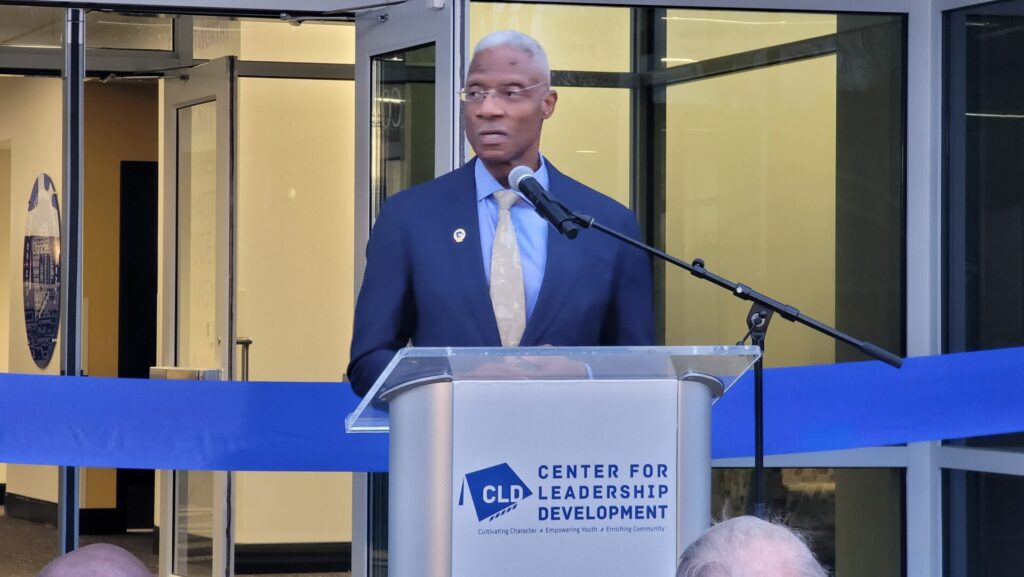
Is there anything that you would like to add about the CLD or other longstanding businesses?
Bland: One thing I have learned in my work for the CLD is that our mission is cultivating African American youth to thrive to become. As I like to say there’s a lot of potential, but the people who really warrant gold stars are the people that can cultivate and move potential to credential.
I want people to know that if you have an entity, and its impact when it has some level of impactfulness and quality to it, just don’t take it for granted. Support it. Support it through student’s involvement, support it through contributions. When you have a charitable organization, basically communities vote as to whether or not you want that business to be around. If people choose to support it, it will be around. If people choose not to support it, then it will not be around.
That’s kind of like the sense of community-shared responsibility. All the more reason if you have a resource that’s giving answers and solutions that’s meeting young people where they are, make sure that organization is always supported.
Don’t wait until you lose an institution before you begin to appreciate the value of the institution.
For more information, visit https://cldinc.org/ .
Contact Staff Writer Malik Simon at 317-762-7847.






, sat down with the Recorder to discuss the mission and legacy of the..)