Thursday, May 28, 2026
Home Blog Page 119

Christian Indiana companies may benefit from Hobby Lobby’s outcome

0

The U.S. Supreme Court in Burwell vs. Hobby Lobby left the decision whether to provide coverage for certain types of birth control to the employer, having an immediate effect on that Oklahoma-based company. However, some Indiana employers also had a vested interest in the outcome of that case. Madison-based Grote Industries and University of Notre Dame in South Bend were among dozens of employers nationwide filing complaints against the Department of Health and Human Services. Many of those employers sought similar relief from the implementation of that part of the Affordable Care Act, commonly called Obamacare. Hobby Lobby, Grote and other family-owned, closely held corporations argued that provision of the ACA violated their First Amendment right to free speech and their rights under the Religious Freedom Restoration Act of 1993.

Obama order protects rights of federally contracted LGBT employees

0

Obama2A recent study conducted by the Equal Rights Center and Freedom to Work concluded job applicants who so much as hint they are gay, lesbian, bisexual or transgender on their resumes reduce their chances of being called for an interview by as much as 23 percent. Test applicants with nearly identical backgrounds, except a strong work history that identified LGBT volunteerism, applied for the same position. The applicant with the weaker resume was contacted repeatedly for an interview while the LGBT applicant never was contacted and someone else was hired. But there is some relief, at least for those who work for the federal government or its contractors. President Barack Obama in July signed an executive order prohibiting federal contractors from discriminating against their employees based on sexual orientation or gender identity.

I.U. embarks on business education partnership with African university

0
Todd Roberson
Todd Roberson

The Indiana University Kelley School of Business has established a 10-week Foundations of Social Commerce program to deliver basic business knowledge to the people of Kenya through its partnership with Moi University in Eldoret. The inaugural program is the first of what university officials hope will blossom into a broader “Business of Peace Through Prosperity” education program. Foundations of Social Commerce is intended to help Kenyan entrepreneurs get beyond product or service development and learn fundamentals, such as finance, communications and marketing, and growth models. The strategic partnership with the Kenyan university started in 2006 through the Indiana University Medical School in Indianapolis. The partnership is considered one of the university’s most significant international alliances. The pilot business program, limited to 50 people and broken into five two-week modules, started in September and is led by Todd Roberson, senior lecturer of finance at the Kelley School.

Graves taps personal experiences to design buildings, products that heal

0
Michael Graves
Michael Graves

Internationally renowned Indiana-born architect Michael Graves, 80, designer of the NCAA headquarters in Indianapolis, the St. Vincent Health building in Carmel and Fort Wayne’s Snyderman House, has turned his attention to universal design. The Princeton, N.J.-based modernist, confined to a wheelchair since 2003 when he came down with a mysterious virus that left him paralyzed from the chest down, recently told the Washington Post good design can be crucial to healing. Whether designing a single-family home for a wounded active-duty soldier in Virginia or nursing homes for Carmel-based Mainstreet, Graves considers his own experiences. That leads to designs minimizing stairs, wide hallways that allow two wheelchairs to pass and rooms with enough space for a wheelchair to spin in a circle even after furniture is placed. Well-known for his iconic Alessi teakettle and a signature line of household goods for Target, Graves also is working with a health technology company to design hospital room products.


Boss’s Day

0

Show your supervisor you appreciate their leadership

By Rebecca R. Bibbs

boss-day2BUYING GIFTS CAN BE TOUGH
Even when they are for people we know well. But buying a gift for the head honcho in honor of Boss’s Day on Oct. 16 can present special challenges. We’ve come up with some ideas for products and services provided by inclusive businesses that might just put you on the fast track for a raise.

JAZZ ON THE AVENUE
Spring for a couple of tickets, $10 each, to this long-running event, featuring local jazz favorites, on the last Friday of every month at Indianapolis’ Madame Walker Theatre. If you’re feeling especially generous, you can throw in a soul food dinner prepared by Percy Grant for an additional $10 each. thewalkertheatre.org.

EDEN’S PATHWAY
Go in with a couple of coworkers and spring for a $40 gift certificate so the boss can enjoy a30-minute “Tension Tamer” neck, back and shoulder massage, an “Indian Head Massage” or an “Ultimate Relaxation Massage” from this Indianapolis-based company. edenspathway.com.

REBECCA LOWERY CERAMICS
So your boss is a java junkie. He or she might appreciate a whimsical hand-thrown coffee mug for $25 from Bloomington-based ceramics artist Rebecca Lowery. rebeccalowery.com.

MEXICAN BAKERY MAMA INES
If you want to give your supervisor something to dunk into that new mug on his or her special day, go south of the border with baked goods, such as a slice of tres leches cake or guava empanadas, from Mexican Bakery Mama Ines. Locations are at 518 Sagamore Parkway North, Lafayette, and 2001 W Washington St., Suite A1, Indianapolis. www.facebook.com/MamaInesMexicanBakery.

SAFFRON CAFÉ
Take the boss on a short trip to Morocco as seen through the eyes of Chef Anas Sentissi with lunch at Saffron Café, 621 Fort Wayne Ave., Indianapolis. Start with the bakoula spinach spread appetizer, $4.95; followed by the kafta tajine, a seasoned beef dish mixed with peas, potatoes and eggs and topped with a lemon, $9.95; and accompanied by atay, a sweet green tea served in a Moroccan teapot, $5.95 for two. saffroncafeindy.com.

ARTIST TREE CURIOS
We may be in the 20th century with high-tech cell phones, computers and tablets, but the boss just might appreciate a reminder of a simpler time like this vintage $7 pineapple pressed Hoosier Glass vase that can double as a penholder, available from Tree Pruitt at Kokomo-based Artist Tree Curios. www.etsy.com.

To have your product or service considered for inclusion in “Hoosier Marketplace,” please email info@indianapolisrecorder.com with the name of your company, contact information, a short description and a link to your Website. Only products and services for which images can be provided will be considered.

Territories

0

Jurisdiction system favors utility owners by reducing competition

By Victoria Davis and Rebecca R. Bibbs

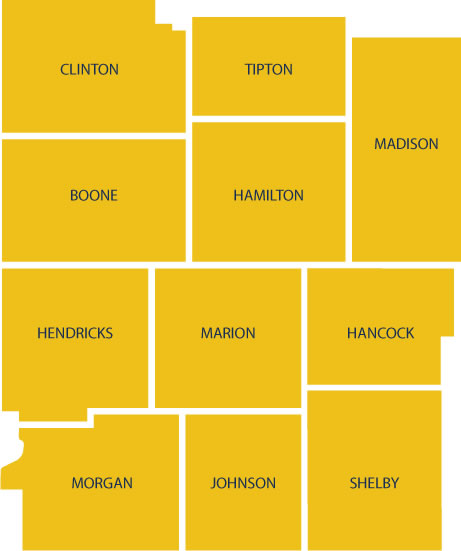
TerritoriesResidents of northern Madison County supply their homes’ electricity through utilities powered by Indiana Michigan Power, while the southern half of the county uses electricity supplied by Vectren.

This occurs because Indiana is divided into multiple utility territories  or jurisdictions, as they sometimes are called  where a specific power and/or gas company is assigned. Indiana happens to be split into five electric territories including Indiana Michigan Power, Duke Energy, Indianapolis Power & Light, Northern Indiana Public Service Company (NIPSCO) and Vectren.

Utilities often are referred to as “natural monopolies” because the infrastructures are so expensive to build and maintain there’s very little opportunity for entry into the industry by new players.

Depending on the area of residence, customers are given an electric service provider, but some companies allow their customers to choose their own providers through a retail choice system. With a handful of options available, customers sometimes wonder whether being split into multiple territories helps or harms competition and pricing.

“We have a program called ‘The Choice Program,’ which opens up competition,” said NIPSCO External Communications Representative Kathleen Szot. “They still would get a bill coming from NIPSCO, but the actual product is from a different provider. It’s a great element to have choice, but each provider has their own pricing.”

In Indiana, nine utilities are run by municipalities, six are investor-owned and five are wholesalers.

About 11 gas suppliers have been split into territories as well. Like electric companies, many are members of the Indiana Energy Association. Some of the larger service providers are Vectren and NIPSCO. Where customers reside and the company they choose directly reflects gas pricing.

“We have been the number two lowest gas cost in the state of Indiana for the last two years,” said Szot. “That’s something not everyone knows. We have two main gas lines in our area so the gas doesn’t have to travel as much causing extra expenses.”

However, gas companies operate a little differently when it comes to having the option of choosing a provider.

Angeline Protogere of Duke Energy said Indiana does not have an option for residents to choose their gas service provider.

“The territories have been set for decades, but the Indiana Utility Regulatory Commission sets the pricing,” she said. “Our rates are not priced like they are on a competitive market.”

In addition to setting pricing, the IURC helps companies measure their efficiency.

“The state in recent years has set energy savings targets,” said Szot. “It’s something we are expected to track and report back to the state regulatory group. It helps us to measure how well we are doing.”


Efficiency incentives for businesses

Though there’s little competition in the utility field, companies do try to offer incentives that can reduce costs for business customers. Here are some ways companies can save on their utility costs:

Indiana Michigan Power: Its Commercial and Industrial Rebates Program offers $45 for commercial clothes washers, 10 cents per square foot for cool roofs and $2-$5 for compact fluorescent light bulbs.

Indianapolis Power & Light: This company offers a variety of “prescriptive rebates” for lighting, compressed air usage, non-lighting and pumps to its customers through its Business Energy Incentive Program. IPL also offers custom incentives for companies willing to implement energy efficiency projects and technologies.

Vectren: Business owners can take advantage of natural gas service equipment rebates, such as $500 – $5,000 for a natural gas boiler and for commercial kitchen equipment, such as $500 for an ENERGY STAR steam cooker or gas fryer.
Check with your utility providers to learn what incentives they may offer.

Through the Looking Glass

0

Experts say now is the time to plan for Indiana’s commercial utility needs

By Michael Dabney

Looking through the glassWhile most people recognize the importance of education to Indiana’s future, many people outside of the industry seem to overlook the importance utilities will play in the state’s future economic growth and prosperity.

But Indiana’s current utility situation is partly to blame.

Energy, water and telecommunications capacity are plentiful and secure in Indiana at the moment. And people generally don’t think of their electrical power or water needs unless there is a rate change or there is a significant shortage for a prolonged period of time.

“Ensuring that Hoosiers receive reliable utility service at reasonable prices is part of our charge  and a responsibility we take very seriously,” said Natalie M. Derrickson, director of communications for the Indiana Utility Regulatory Commission. The IURC hears utility rate cases from across the state.

Indiana’s electric rates are relatively low. The state’s annual ranking for average total customer retail electric rates from 2000 to 2013 ranged from ninth lowest in the nation in 2000 to fourth lowest in 2002 to 15th lowest in 2013, Derrickson said.

The availability of water also hasn’t been a statewide problem in Indiana.

With average annual rainfall of roughly 40 inches, significant ground water reserves and substantial water resources with Lake Michigan in the north and the Ohio River in the south, Indiana has long-enjoyed a reliable supply of fresh water, according Vision Indiana: 2025. That recent report by the Indiana Chamber of Commerce Foundation addresses the state’s infrastructure needs.

Indiana experienced a natural gas boom in the 19th Century that has all but ceased to exist today. Citizens Energy Group in Indianapolis has gas shipped in from out of state, and though it has seen a decrease in gas load in recent years due to the loss of some industrial customers and improvements in equipment efficiencies, the supply is still adequate, said Christopher H. Braun, vice president of energy operations at Citizens.

As it relates to supply, the state is similarly situated.

But that doesn’t mean that things can’t change in the future.

ON THE HORIZON
Having an adequate energy supply is essential to Indiana’s future, most energy and telecommunications experts say. But the question remains as to whether the Hoosier state has the infrastructure capable of handling its commercial and residential needs.

The Indiana Chamber of Commerce Foundation’s report says the state’s assets cannot not be taken for granted and that continued investment and improvements are essential.

“Our future challenges will be to allow competitive markets to function while judiciously using public dollars, maintain what we already have and addressing new market demands,” it states. “The mix between public funding and private investment, as well as the sometimes overriding impact of federal activity, could prove decisive.”

But Indiana has challenges in virtually all utility areas.

At 64 percent, Indiana tied for 37th in the nation in the percentage of households with broadband Internet access, according to the Congressional Research Service. Moreover, the U.S. Census says 18.7 percent of Indiana households have no computer, and those residents have no connection elsewhere. Indiana also ranks significantly below the national average in the percent of highly connected individuals and significantly above the national average in non-connected individuals.

The Congressional report says “. . . disparities in broadband access across American society could have adverse economic and social consequences on those left behind.”

Water is necessary for all life, and an adequate supply of this ‘blue gold’ is essential for the state’s economic future, said Kumar Menon, director of Fort Wayne City Utilities. But he adds that Indiana’s economy is the most water-dependent in the country, and a long-term comprehensive plan is needed to ensure that the state’s water supply does not dry up.

“This is not something that can be achieved in a year or two,” Menon said of developing a statewide water plan. Water “does not know political boundaries and so public officials at all levels will need to be involved.”

The chamber foundation’s report estimated Indiana’s statewide wastewater and drinking water infrastructure needs through 2020 require $12.4 billion to $13.9 billion in funding for capital projects to improve or rehabilitate infrastructure. The American Society of Civil Engineers’ 2013 Report Card for America’s Infrastructure put it quite bluntly: Indiana’s drinking water infrastructure earned a D-plus, and its wastewater infrastructure rated only a D-minus.

Menon didn’t totally agree with the conclusion in the civil engineers’ report. But he did say water utilities needed to invest between 1 percent and 2 percent of revenues each year to maintain and improve their infrastructures for reliable drinking water, high quality water for industry and for quality sewerage treatment.

POWER OF THE FUTURE
There are no operational nuclear power plants in Indiana. And despite gas-fired plants, renewable energy plants and one of the largest windmill farms in the country visible along Interstate 65 in White County north of Lafayette, the Hoosier state is not energy-diverse.

Slightly more than 93 percent of all electricity in the state is generated by coal-fired plants, which critics say pollute the atmosphere, particularly along the East Coast. And coal supporters claim the federal Environmental Protection Agency under the Obama administration is hostile to the coal industry and could force electric utilities to adopt regulations that could dramatically hike electric rates.

Compliance with current and future EPA standards “will continue to increase the cost of electricity to our customers,” Indianapolis Power & Light Co. president and CEO Kelly Huntington said in a statement. But the utility has plans to deal with that.

But to hold down costs and meet regulations, particularly regarding wastewater, in the last several years IPL has announced plans to close or refuel 12 coal-fired or oil-fired generation units and is seeking IURC approval to repower some coal-fired generation stations to natural gas. According to plans announced in mid-August, 79 percent of IPL’s electric power was from coal-fired plants in 2007 and the company hopes to reduce that to 44 percent by 2017, making natural gas IPL’s largest fuel generation source.

Huntington said converting some plants to natural gas “is the best plan for our customers because it is the reasonable, least cost option.”
Public officials and business leaders say the Indiana utility industry is well-trimmed for the future but continued planning and re-investment are needed to insure the state remains a leader through the middle of the century and beyond.

Off the Grid

0

Hoosier businesses increasingly supply their own energy needs

By Victoria Davis and Rebecca R. Bibbs

Off the GridFlash back to May 2009 and one would find a massive team on Ball State University’s campus working on an $82.9 million geothermal project in Muncie. Today nearly half of the 1,100-acre campus is heated by geothermal energy.

“The project produces hot water for heating and cold water for cooling,” said Director of Engineering and Construction Operations, Jim Lowe. “It’s an alternative to burning coal in which we make steam. That process is being replaced with a geothermal process called ground source geothermal heating and cooling.”

There was a time that getting off the grid seemed like something done only by people on the fringes of society. But with the cost of electricity increasing and the intense need to discover new ways to provide energy, Ball State is one of many entities and businesses turning to renewable energy sources to heat, cool and power their spaces. Major companies and service areas, such as the Indianapolis International Airport and the

General Motors plant in Fort Wayne, also have made commitments to serve the planet well by using solar energy or landfill gas to create electricity.

Ball State originally awarded its contract to build a geothermal building on the north side of its campus and has allocated $33 million to construct an additional facility on the south side of the campus. About half of the campus receives warm and cool water as a result of the geothermal project.

The Indiana Office of Energy Development (IOED) reported, “Ball State University has completed Phase 1 of the United States’ largest ground-source, closed-loop district geothermal energy system. The university anticipates that $2 million dollars in savings will result from this project.”

The IOED also reported that as of June 2014, about 93 megawatts of solar photovoltaic panels have been installed throughout the state. For instance, Bloomingfoods Market & Deli, located in Bloomington, uses a solar water heater installed on the roof of one of its locations, which preheats water and serves the kitchen.

“It has a natural gas backup heater for when the solar energy isn’t producing enough heat because the health department requires pretty hot water,” said Facilities Manager Pete Kinne. “We get a lot of bang for our buck using our solar water heater.”

The business also has a solar electricity generator used at another location; however it is mostly used as a demonstrator because it doesn’t produce as much energy.

“This is evidence that we are committed to alternative energy,” he said.

Kinne said the company talked about the process for about six to eight months beforehand, and once the decision was made, installation for the whole project took about two days.

The Comprehensive Hoosier Option to Incentivize Cleaner Energy (CHOICE) program will increase the renewable energy production for the state to 10 percent by 2025.

Tough it may not be their primary source of income, companies that supply their own power also have an opportunity to sell surplus energy back to the grid.

But not everyone is shunning the conveniences of modern utilities. Though they aren’t supposed to for religious reasons, a growing number of Hoosier Amish, some of whom have mechanized operations using electricity alternatives like kerosene, increasingly use cell phones, especially when they own businesses.

Crisis Planning

0

12 tips to get businesses and homeowners through a utility emergency

By Victoria Davis

Crisis PlanningWhile shopping for apparel, groceries and home goods, Target customers were surprised when the store lost power for nearly three hours. As a result, customers were frantic and many food items had to be thrown away once they reached room temperature, resulting in a significant loss for the store, at the very least, its insurer.
Every once in a while the unexpected happens: A family finds itself without power due to an outage, and even a big business that relies on generators to stay in operation may find its alternative power sources sometime fail.

Whether small or large, a business always should have an emergency plan for restoring power.
Here are some tips businesses and homeowners can follow if they happen to lose temporary use of their utilities.

ELECTRICAL
1. Locate power switches and turn them off.
2. Group foods together in the freezer to help them stay fresher longer.
3. Let faucets drip to avoid pipes from freezing.

NATURAL GAS
1. Do not attempt to operate gas valves on the meter or tamper with the meter in any way.
2. If you suspect a gas leak, do not attempt to find the source of the leak or to repair a leak.
3. Meet with employees and take action. Each business should have an emergency gas outage plan.

WATER
1. Turn off the lead.
2. Only use boiled or bottled water to clean and/or drink.
3. Once water is restored let it run for a few minutes to filter.

SEWER
1. If you have a back-up, do not flush the toilets.
2. Contaminated carpets, rugs, and upholstered furniture should be discarded.
3. Turn off central heat and air system and prevent flow from reaching floor vents.

Natural Gas

0

Companies invest in operations to improve production, customer efficiencies

By Lisa Terrell

Natural GasA push towards natural gas has prompted changes from local utilities, with major plans from Indianapolis Power & Light and Northern Indiana Power Supply Company underway.

IPL announced in May it will sink $600 million into a new combined-cycle gas turbine power station near Martinsville and will spend $36 million to convert Units 5 and 6 at the Harding Street Generation Station from coal to natural gas. The news is in stride with a national study,

“Fueling the Future With Natural Gas: Bringing It Home.”

“Today, natural gas is plentiful and accessible, and there are many potential benefits for residential and business customers beyond today’s traditional applications,” said Chris Johns, chairman of the American Gas Foundation.

For IPL, the plan is both cost effective and efficient.

“Building a CCGT and refueling two of our Harding Street units will ensure our ability to meet the future needs of our customers and diversify our generation portfolio,” said Kelly Huntington, IPL president and chief executive officer. “In 2017, IPL’s reliance on coal-fired generation will have decreased to only 54 percent from nearly 80 percent 10 years before, with natural gas, wind, solar and oil powering the rest of our customers’ needs.”

IPL says the new natural gas plant will generate around 650 megawatts of electricity more efficiently with fewer environmental emissions. The CCGT will reduce the rate of sulfur dioxide, nitrogen oxide and particulate matter emissions by almost 100 percent. In addition, almost all mercury, lead and fluoride emissions will vanish, and water use will be cut by 97 percent.

Conversion of the Harding Street Generating Units 5 and 6 will begin in the fall of 2015 and be complete by early 2016. The unit will evolve from burning coal to using natural gas to create electricity.

“We are working to balance costs associated with meeting new environmental standards set by the EPA and the affordability for our customers,” Huntington explained.

About 700 permanent and construction positions are benefits to building the CCGT in Martinsville, said Huntington. Economically, the site will bring $1.6 million annually into Morgan County through local tax revenue, with an overall economic boost to the state of $857 million during construction, and an additional $48 million annually during operation. Work on the CCGT started this summer, and should be complete by 2017.

Citizen’s Energy Group of Indianapolis saw record numbers of natural gas usage in January as residents faced vicious frigid temperatures and are prepared to meet those needs again should Indiana face another brutal winter. The 25-percent colder temperatures in January led to higher bills for its customers.

Citizens’ gas system delivered 9.4 billion cubic feet of natural gas — a 26 percent increase over January 2013  during those treacherous months.

“Thanks to prudent investments in our pipeline infrastructure and careful supply planning, the Citizens gas system again provided natural gas to our customers when they needed it most,” said Mike Strohl, vice president of customer relationships.

NIPSCO also is looking to upgrade key parts of its facilities over the next decade under its Infrastructure Modernization Plan, filed in July 2013 with the Indiana Utility Regulatory Commission. Jim Stanley, chief executive officer, said the changes are necessary to boost customer efficiency.

“We’re reinvesting in our future by strengthening our system, while creating a direct local economic boost with minimal impact on customer bills,” he said.

Stanley said large parts of the country’s electric and gas systems were built in the post-World War II era and now are nearing their limits, which can become a problem if proactive measures aren’t taken.

Although the first $1 billion of the plan will go toward making improvements to the company’s electric system by the end of the decade, plans for additional improvements to the natural gas system are still underway. The project, however, is expected to include the extension of natural gas to the underserved areas, among other key improvements, and should boost the job market by 1,200 direct and indirect positions through the end of the decade.


Citizens taps Harrison to take over as CEO next year

Jeff Harrison will succeed Carey Lykins, who will retire after 42 years of service, as president and CEO of Citizens Energy Group on July 1, 2015.
In the interim, Harrison, who has been senior vice president of Engineering and Sustainability since January 2013, will serve as the company’s executive vice president and chief operating officer.

Dan Appel, president of Citizens’ board of directors, said Harrison brings unique qualifications to the leadership team.

“Jeff Harrison has displayed remarkable leadership as Citizens has embarked on unprecedented investments in the community’s aging water and wastewater systems. In addition to his extensive utility industry experience, Jeff has always shown great ability to inspire and motivate employees,” he said.

Harrison joined Citizens in 2003 as director of market development, working his way through positions of increasing responsibility. They include vice president, Manufacturing in 2006 and senior vice president, Capital Program & Engineering in 2011.

Prior to joining Citizens, Harrison served in positions of increasing responsibility during 13 years at Indianapolis Power & Light, including corporate strategist.

Harrison earned a bachelor’s of science degree in electrical engineering from Rose-Hulman Institute of Technology and an MBA from Indiana University.

A graduate of the Stanley K. Lacy Executive Leadership Series, the Hoosier Fellows Program and the Diversity Leadership Academy of Greater Indianapolis Harrison also has developed as a civic leader. He has served on the boards of the Center for Leadership Development, the Indianapolis Zoo, Goodwill Education Initiatives Inc., Marian University and the YMCA.

Under a restructuring of executive pay, Lykins’ pay has been reduced by 32 percent and pay for other executives has been reduced by 6 to 12 percent.

Translate »